by Dymphna Lonergan
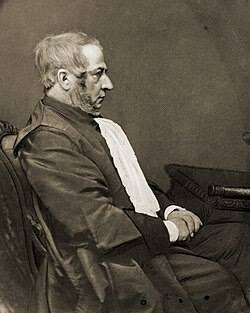
G S Strickland, Bandon, Co. Cork: ‘The first European’ in Adelaide‘
George Strickland Kingston (1807-1880) Deputy Surveyor to Colonel Light, the founder of Adelaide, was born and raised in Bandon, County Cork. His father and mother were in the timber business and owned a great deal of land and property.
George Kingston, however, would not enjoy much of his family’s fortune. His father died when he was 10 years old, his sister when he was 11, and his mother when he was 13.[i] The estate then passed to eldest brother William who was 21. Eleven years later George was married and living in London. Although in 1830 his son was baptised in Bandon (posthumously, having only lived five hours. Kingston was to say goodbye to his Ireland home within a few years, and as with many other migrants, never returned. For all that, George Strickland Kingston never forgot his ethnic heritage. He was proud to be an Irishman in South Australia, not least because as an Irishman, he said, ‘he could not be expected to have much modesty’ and so had a licence to boast about his achievements, and they were many.
GS Kingston was one of a small number of visionary men in London in the early nineteenth century who believed in the proposed new colony in South Australia. Having trained as a civil engineer in Birmingham, he was keen to put his skills to work. Through answering a newspaper advertisement in 1834 he worked voluntarily for the South Australian Colonisation Commission. His reward was to be chosen as Colonel Light’s right-hand man, arriving at Holdfast Bay on the Cygnet in 1836. In November of that year, while Colonel Light sailed north to look for a suitable harbour in Spencer Gulf, 29-year-old George Kingston set out from the Holdfast Bay campsite to find a suitable site for the city of Adelaide.
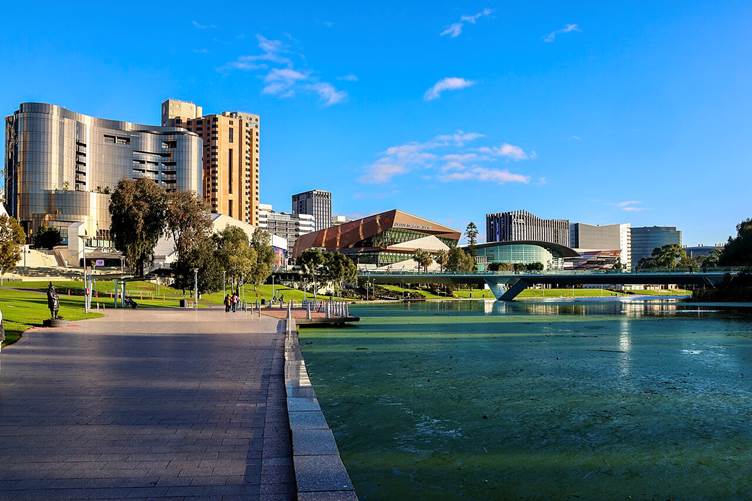
Karrawirra Parri / Karrawirraparri) The River Torrens (en.wikipedia.org)
Kingston was young, keen, and, above all, fit enough in the summer heat to negotiate the dense forest in what was later named Hindley Street. On 6 November 1836, his thirsty dog came across what turned out to be the river Torrens; it was subsequently named after the Derry-born Chairman of the South Australian Colonisation Commission, Colonel Robert Torrens. Although he was convinced that the flat area supplied by the Torrens was an ideal site for a city, Kingston needed confirmation from his superior, Colonel Light, who, on viewing the area from a distance because he was too exhausted to travel any further inland, agreed with Kingston’s choice. Light then informed the just arrived Governor Hindmarsh, who thought it was too far from the harbour, and suggested an alternative site near present-day Torrensville. Light agreed with this suggestion, but Kingston cautioned that Light see Hindmarsh’s site for himself. On 30 December, Kingston went with Light to the site and promptly pointed out that the area Hindmarsh had in mind was subject to flooding. Light then returned to Kingston’s first proposal and the next day endorsed it as the best spot for the city of Adelaide.
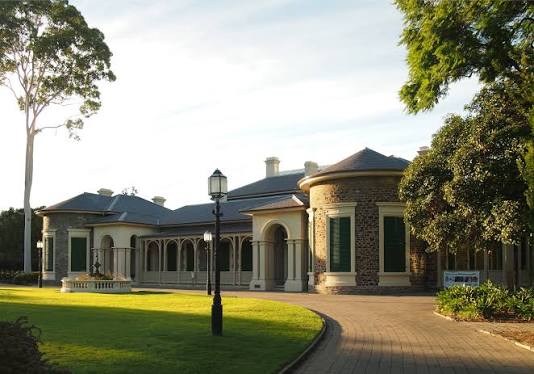
Ayres House, North Terrace (en.wikipedia.org)
Although it became known as Light’s Vision, the city plan for Adelaide was largely drawn up in London before Colonel Light came on the scene. During the two years’ preparation, Kingston led a team that looked at building requirements and provided ‘proposals for a town and government buildings’ on a ‘permanent plan’ Kingston went on to design many of Adelaide’s early buildings when he set himself up as a private architect in Adelaide in 1838. While Kingston’s experience as an architect was largely book-based, he applied himself to serving the fledgling city’s needs, and many of his building designs still stand: older parts of Government House, the Catholic Bishop’s House, West Terrace, Adelaide Gaol, St Francis Xavier Roman Catholic Cathedral, Ayers House, the Braes in Reynella, and his own Kingston House in the suburb of Marino.
While it seems that Kingston has stood in the shadow of Colonel Light in Adelaide’s early history, he was never shy of promoting his achievements. As a politician in the 1850s, this was necessary, but as an old colonist who lived to tell many a tale, Kingston was often given the opportunity to share his knowledge of early Adelaide. Kingston was very clear, if qualifying, in 1877, in a letter to the South Australian Register about his role in the founding of Adelaide when he acknowledged that (in so far as fixing on the site and founding the city may be considered synonymous terms) ‘the foundation of the city took place on December 31, 1836’.
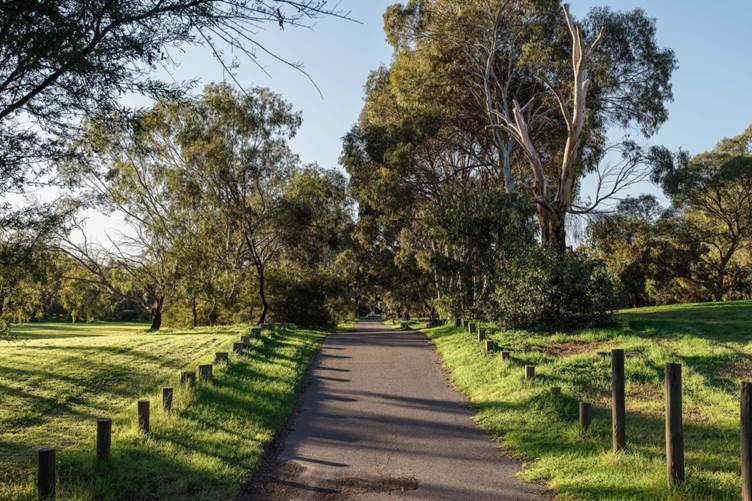
https://www.cityofadelaide.com.au/park/g-s-kingston-park-wirrarninthi-park-23
Kingston cultivated Irish networks in Adelaide; he founded a group called the Sons of Erin in 1840. In 1849, he was a founding member the St Patrick’s Society that lobbied for increased Irish immigration to South Australia. GS Kingston ultimately represented Burra and Clare in the Legislative Council; in 1857 he became the first Speaker of the House of Assembly in South Australia. His son, Charles, became Premier of South Australia in 1893.
In a history of the Irish in South Australia that aims to acknowledge the early numbers of Irish-born who played a role in the establishment of the State, Sir George Strickland Kingston certainly holds the most prominent position of being the first European to have set foot in 1836 in what was to become known as Adelaide. His major contribution to the development of South Australia was likened in his obituary to having been ‘almost the history of the colony’ with ‘none of its pioneers possessing in a higher degree a better claim to public recognition and general regard’.
Place names associated with Kingston include Kingston-on-Murray and Park 23 in the Adelaide Parklands: Indigenous name Wirrarninthi. His Regency designs can be seen in the old Adelaide Gaol, Ayres House, The Braes, and Kingston House. Colonel Robert Torrens.
Dymphna Lonergan is a retired acadeic from Flinders University and a member of the Tinteán editorial group. Hailing from Dublin, she is also a proud and happy contributor to Adelaide’s social history along with her Dublin and Adelaide-born children and grandchildren. This article is based on her chapter in Irish South Australia (Wakefield Press). For more on Colonel Robert Torrens, see https://adb.anu.edu.au/biography/torrens-robert-2740

