Of course, many would ask why – or even how – Ned Kelly elicits such interest, some 146 years after his death; this son of convict John Kelly from County Tipperary and Bounty Migrant Ellen Quinn of County Antrim? Continue reading
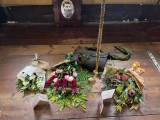
Of course, many would ask why – or even how – Ned Kelly elicits such interest, some 146 years after his death; this son of convict John Kelly from County Tipperary and Bounty Migrant Ellen Quinn of County Antrim? Continue reading

He was playing bass in a rock band and, as he put it, was ‘too cool for school’. When his father underwent quadruple bypass surgery, Finbarr stepped in for a tour, learning songs on the five-string banjo. The experience changed his understanding of the music. Continue reading
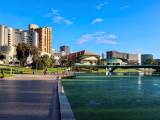
Kingston was young, keen, and, above all, fit enough in the summer heat to negotiate the dense forest in what was later named Hindley Street. On 6 November 1836, his thirsty dog came across what turned out to be the river Torrens; it was subsequently named after the Derry-born Chairman of the South Australian Colonisation Commission, Colonel Robert Torrens. Continue reading
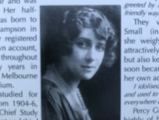
Here is a brief snapshot of Kitty Parker’s rebel ancestry: Michael Dwyer’s sister Sarah married Hugh Vesty Byrne, Dwyer’s Lieutenant. They had fourteen children. In 1825 a daughter Catherine Byrne married John Keirghan also a currency lad, or child of the convict Patrick Keirghan transported on Marquis Cornwallis, 1796, who married convict Catherine Kitts in Sydney. John Leary, convict on transport Prince Regent 1824, married convict Catherine Jones in Sydney 1825 Continue reading

This was the start of a 14 year war, which divided the Irish community. Enormous efforts to resolve the matter by many parties occurred at a high legal cost. Continue reading

For many families, this will be the first opportunity to see relatives recorded in the early years of the Irish Free State. Beyond genealogy, the records will support research in social history, economics, public health, housing, education and language use. Continue reading

Class took place on Monday night around the kitchen table, and it was always a relaxing cultural evening. Afterwards the chat continued often to near midnight. Indeed, there were times I felt transported to a farm house in the Donegal Gaeltacht of the 1960s and that I was not in Canada at all. Continue reading

he video ‘was created to capture Brian’s deep knowledge of the craft, specifically the specialised stretching and table cutting techniques that modern machines simply cannot replicate…and serves as a visual record of a vanishing skill and an important piece of the cultural fabric of Dublin’. Continue reading

No, it was not the gold discovery that brought me out. In Corrigeen, Barony of Kilmarney, where I lived, seventeen houses were burnt in one day by way of eviction. I at once made up my mind to be under Parker, our landlord, no longer, and I came out here. Continue reading

The wicked history of ‘Monto’ spreads itself accommodatingly from the 1860s up to the 1950s. ‘Monto’ was, at one time, so it is claimed, to be the largest redlight district in Europe. It is estimated that there were at times up to 1,600 prostitutes working there. Continue reading

