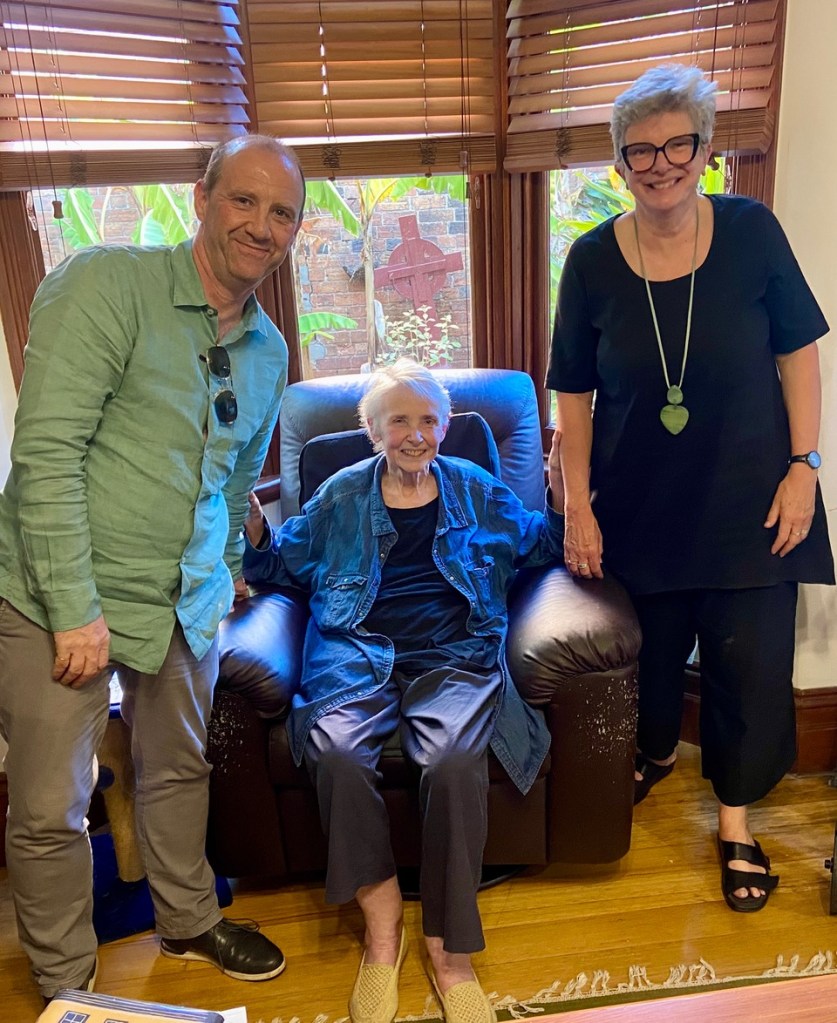
3 December 1948 – 19 May 2026
Four Memorial tributes from Family and Friends by Robert Johnston, Val Noone, Christina Hunt Mahony and Dianne Hall
In this issue, we reproduce the four tributes delivered at the memorial service for Elizabeth Malcolm at The Oratory, Newman College, on 27 May. The four speakers were her brother Robert Johnston and three friends, Val Noone, Christina Hunt Mahony and Dianne Hall.
As is fitting at a funeral, these short talks not only emphasised her exceptional professional career but also added personal memories about a sister and a friend. In due course formal obituaries are planned.
As noted in an earlier issue, Elizabeth was an important writer for, and supporter of, Tinteán.Moreover, as the first professor of Irish Studies in Australia, she made an outstanding contribution to researching and teaching Irish and Irish-Australian history and culture.
The Oratory at Newman College (a former chapel designed by Walter Burley Griffin and Marian Mahony) had special meaning because for many years that was the place where Elizabeth chaired the influential Melbourne Irish Seminar Series, a series which she had initiated.
At the beginning of the service a film clip was shown of a fascinating 1987 interview with Elizabeth on Irish television entitled ‘stereotypes-of-the-irish’ which is available online at ‘RTE Archives’.
In accordance with Elizabeth’s wishes, her remains have been privately cremated and her son Hartley will take them to Ireland and scatter them on Lough Erne, in Fermanagh, near where her father came from.
_______________________
Robert Johnston:
Elizabeth Letitia Malcolm, a hard act to follow
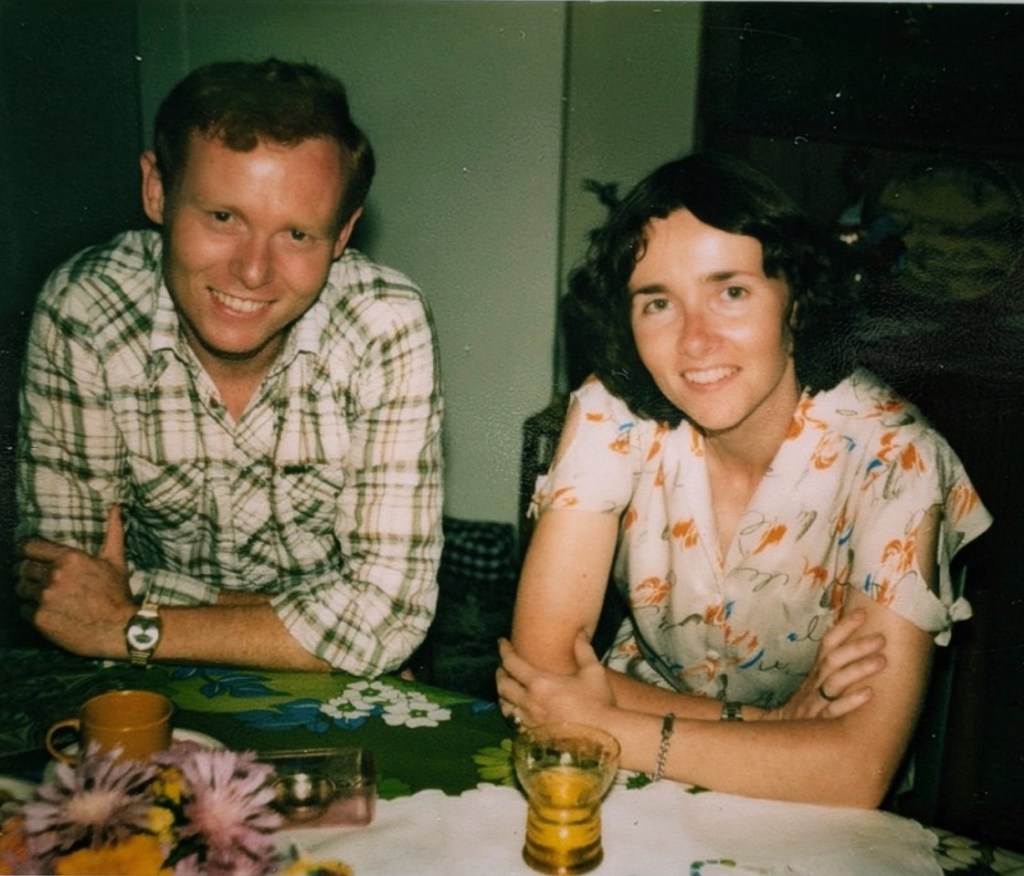
When trying to think of a way to summarise Elizabeth’s life and work in a few words I had the good fortune to come up with one word. And that word is Books.
Some of you will have been to Elizabeth’s home in Fitzroy and I’m sure you can imagine why I made that choice. It sometimes seems to me that the house in Westgarth Street is held up by the books that line its walls and fill every available corner. Once, when I was in a cheeky mood, I asked Elizabeth if she had read every single book in the house and I can tell you she was honest enough to give me an evasive answer.
But, to my mind, books defined Elizabeth’s life from the beginning, or from as early as I can remember her.
The first stand out moment relating to books was Elizabeth’s insistence on joining the local council’s mobile library service which stopped every Wednesday afternoon at the bottom of our street. In our house, where a rule applied that you never answered back, Elizabeth’s insistence on joining was rebellion indeed. Mum resisted the idea on the ground that libraries spread disease. You never knew who had handled that book before you. Not so silly a fear in the 1950s when kids getting measles, chickenpox, mumps, and even polio, was still a thing.
So, this was a first and significant act of rebellion, because we lived in a home where our father read The Bible, our mother read the Women’s Weekly, and they both read The Daily Telegraph. There was no template for this rebellion, it was solely an urge natural to Elizabeth herself. I call it a desire for knowledge that would not be denied. And I was happy to ride on the coat tails of Elizabeth’s rebellion, which lead me into the world of books and reading.
But while I was graduating from the Secret Seven to the Famous Five, Elizabeth was deep into the novels of Rosemary Sutcliff that started to appear in the mid-1950s. First came The Eagle of the Ninth, then The Silver Branch, followed by a string of other titles. These historical dramas showed that Elizabeth’s pleasure in history developed early. And with each new book she bought, out would come the roll of clear plastic from which Elizabeth would cut a rectangular sleeve with which to cover the book. To Elizabeth books were always precious and deserved protection.
And the interest in history was also fed by our family story. Ireland was in the blood, on both sides of the family. But on our father’s side it was of his own generation. His family arrived in Sydney in 1925 from Enniskillen in Northern Ireland. From our father, from aunts and uncles, and from our grandparents we heard tales of Ireland. Stories of everyday life, of community connections, and larger stories of strife and conflict. These bigger tales always ran along the same themes of Catholic treachery and Protestant triumph. I remember being much taken by the big repro painting of Prince William of Orange crossing the Boyne on his white horse that hung on the living room wall in our grandparent’s home in Ryde. Although the family was thoroughly settled in Sydney, the memories of the old country were always vivid in their conversations.
This was the fertile ground in which a life time passion grew. Later it was encouraged further by the teaching and friendship of Professor Patrick O’Farrell. Here was a mentor and guide who Elizabeth always admired and I believe there was respect and affection given in return. A few years later I also had the pleasure of attending Professor O’Farrell’s seminars. While sitting in his office I suspected him of often making a comparison, but he was too much of a gentleman to say out loud that the result was invidious.
Elizabeth was a hard act to follow.
Once Elizabeth had graduated from Trinity College, she went from reading books to writing them. Now books are funny things, once launched they take on a life of their own. A writer can never imagine how and when and where their book might have an effect. I had the chance to see how the book on the Royal Irish Constabulary (RIC) had an influence Elizabeth would never have imagined.
A friend of mine, Gerry O’Sullivan, years ago was writing a crime thriller set in Shanghai in the 1920s. His main character is an RIC man who left Ireland to join the Shanghai international police and became entangled in the criminal underworld of the city. Naturally, there’s a mysterious, beautiful woman involved. Gerry used Elizabeth’s book on the RIC to help build a background for his hero, and after I organised a meeting, he was able to talk to Elizabeth about aspects of his novel.
When I let Gerry know about Elizabeth’s death, he messaged me to say: ‘I enjoyed meeting Elizabeth very much, and was very grateful for her feedback on Gangsters of Shanghai. Her RIC book was a resource I drew on quite a bit when I was writing.’ This one example tells us that through her writings and her teaching Elizabeth has an influence we will never fully understand.
And now returning to all those books in Fitzroy. What do they signify? Are they in truth a monument of sorts. Are they a tangible tribute to a life of inquiry, curiosity, analysis, synthesis, diligence, persistence? All those words read went through Elizabeth’s mind and were returned in lectures, reviews, books, articles, seminars, interviews, discussions and conversations. Here is a cultural contribution of real significance and a lifelong story of personal enrichment and enlightenment.
So, the last pages have been read, the book is closed, and Elizabeth has reached her end with the satisfaction of a job well done and a life well lived.
Val Noone:
Elizabeth Malcolm, friend and scholar
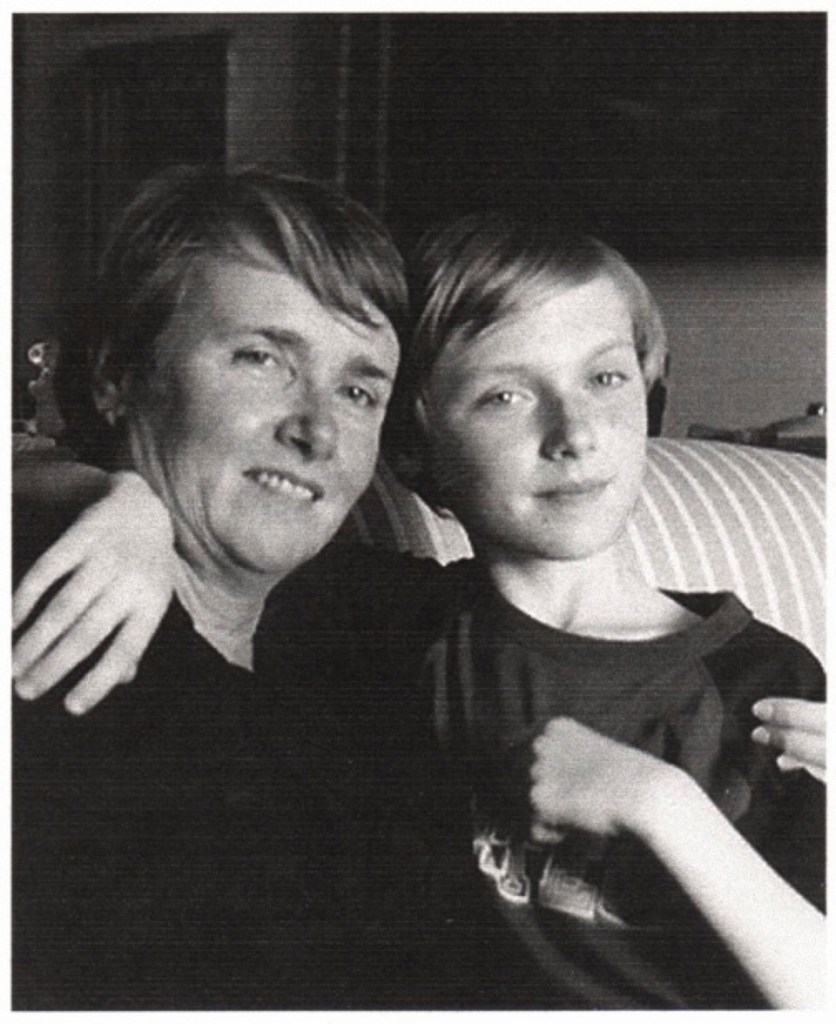
Elizabeth belongs in a tradition of scholars that goes back a long way. Some 1200 years ago, in a cold Benedictine monastery at Reichenau in what is now southern Germany, an Irish scribe was copying out a commentary on the Latin poems and other weighty topics. The scribe found this boring, so he watched his white cat, Pangur Bán, chasing mice, and wrote a poem about how much he felt in common with his cat:
Messe ocus Pangur Bán,
cechtar nathar fria saindan …
and in Robin Flower’s translation:
I and Pangur Bán my cat
Tis a like task we are at
Hunting mice is his delight
Hunting words I sit all night.
Elizabeth, like the scribe, a skilled wordsmith and in her way a contemplative, sought out the right word for every occasion. However, Elizabeth was not content to watch one cat: in retirement she had two cats, Fionn and Maedhb, as her constant companions.
Elizabeth’s life story was, of course, different and unique. She was born Elizabeth Letitia Johnston on 13 December 1948 to William Johnston of Fermanagh and Josephine Johnson from Rockhampton. While her parents were holidaying at beautiful Tuggerah Lakes, near the Entrance, about 90 km north of Sydney, Josephine prematurely gave birth to Elizabeth. She has an older brother, David who has died, and a younger one, Robert, who is with us this evening.
In her youth Elizabeth Johnston married John Malcolm, a medical doctor, retaining the surname Malcolm. Later Elizabeth partnered for a time with Bob Stevens, a medical researcher, and Hartley, chief mourner and co-host today, a social worker in Sydney, is their son.
Elizabeth grew up in Malabar on Sydney’s south coast, went to Sydney Girls High School, studied history at the University of New South Wales with an honours thesis in Chinese studies and then an MA in Medieval English history. However, the famous historian of Irish Australia, Patrick O’Farrell sparked her interest in Irish history and recommended that she pursue postgraduate studies in Ireland.
Elizabeth taught history at UNSW for three years, and then moved to Ireland where she started her PhD on the nineteenth-century Irish temperance movement under the supervision of the famous historian, TW Moody at Trinity College, Dublin. During those years she also spent time teaching in Norway. After completing her PhD in 1980, she returned to Australia for a year in the Canberra public service working on overseas aid before landing a research position in Queen’s University Belfast during the 1980s. In the 1990s for 10 years she was a senior lecturer and researcher at the Institute of Irish Studies, University of Liverpool.
No wonder she was chosen to be the Gerry Higgins professor of Irish Studies at the University of Melbourne, the first professor of Irish Studies in Australia.
When Elizabeth arrived in 2000 nobody around Melbourne seemed to know her. I was fortunate to become a colleague of hers at University of Melbourne. We worked on projects together, our families became friends. I was editing the Táin magazine of Irish Australia which published her inaugural lecture and various pieces. As far as I can tell Elizabeth was the most learned scholar of Irish history ever to live and teach in Victoria. Lecturing and tutoring in Modern Irish History under her guidance was a highlight of my academic life.
A word now about Elizabeth’s last months. Her way of dealing with her coming death was to fight the cancer with a realistic understanding of her chances, and to go on living life to the full as much as she could. In this regard, I wish to put on record our thanks to staff at Peter MacCallum Cancer Centre, Royal Melbourne Hospital and Westhaven Baptcare Home for their devoted attention to her.
In her final weeks, Tinteán published two articles by Elizabeth on Irish-born Australian women writers. That was a fitting coincidence. The first was about Eliza Dunlop, whom we quoted in our Acknowledgement of Country. The second article was about Anna Maria Bunn who wrote the first Australian novel by a woman. Elizabeth knew her academic article about Bunn was to be included in the next issue of Australasian Journal of Irish Studies, but on the day I took a print-out of the Tinteán piece to show Elizabeth at Westhaven, sadly, she was past conversation.
All of us here would agree that we are indeed fortunate to have been friends and colleagues of Elizabeth Malcolm. May she rest in peace.
Christina Hunt Mahony:
Memories of Elizabeth
Because Christina lives in Wicklow, Louise Willis read this tribute on her behalf.
I first met Elizabeth through our great friend Ruth Sherry. We were all living in Monkstown, near Dun Laoghaire, along the coast south of Dublin. My husband Bob had finished his PhD at Trinity, where Elizabeth was finishing hers. I was at University College, Dublin, doing mine, and Ruth was teaching in Norway. Thus began a fairly regular annual reunion, or migration, to Dublin in the summers from wherever we were based, Chicago, Washington, Trondheim, Tromso, Belfast, Liverpool, Manchester, and beyond. We were connected by Irish Studies from the start.
At the beginning Elizabeth was in digs with Miss Murphy in Belgrave Square, and some of you may have heard those stories. Miss Murphy and her household probably deserve a book of their own, and Elizabeth kept us abreast with quirky tales.
We all loved to take off for day trips, either locally in the countryside or, at times, longer car journeys around Ireland. Elizabeth, who never drove, did have an excellent AA road guide and other guidebooks galore. And cameras, plural.
Many’s the diversion was dictated by her preparatory research, which was as meticulous as that for her thesis. Soon we would find ourselves in a muddy field in search of an ogham stone or an elusive stone circle. At times we encountered unimpressed farmers, or the odd bull eyeing us, luckily, from a distance. But I remember most vividly the many trips to asylums, hospitals, orphanages and the remains of other institutions which often loomed abandoned over provincial towns. The historian in Elizabeth was rarely off duty.
When my daughter arrived on the scene she joined these summer junkets, and Elizabeth surprised Nora when she was old enough with the loan of an excellent camera, thus fostering her lifelong interest in photography. When the time came, that camera was duly passed back to Hartley.
But Nora and I agree that our fondest memories of Elizabeth from long ago were nights spent laughing and talking at The Dalkey Island Hotel, alas now long gone. Many a pint and club orange were had there, looking out at the Irish Sea and watching the rowing races.
After I moved permanently to Ireland Elizabeth and I had a memorable trip to the West of Ireland – by train to Westport, and then by car out beyond Belmullet. We were headed to the Ceide Fields, a vast neolithic site overlooking the Atlantic, and containing the oldest known fenced field system in the world. Elizabeth would have wanted me to be certain to get those details right. It was July, but it was Mayo, so it was bitterly cold, with pelting horizontal rain. Undaunted, we listened to the dogged young guide, along with two soggy and bewildered Spaniards whom we suspected were on their honeymoon. Our local BnB accommodation, festooned with international souvenirs from grateful previous guests, included a shockingly objectionable and outdated replica of an Australian shebeen which, of course, Elizabeth manage to capture with her camera. We were, incidentally, the only guests not there to fish for salmon, although we did end up eating a good deal of it on that trip.
In more recent years Elizabeth bought a flat near mine in Wicklow Town. She steadfastly refused to put any shades or curtains on her huge bedroom window because she didn’t want her view of the Irish Sea to be obstructed. Colleagues from Australia, including Di Hall and Philip Bull, were among those who have stayed there and enjoyed going to The Bridge Tavern with Elizabeth for drinks or dinner. She liked to sit by the window on the off chance that an otter or a heron might appear on the river running past. She had the camera ever ready, although now it was in her phone.
Elizabeth loved her second home and her very own view of the Irish Sea. I only wish she had been able to be there more often to enjoy it.
Dianne Hall:
Elizabeth Malcolm, historian
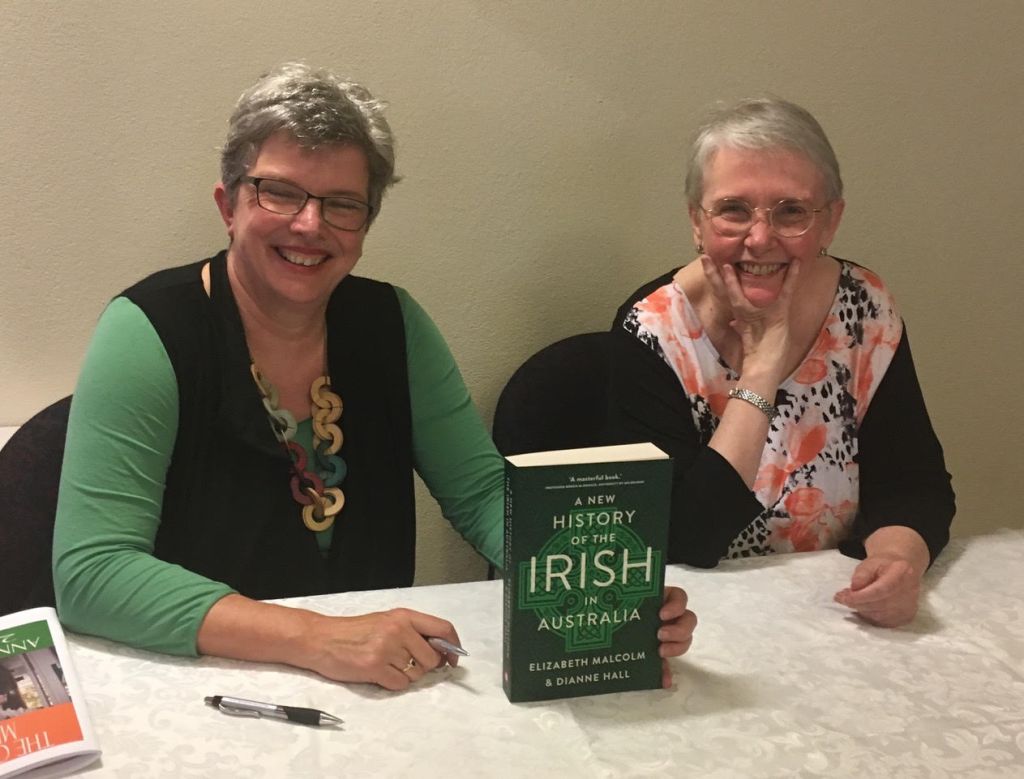
I first met Elizabeth and her son Hartley soon after they arrived in Melbourne in 2000 when she took up the position as Chair of Irish Studies at the University of Melbourne. Elizabeth had been put in touch with me as someone who could tutor for her new Irish history subjects. As well as tutoring, I also initiated her into the arcane mysteries of the student Learning Management System and the University’s many rather baffling admin systems.
She had come to Melbourne after studying and working in Ireland, Britain and Norway for 25 years, living in Ireland and Britain through times of great change. When she arrived in Dublin in 1974, she had already been involved in the women’s movement in Sydney and so joined similar campaigns in Dublin, later publishing editions of the pamphlets that she collected during this time. In the 1980s she worked in Belfast during some of the worst years of the Troubles. In later years, she made few personal comments about her experiences then but she did talk to me about working as Warden for Riddell Hall, one of the residential colleges at Queen’s University Belfast in the early 1980s, saying that the young women in the college found it very hard to be away from home and studying when the city was in such uproar.
After she arrived in Melbourne, she moved quickly to set up Irish Studies networks and to connect them to the global Irish studies community. Along with Frances Devlin-Glass from Deakin University and Philip Bull of Latrobe University, she started several organisations that I joined soon after. These still continue – the Melbourne Irish Seminar Series at Newman College, the Australasian Journal of Irish Studies, and with Brad Patterson from Wellington, she led the establishment of the Irish Studies Association of Australia and New Zealand. We as fellow editors of the journal appreciated her encyclopaedic knowledge of Irish history and her eagle eye for detail that ensured its high quality. She also played a key part in the founding of BrigidFest at the Melbourne Celtic Club, the Nicholas O’Donnell Fellowship at Newman College, Irish Australian conferences and supporting Táin and later Tinteán magazines.
As well as teaching at Melbourne University, and establishing those important networks beyond the university, she continued with her research, completing her major book on the social history of the Royal Irish Constabulary. In the process of researching for this book, she had put out a call in the Irish media for information on members of the RIC and said she was deeply touched and surprised by the flood of letters that she received from the children of former policemen. Following the police book, her research focussed on histories of gender, violence and war in Ireland; the history of psychiatric care in Australia, and history of the Irish in Australia. On her retirement from the University in 2012, she was delighted to have more time to research and write, and as well as new projects on the Irish Famine orphans and 19th century Irish Australian women writers, she continued to publish on aspects of her earlier projects on the history of drink, violence, mental illness and the police. Indeed just before her death, a new collection on the history of the pub in Ireland was launched, which includes her important article on the role of women running pubs in Ireland. And a few months ago, she and I finished the manuscript of a monograph on history of gender and violence in Ireland which will be published sometime over the next year.
One of Elizabeth’s strengths was her interest in and encouragement of students and more junior scholars, including Dolly MacKinnon and myself when we were at the University of Melbourne in the early 2000s. She tirelessly wrote references, proofed applications and gave advice on navigating academia. Many people she assisted have been in touch with me remembering her kindness. Her comments and questions to postgraduate students on their work were always both astute and carefully delivered.
As well as engaging with the work of up-and-coming researchers, she remained an active host to visiting academics even when illness curtailed her attendance at academic events. A few months ago, Brian Ó Conchobhair and Louis de Paor were the most recent visiting scholars and though she was frail, her deep knowledge sparkled and delighted all of us that day.
Over the years, she and I became friends as well as colleagues, and I enjoyed many long conversations with her about research, history and current events about which she was both very knowledgeable and frequently acerbic.
In her retirement she enjoyed watching the rugby and the Australian and the French open tennis on tv with her beloved cats. When staying in her Wicklow flat, she loved nothing more than to sit and watch the wonderful view of the Irish Sea while reading and writing. She was equally fond of nice food and good wine, and until the last few years, our meetings and catchups were always appropriately in pubs near wherever she was living.
So many messages have come through from all over the world not only honouring her scholarship but also recalling her generosity – to friends, colleagues, early career researchers and students, as well as the helpers who assisted her over the last few years.
So we join together here with her son Hartley and brother Robert in celebrating her achievements, knowing we have benefited from her friendship and kindness.