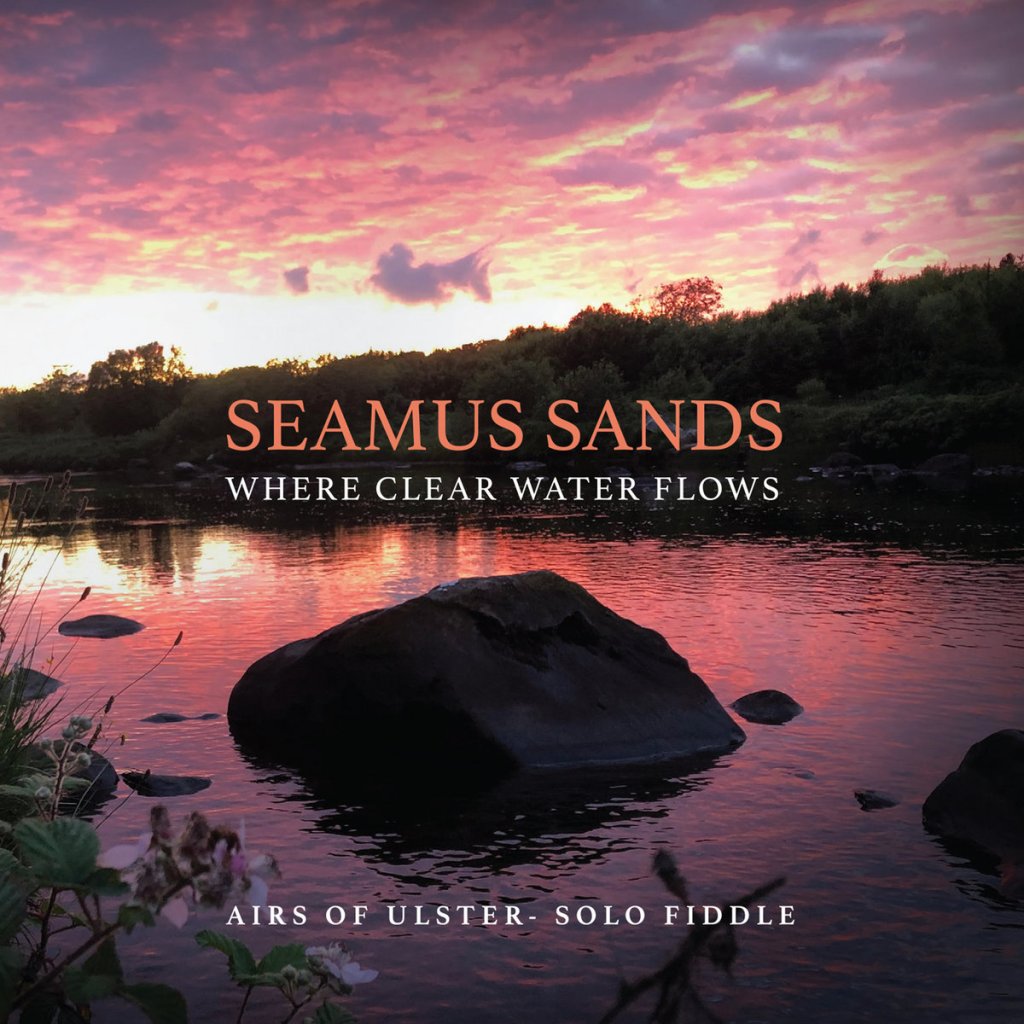
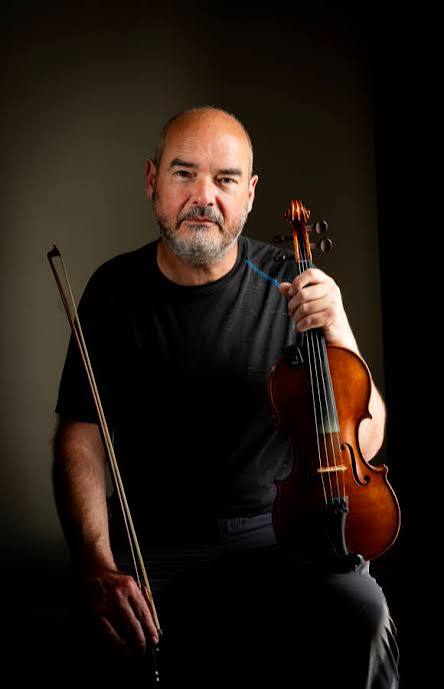
Thanks to his latest album Where Clear Waters Flow: Airs of Ulster – Solo Fiddle being the featured album at www.thesession.org, I recently discovered the fiddler Seamus Sands. In this age when A.I. threatens to homogenise all musical styles, it is a delight to discover any musician who is dedicated to acknowledging the tradition in which he or she lives and works.
The Sands name is renowned across County Down, Ireland, and beyond. There is a band called the Downs Family, and Colum Sands is a widely loved songwriter. I have very fond memories of him sharing a song at the National Folk Festival in Canberra with Melbourne’s own Enda Kenny.
Both the historical stream connecting Ireland and Australia and the song tradition travelling from an oppressed country to a penal colony reflect the old saying that history and song are one. While some observers think that the only true folk music is anonymous most folk performers of my acquaintance delight in being able to discuss the origins of both tunes and songs and to attribute variations and background accordingly. Indeed, the acknowledgement of the ‘past’ of a song or tune is the thread which
binds today’s musicians into the tradition.
Seamus Sands occupies an important place in this history. Essentially, he plays on his fiddle, the ‘old songs.’ Furthermore, he plays them solo in sean nós style. Imagine a solo singer standing unaccompanied and rendering a traditional song in Irish. A hush falls over the audience who pay respectful, almost reverent attention whether they are Irish speakers or not. There is something precious about the moment: it is unique, unrepeatable and pays homage to a past that forms part of the identity of anyone with Irish ancestry. In order to accurately portray the sean nós tunes on fiddle, Seamus Sands built his own instrument. As he says, the repertoire demands a fiddle that is mellow and sweet and he aimed to create this with his own hands. This listener agrees that he has succeeded in this endeavour.
The second aspect of his playing which becomes clear as you listen is that he has indeed respected the
sean nós traditions. While most sean nós airs are the tunes of the old songs, to render them as fiddle solos,
Seamus practises them tirelessly, initially as songs. It is only once he has the songs at his fingertips that he
attempts to play them. The sean nós technique is clear in the way that Seamus slides up or down to a note, how long he holds a
syllable to ensure it has maximum effect and in his control of the dynamics. His fiddle can dance jauntily,
whisper the quiet moments or demand attention. This is meaningful, nuanced music.
Seamus has three albums on Bandcamp: Across Bridges, A Deep Pool and the 2026 double CD Where
Clear Waters Flow. The earlier albums feature a variety of barn dances, reels, jigs and hornpipes. Importantly, Seamus notes that the airs on the recent CD were learnt two ways. Some were in written form but others came from listening to them performed in sean nós style.
Seamus says that in order to learn the tunes properly, he writes them out so that he can memorise the words. It might take three weeks for him to feel that he can play the tune with all its unique characteristics. The titles of the generous 34 tracks on this double album include a dozen in Irish. A track list and a couple of samples are available on Seamus’ website https://seamussands.com/music/where-clear-water-flows/. ‘Aige Bruach Dhún-Réimhe’ is particularly poignant. Listen at: (https://seamussands.bandcamp.com/track/aige-bruach-dh-n-r-imhe).
In the ‘sleeve notes’ Seamus explains the origins of each tune and where he learnt them. Quite often the experience of tracing the airs took him back to family occasions, some happy, some sad but all of them inspiring. The airs on this album have the power to invoke such musical memories in us all.
Tony Smith 2026
Tony Smith is a retired academic with an ongoing interest in folk music. He busks and writes reviews and articles regularly for the Trad & Now magazine and occasionally for Eureka Street, Verandah Music and Transmissions: the Newsletter of the Australian Folklore Network.

