The High Kings, Irish diaspora and the life of a tradition
A Feature/Review by Jamie Henry
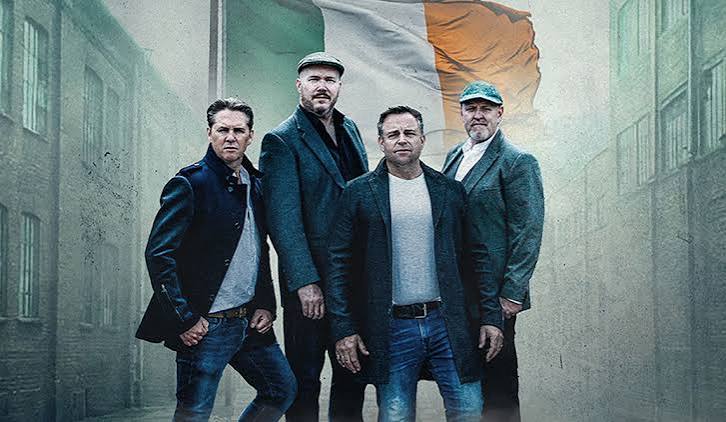
At Canberra Theatre on 22 October, The High Kings played to an audience that understood these songs as more than entertainment. For some, they were a connection to Ireland; for others, they belonged to family histories, old friendships or memories that had little to do with where anyone was born.
Before the show, I spoke to a man who still attends Irish folk concerts in memory of his late father. Nearby, a young child slept through the excitement, having apparently decided the evening’s arrangements were less important than a good rest. His parents told me the child’s favourite songs were ‘The Rocky Road to Dublin’ and ‘Chasing Rainbows’. The band had met the family earlier.
It was a small scene, but it captured something essential about folk music: its life extends well beyond the stage, and often beyond the people who first sang it.
When I spoke to Finbarr Clancy and Brian Dunphy before the tour, they reflected on how their Australian audiences had changed. ‘It’s become mainly Australians that are coming to see us now,’ Dunphy said. What had once been a crowd largely made up of Irish people and their descendants was increasingly attracting people with different connections to the music.
‘It’s kind of done a flip over to the other side,’ he said, “which is great for us because obviously the music is reaching other people and it’s not just about home all the time.” That distinction matters. Irish music can be a way of remembering home, but it need not be restricted to those who have lived there.
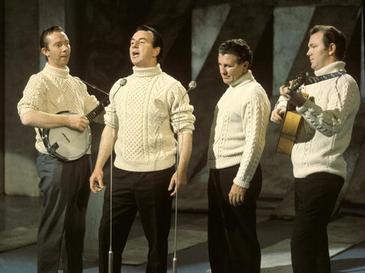
The Clancy Brothers and Tommy Makem (en.wikipedia.org)
The long road to Australia
For Clancy, that connection took time to understand. His father, Bobby Clancy, was a member of the celebrated Clancy Brothers, but Finbarr initially had little interest in following the family tradition. He was playing bass in a rock band and, as he put it, was ‘too cool for school’. When his father underwent quadruple bypass surgery, Finbarr stepped in for a tour, learning songs on the five-string banjo. The experience changed his understanding of the music.
The band’s own history also reflects the changing routes Irish music takes. Initially aimed at the American market, The High Kings gained exposure through a PBS concert film before their success spread to Ireland, Britain and Europe. More recently, their versions of ‘Rocky Road to Dublin’ and Will you go Lassie go reached a new audience through Ryan Coogler’s film Sinners, after composer Ludwig Göransson heard their recordings. ‘It was just insane how it happened,’ Dunphy said of being invited to add vocals. The result was another reminder that traditional songs can find unexpected lives in unfamiliar settings.
A tradition that keeps moving
The High Kings are not alone in carrying Irish music to new audiences. Contemporary acts such as the Mary Wallopers, Kingfishr and Amble are finding listeners well beyond Ireland. Clancy welcomes that growth, proud of the band’s place in the genre but clear that its future belongs to more than one group.
The High Kings’ own performance made the case. The musicians gave individual songs space to breathe, allowing each voice and interpretation to come forward without losing the sense of a band working together. The quieter moments were not simply pauses between crowd-pleasers; they were part of a set that moved between intimacy and exuberance. That balance is important to a tradition often presented as a fixed expression of national identity. These songs have always travelled, been adapted and acquired new meanings. Their histories matter, but so does what happens when they reach someone who has never set foot in Ireland.
At Canberra Theatre, that intergenerational connection sat alongside the presence of people whose relationship to Ireland was distant, complicated or perhaps nonexistent. The songs did not require everyone to share the same history. They offered a meeting point. And for those who had left Ireland, Dunphy had a message: ‘For those here from Ireland, we miss you at home and it’s not the same without you.’
It was a generous sentiment, but the evening also suggested that home is not always a place one can return to, nor is it necessarily somewhere one has lived. Sometimes it is a song remembered from childhood. Sometimes it is a room full of strangers singing the same chorus. And sometimes, as The High Kings demonstrated, a tradition remains alive precisely because it keeps finding people who can make it their own.
J Henry is a Canberra-based teacher and writer from County Antrim, Northern Ireland, with a particular interest in music, film and the stories that connect people, places and cultures.

