a feature by Tomás Ó Dúbhda
From a low of only 3% of land owned by those who worked it in 1870, this had risen to 65% by 1916, something completely unimaginable fifty years beforehand. By 1920, and the escalation of the War of Independence, the Land Commission, and the Congested Districts Board, had transferred 13.5 million acres to farmers throughout Ireland. This usually involved re-allocating the land to those families who had previously occupied it but sometimes included movement from one part of the country to another area where the land was better and where sub-division in the home area was not an option due to the existing land holdings being uneconomic.
Dáil Courts 1920
One of the lesser-known facts about the War of Independence 1919-1921 is that there were two court of justice systems running concurrently for most of this time. Although the Circuit and higher courts of the British legal system continued to function much as they always had, the opposite was the case with the lower elements of the system. As far back as 1904 the idea of having a court system completely independent of the British one had been mooted by Arthur Griffith of Sinn Féin. When the Dáil Ministry met in June 1919, after independence from Britain had been declared, it was decided to expand on a nationwide basis the local parish courts system which had already been operating successfully in parts of Mayo, Galway, and Clare. As most of the British courts were unable to function due to many of the rural RIC/police barracks having been abandoned because of the war, this presented an opportunity for Sinn Féin.
On the one hand, it allowed them to prove they could fulfil the duties the British were unable to fulfil. It also meant that, in addition to day-to-day matters of justice, the question of land arbitration and public service administration generally could continue to be dealt with, again demonstrating that there need not be any period of chaos following eventual British exit. Because people had been crying out for a resolution of the land question for so long, and had no desire to wait any longer, this, along with war weariness, may have been a big factor in the massive support for acceptance of the treaty with Britain.
Land Ownership Post Independence
After independence, the work of the Land Commission continued, including compulsory purchase where necessary, though changes were made and new legislation, the Land Law Act of 1923, was passed. Given that agriculture was by far our biggest area of export, and as the government wanted to increase the volume, and quality, of these exports, they believed that land purchase was desirable. With this ln mind, the 1923 Act ordered the compulsory purchase of all land still held by landlords. The Commission’s two main functions were to complete land purchase and deal with the problem of congestion.
They were to do this by acquiring untenanted, pastoral, estates and dividing these into appropriately sized parcels for allocation to chosen recipients. The primary aim was to enlarge uneconomic holdings and to provide new holdings for those deemed eligible. The absolute dependence on agriculture in Ireland at this stage is reflected in the fact that in 1924, 86% of total exports were accounted for by agricultural produce. After centuries of subservience to the landlord class, and all that encompassed, it was finally possible for the former tenant to gain some status in the community if only he could acquire extra acreage.
The man, for only in exceptional cases did women own and run the farm, with three cows looked down on the man with two, who saw himself as infinitely superior to the man with just one. The family who could contribute more to church collections certainly held their heads high after the contributions were read from the altar. It was not enough to enjoy an increase in one’s wealth, it was vital that the entire community were aware of it. If a farmer were to receive a few extra acres and increase his stock numbers, he might expand further by renting more land thereafter if none was available to buy.
This might allow for one son to be sent to a second level boarding school and afterwards to Maynooth, or another seminary to become a priest, something that would guarantee the status of this family for generations to come. The desire to gain more acres was overwhelming among most rural people in the newly independent state, but it also led to enormous rivalry, jealousy, and resentment in small close-knit communities. The inspectors who did the eligibility assessments often received derogatory stories from one applicant about another, such was the determination to prevent the neighbour from gaining any advantage over oneself. If I can’t advance, neither will he was the all-prevailing attitude.
Following a number of land acts from 1923-31, a new Land Act was passed in 1933, which clearly set out the functions of the Commission, leaving the relevant Cabinet Minister with no direct role apart from his ministerial oversight. This, however, did not prevent the government of the day ensuring that some of the commissioners and many of the local inspectors and supervisors were of the correct political pedigree. Given the bitterness of the Civil War and its immediate aftermath, and a desire to settle perceived injustices inflicted by the other side, it is understandable that the criteria used for deciding eligibility may have been inconsistent, to say the least.
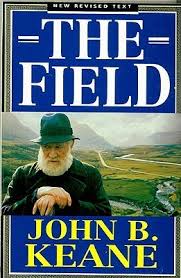
Those who ought to have satisfied the criteria, but did not receive any land, were enormously bitter and, in many cases, deep and lasting divisions formed where there had previously been friendship and co-operation. Anyone who has ever seen The Field by John B Keane will have got some understanding of how fiercely people were attached to the land that was worked by their fathers, and their fathers’ fathers. That some might not stop short of murder to defend that land, if all else had failed, should not be beyond belief. A provision included in these Acts was a secrecy clause which ensured that the Commission files would remain closed for all time.
Land in the East for the Irish Speakers from the West
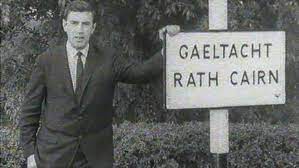
Many would say that one of the most laudable achievements of the Commission at this time was the decision to establish the Rath Cairn Gaeltacht/Irish speaking area in Co. Meath in 1935, an area where Irish is still the predominant language spoken today, almost ninety years later. It is still somewhat strange to hear people speaking Irish with a strong West of Ireland accent virtually on the outskirts of Dublin. People who moved from Kerry, Galway, Mayo and Donegal Gaeltacht areas were able to get a more viable land holding and still be able to hold onto their language and culture. These people did not receive a hearty welcome initially as locals often felt they should have got the land, even though many/most of them already had reasonably good-sized farms.
Another group from the Joyce Country (North Connemara/South West Mayo) Gaeltacht, transferring to the Gibbstown area of Meath had a similarly hostile initial reception, although they were not deemed as ‘culturally different’ by their new neighbours, having failed to get Gaeltacht designation. What is extremely ironic is that some of those who moved to the Gibbstown area acquired land formerly owned by a Mr Gerrard, the notorious evictor around Mountbellew about ninety years previously. It could finally be said that ‘the wheel had turned full circle’ and that, finally, all those who worked the land in Ireland were the owners of that land.
not a Free State but a Republic
There were also movements within the Western area itself as people from the areas of poorest land received farms in East Galway and Mayo, in something of a reversal of the 1650s re-location referred to earlier. These movements meant their old holdings could be divided among their former neighbours, making the enlarged holdings somewhat more viable. One of the commissioners, S. J. Waddell commented in 1933: ‘To deal justly with those who have to give up their land so necessary for the relief of the congests, to allot this land equitably to the numberless applicants and to install the migrants in the teeth of what is often determined and strenuous opposition, is not an easy task’. Ireland declared itself free of the British Commonwealth and became not a Free State but a Republic in 1937. It is noteworthy that, with the process of land re-distribution under way, Article 45.2 of the new Constitution stated ‘that there be established on the land in economic security as many families as possible’.
Big House Droit
Many of the old ‘big houses,’ the former landlords’ residences, were destroyed during the War of Independence, even where the owners had enjoyed a reputation as reasonable landlords. In some cases, it is alleged that this was more to do with the sexual misconduct, perhaps of earlier generations of the landed gentry. Talk of the absolutely despicable Droit de Seigneur/Right of the Master where a bride-to-be was forced to spend the night before her wedding in the bed of the landlord, although no written records are available, is widespread in the oral history.
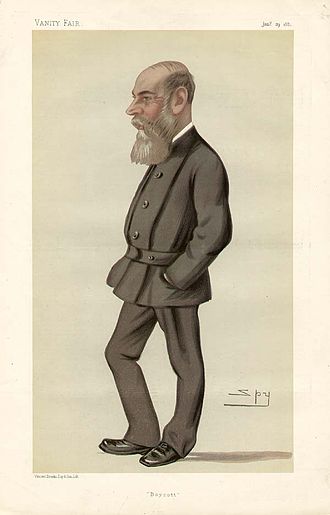
These events may not have been spoken about widely but, nonetheless, are believed to have accounted for a large number of the burnings. Today such events would be prosecuted as rape/sexual assault but, as was the case in other countries, the ruling class in those dark days considered the ‘paupers’ to have no more rights than animals. I would refer again to Capt. Boycott’s ‘divine right of masters over the servant class’, many of the same masters saw this right as absolute, with no limits whatsoever. In fact, they probably showed a lot more consideration to their horses and hounds than to their tenants.
Brexit
That many of the wealthy, propertied class in Britain seem not to have modified their old attitudes towards Ireland and its people very much, if at all, in the intervening century is best summarised by the recent comments of the Oscar-winning film producer David (Lord) Puttnam. On resigning from the House of Lords, this is what he had to say of the Tory (Conservative) government: He referred to the ‘pig ignorance displayed by many Tory MPs during Brexit negotiations on the Irish border’, citing this as a reason for his leaving politics. Puttnam, who has lived in West Cork since 1998, said he watched Tory ministers ‘malevolently twist, turn and posture in parading their prejudices during the Brexit debates’.
For all the faults of various Irish governments since 1923, and there have been many such faults, I think there would be remarkably few, if any, in the Republic who would argue that we paid a heavy price to be free of that self-justifying, truth-denying class of people. I think most Irish people would agree it was a price worth paying. The so-called values they held dear, their ‘entitlement’ to treat so abominably those they saw as ‘inferior’ to them are absolutely repugnant to those of us who never saw our forefathers as in the slightest way British, and never saw our language, our culture and heritage as in any way inferior to theirs.
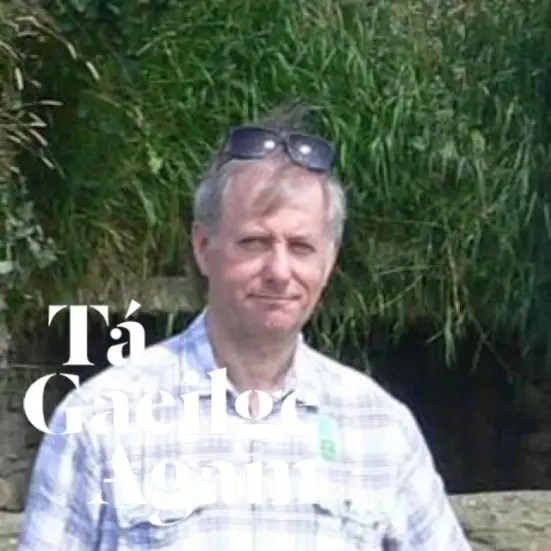
Tomás Ó Dúbhda
Tomás grew up on the Mayo/Galway border in the 1960s. He studied Archaeology, History and Irish at the University of Galway and has maintained an active interest in each of these areas throughout his life, including the derivation of placenames, the Great Famine period, and the Land Ownership question. He has been involved with a number of heritage and historical groups, attending seminars and field trips in counties Clare, Galway, Longford, Mayo, Offaly, Roscommon, Sligo and Westmeath.
 Tinteán