Interview of Patrick McGorry by Eoin Killackey
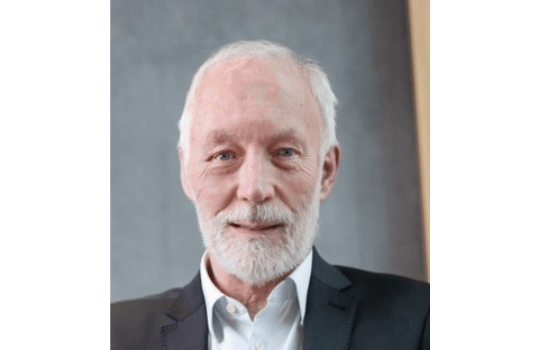
Celtic Conversations, at the Wild Geese, 28 January 2026
The former President of the Celtic Club was engagingly interviewed by a work colleague, and Celtic Club Cultural Heritage Sub-Committee member, Professor Eoin Killackey about his career
They began chatting about Patrick’s Irish heritage. The child of a mixed marriage, Patrick was born in Finglas (Dublin), and grew up in Swansea, Wales. His father was a physician treating TB, and mother a nurse. Jobs were scarce in Ireland after WWII: the choices were a job in the government, the professions, or emigration. The McGorrys chose migration, first to Wales, and when his father was offered a job in Glasgow, he brought the family to Australia when Patrick was 15. His father was reluctant to expose his children to the kind of sectarianism he had experienced in Clones (Co Monaghan).
He decided as a medical undergraduate at the University of Newcastle (NSW) that Psychiatry was his calling. Of all the sub-branches of medicine, he found it ‘mind-expanding.’ He talked about his relocation from Newcastle to Melbourne in the mid-’80s as involving a huge culture shift: the uni student who wore board-shorts and thongs had to leave his surfing culture behind him and don more formal attire.
It was a time of great change, and this interview sketched out a social history of psychiatry from the 1960s to the present. Patients who had been ‘warehoused’ in asylums were being de-institutionalised, and he found himself working in a brand new unit he had helped to set up, the Research Unit, at what had been Royal Park Hospital for the Insane (later Royal Park Psychiatric Hospital). It had been run since 1905 by the quaintly termed ‘Lunacy Department.’ The system he encountered was, he felt, a ‘recipe for hopelessness’ with patients being over-medicated. In his time, he pioneered radical treatments designed to detect the signs of psychosis at the earliest possible point, establishing community-based resources and case-based management in the community. Treating the first manifestations of mental illness, the number one disease of adolescents and young adults, became his and his team’s priority. He commented that the health system did not have the capacity to deliver for this cohort. The question was how to upscale, and develop capacity to meet the needs of some 50,000 young people in NW Melbourne. Headspace made a tentative start establishing ten centres in 2006. It would in time expand into 174 communities.
The Lancet Psychiatry Commission on youth mental health, published in 2024, would uncover 15 countries where youth mental health was in crisis, rising from 27% in 2007 to 39% in 2021. The government blamed social media, but Patrick McGorry and his colleagues felt that was a simplistic diagnosis and called for more research. Social and economic systems were fundamentally not delivering for the youth generation – with megatrends pointing to job precarity, housing, identity issues, and privatisation of services under neo-liberal and consumerist regimes. He was strongly of the view that culture plays a huge role in mental health. These young people are growing up in a harsh and precarious world, disconnected from the cycle of nature; isolation for many is endemic (and perhaps more so in the internet age); and climate change, inequality and possibly inadequate food and sleep may also be factors.
Such findings led him over 20 years ago into the political realm, advocating for youth mental health services to different levels of government. State investment is poor and, he argues, covers only 50% of unmet need, creating what he terms the ‘missing middle’ who cannot access specialist mental health care. Cancer, he commented, gets an appropriate share of research and treatment budgets; however, mental illness does not, despite the fact mental ill-health affects some 85% of the population (the results of a New Zealand study) by the age of 45.
He ended on a positive note suggesting that the stigmatisation of mental health is declining, and that has influenced for the better the treatment of depression and anxiety but noted that some psychiatric conditions remain stubborn: schizophrenia, anorexia, borderline personality disorders. He suggested that the diagnostic parameters for Autism and ADHD have become too wide, driven in part by access to self-diagnosis on the internet. There is overdiagnosis and underdiagnosis side by side in this domain.
It was a powerful talk that took a wide and optimistic view of his profession and its history: it stimulated its auditors judging by the questions fielded after it.
Professor Patrick McGorry AO is an Irish Australian Professor of Youth Mental Health at the University of Melbourne and Director of Orygen Youth Health Research.
Professor Eoin Killackey is Chief of Research and Knowledge Translation and head of the functional recovery research program at Orygen.
Report prepared by Frances Devlin-Glass, a member of the Tinteán editorial collective.

