A Book Review by Jules C McCue
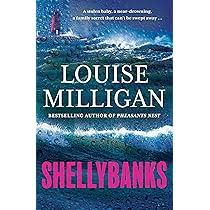
Louise Milligan, Shellybanks, Allen & Unwin, 2026, Sydney, Australia
ISBN 978 1 76147 035 6
Shellybanks is able to be read in lightning time. Fittingly, Milligan, a well-known, award-winning investigative reporter is capable of writing with clarity and ease as she is a journalist who turned fiction writer in recent years. Though three-hundred and eighty two pages, it may be possible to take a day off from heavier duties, start at eight a.m., take a light lunch and complete Milligan’s second crime fiction novel by eight p.m. the same day.
Her first book Cardinal, a controversial piece on George Pell, was withdrawn initially due to legal complexities after Pell was charged by police, later returning to bookshops. Her second book Witness (2022) analyses the criminal justice system regarding sexual assault cases. Last night on Four Corners [7/9/26] I recognized the author, again using her expert skill to expose yet another chapter of the Christian Brother’s ongoing legal saga in dealing with the expansive sexual and violent abuse crimes some of their brethren inflicted on a large cohort of young people in whose care they were entrusted. It seems they have run out of money needed to compensate their victims for these heinous crimes. It also appears that they may be forced to sell real estate assets and lower lifestyle expectations.
Milligan must be admired for her dedication and determination to relentlessly expose these wrongs, as this work drains the mind and soul. Nonetheless, her last two books consist of narratives explicitly exposing violent and sexual crimes towards women. I have not read Pheasant’s Nest (2024) but it recalls the dreadful tragedy of young Jill Meagher’s abduction and violent death in 2012. This book begins in Melbourne and ends in NSW; the main character is a journalist who transforms into the narrator of the following book, Shellybanks, a type of sequel to Pheasant’s Nest. It is clear that Milligan is familiar with parts of Ireland, Dublin and especially the Ringsend – Dodder area of the city’s shoreline. In fact, she was born there and left when six-years of age. More recently she returned for a pre-writing immersion, when she re-acquainted herself with people and places to furnish details of her latest, expository narrative.
Accordingly, in keeping with her noble objective to expose crimes of violence and sexual abuse perpetrated through the institution of the Catholic Church and others, Milligan maintains a parallel career in journalism and fiction writing. In Shellybanks, the main character Kate, a journalist, finds herself facilitating her much-loved Dublin aunty, after her soon-to-be husband dies suddenly of natural causes. The middle-aged aunty has been single all of her life and this last disappointment is one of many as Kate is to find out when she arrives in Dublin, cutting short a holiday in the Greek Islands. From here, the story becomes a crime novel, and this time, like the monstrous machinations of the Magdalen Laundries, it is women who are the perpetrators of sexual abuse, violence, kid-napping, baby-stealing, enslavement and other misdeeds and crimes. Of course, being set in the nineteen sixties and seventies, there are powerful men such as doctors and priests within the hierarchy of the Catholic community, lurking in the background, enabling and facilitating these criminal, sadistic, religious fanatics.
The perpetrators of abuse in Shellybanks, a particular religious organization, may be known to Irish people but we in Australia are less aware of these manipulative deviates, like the nuns in the laundries, who over years have also destroyed many lives. Louise Milligan has cleverly exploited her expertise as an investigative reporter to find the narrative, but has also derived much information from family members and a wider group of knowledgeable people.
Painful as the reality is, it is right that these crimes are being revealed and dealt with and that journalists like Milligan are working hard to ensure the stories reach a broad audience, a feat she achieves both managing to entertain and inform through creative literary techniques. It is a page-turner and I suspect only her fourth of many literary investigations supporting the upturning of aspects of a patriarchal world order of individuals, institutions and organizations like The Church.
Jules McCue is a Wollongong based artist, musician, writer, teacher, and independent researcher. She is a regular contributor to Tinteán over a wide range of topics
 Tinteán