by Dymphna Lonergan

‘How do you say ‘Hello’ in Irish?’ a new student recently asked in my class. A ‘new’ student, but one who had learned Irish in primary and secondary school in Ireland and had not maintained her Irish over the past forty years. While I always assure those who are returning to Irish that the language is still there, merely ‘sleeping’ and will come back quite quickly if they put the work in, there have been changes in recent times that they will need to get to know, the most fundamental being how Irish speakers say ‘hello’ outside of the grammar books.
Dia duit/Haigh/Heileo
The Irish language is noteworthy in using religious terms for greetings: Dia duit ‘God with you’ is responded to by Dia is Muire Duit ‘God and Mary with you.’ The latter response is not as prevalent nowadays). The Dia duit form is still taught as a greeting; however, there are changes in colloquial speech to a new form of greeting that mimics English ‘Hello’ Heileo. A third greeting is the word Haigh coming from the English word Hi. I have used Haigh myself at the start of casual emails.
Hello as greeting
Heileo is also offered as an Irish word for Hello in Foras na Gaeilge’s online dictionary https://www.focloir.ie/en when used as a ‘greeting.’ The aforementioned Dia duit is also offered, but in second place. Haigh is cited as especially US as an informal greeting for hey or hi.
Hello as call
Heileo is also offered as the term for an is anyone-there type query. The word Haigh is in second place.
The replacement of religious terms by lay terms is the subject of a Tuairisc article by Antain MacLoclainn who sees these changes as representing changes in attitude. In the case of Ireland, what used to be ainm baiste, ‘baptismal name’, as a requirement on a form is now céad ainm ‘first name’; and the greetings Haigh and Heileo appear to be outpacing Dia Duit. See https://tuairisc.ie/dibirt-de-fagfaidh-conspoidi-creidimh-a-lorg-ar-an-ghaeilge/ for full article. (If you right-click you can get an English translation).
So, with all these changes, which term should someone who has learned Irish many years ago adopt now? For questions such as this, I go to https://www.gaois.ie and its National Corpus of Irish database. This Corpus is a collection of written and spoken texts ‘…that span the 2000-2024 period with the intention of being representative of contemporary Irish.’ Here I find numbers for the occurrences of terms for ‘hello’ in Irish in this century: 752 Dia duit, 669 Haigh, and 210 Heileo. The religion-based Dia duit wins out, but Haigh is not far behind.
When Alexander Graham Bell invented the telephone, he used the term Ahoy as an introduction to a phone call. Contemporary inventor Thomas Edison preferred hello, perhaps because it had been used already as a greeting (Hallo the house) in rural US as an alert to the occupants on approaching a house. By contrast, Graham Bell’s Ahoy has had a nautical association since ship ahoy was first recorded in 1811 (Oxford English Dictionary). Despite Bell’s advantage in being the inventor of the telephone and continuing to use Ahoy, Edison’s Hello won out, and by 1883 the term Hello Girl was applied to a female operator in a telephone exchange.
So, my answer to the returning-to-Irish student as to which term to use for a greeting in Irish is both Dia duit and Haigh. As for those new to the language, Dia duit is unlikely to be replaced in language learning texts any time soon, and it will be some time before you come across Haigh. As for Heileo, looking again at those numbers in Gaois, it is very much an also ran and may quickly go the way of Ahoy.
The curious origin of the word playboy
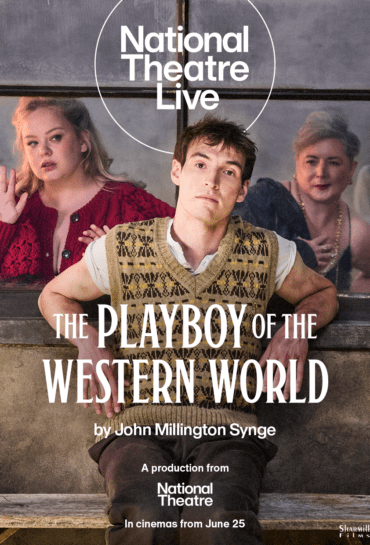
The National Theatre’s live-filmed stage production of The Playboy of the Western World has been screening in cinemas across Australia. The play tells the story of a young man named Christy Mahon who is on the run for allegedly killing his father. Instead of being horrified, the locals welcome him, especially Pegeen Mike whose family shebeen Christy stumbles into and beguiles her with his tale of patricide. On hearing his story, she exclaims, ‘You’re the walking playboy of the western world.’
This word playboy was heard by Dublin audiences for the first time at the Abbey Theatre on January 26, 1907 in John Millington Synge’s play The Playboy of the Western World. The ‘riots’ following this production’ were a reaction to the depiction of the rural Irish as drunken, ignorant, and promiscuous.
Synge was famously advised by W. B. Yeats to go to the west of Ireland and listen to and take notes of how the people spoke English. It is not clear if the people Synge listened to used the term ‘playboy.’ It is not a word found in collections such as P.W. Joyce’s English as we speak it in Ireland (1910) or Diarmaid Ó Muirithe’s A Dictionary of Anglo-Irish (1996) or Terence Patrick Nolan’s A Dictionary of Hiberno-English (1998). Today, the word playboy is likely to be associated with Hugh Heffner and his magazine Playboy depicting a ‘men’s lifestyle’ that is a far cry from the ‘walking playboy’ of John Millington Synge’s play. So, why do we not hear the word playboy in the English of Ireland anymore, and was it ever in common use?
The Oxford English Dictionary cites as a first use of playboy in Synge’s sense of the word in 1828: The pretty Syl repeatedly told him that he was ‘a funny gentleman’ and ‘a great play-boy’ from Limerick-born playwright Gerald Griffin’s play The Collegians.
The next citation of playboy is Synge’s use in 1907: ‘You’re the walking playboy of the western world.’
Christy Mahon is the ‘playboy’ in the drama. The Oxford English Dictionary in discussing the word playboy cites it as ‘Originally Irish English’ to describe
‘…usually a wealthy man, who leads a life of pleasure, esp. one who behaves irresponsibly or is sexually promiscuous.’
Christy Mahon boasts about having killed his father, but he is not wealthy. He is on the run from the ‘peelers’ and takes advantage of the women’s interest in him in order to avoid capture. It is not clear what playboy means in the drama and it is not clear that playboy was used regularly in the English of the west of Ireland at that time. Why then did Synge use this word for his protagonist? The answer might lie in the Irish language term buachaill báire.
Foras na Gaeilge’s online Irish English dictionary Foclóir.ie describes a buachaill báire as [in translation] a contemptuous term for someone who is talented and successful, especially in business, but not to be trusted. The site’s ‘reverse search’ option provides buachaill báire for the word Playboy. If we then go to Niall Ó Dónaill’s Foclóir Gaeilge Béarla (1977) and look at the word buachaill, we find as a first definition ‘boy’ and a fourth definition ‘Lad, boyo. ~ báire, playboy, trickster. Under báire, is ‘a match/contest, second ‘a hurling match’, third ‘a goal’, and a phrase ag imirt a bháire baoise ‘sowing his wild oats (the word baois is ‘folly’).
In Irish English today, the words lad and boyo would be the equivalent of Synge’s use of the word playboy, meaning foolish and irresponsible. But Pegeen Mike’s cry at the end of the play that she has lost ‘the only playboy of the western world’ is a lament for a strong and bold man, probably good at hurling, who may be sowing his wild oats but who arrived one day to her shebeen and could possibly take her away from this place. Her ‘playboy’ is more a buachaill báire than a mere lad or boyo.
Dymphna is a member of the Tinteán editorial team, a retired academic from Flinders university, and an ongoing Irish language teacher in Adelaide and at the Australian daonscoileanna.

