Kathleen is Here, written and directed by Eva Birthistle
A film review by Mandy Maroney
What does the future hold when the past is all you’ve got?
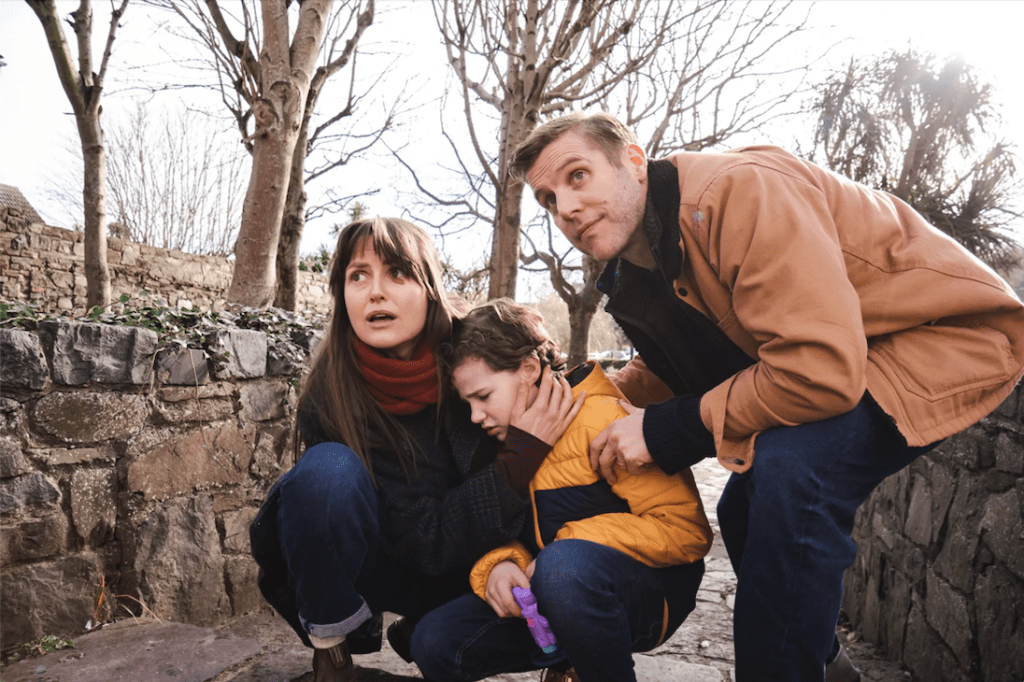
It appears Kathleen has a second chance in life after a difficult start in this new drama. After her mother dies, the eighteen-year-old has inherited a house in a coastal Irish town and can leave foster care and return home. Her social worker Damian tells her she’s been given a great opportunity, ‘more than most’ and it’s time to be a grown up now.
On his suggestion, she gets a job as a shelf stacker and is befriended by fellow worker Yvonne, who is confident, street-smart, everything Kathleen isn’t.
From the first frame, when Kathleen literally misses the bus, we know it’s not going to be an easy journey. Kathleen has a short fuse and tends to rub people up the wrong way. The girls are drawn to celebrity culture in the gossip mags on their shelves and the social media on their phones, and Kathleen’s talent at aping her idols hints that she’s acting her way through life. Her dreams of opening her own beauty salon may look like ambition but the disconnect between the facts of Kathleen’s life and the one she projects suggests she has a hard time accepting reality.
The return to her childhood home is fraught. Golden memories of her mother playing with her on the sand dunes are contrasted with shots of bleak suburbia, thanks to the work of Irish born cinematographer Burschi Wojnar. Sleeping in her narrow childhood bed recalls happy memories of spooning with her mother but bad memories are also sparked. Kathleen hates the expression ‘fresh start’; as she puts it ‘doesn’t matter where you go, it’s still shit’.
When Kathleen meets Dee, who has just moved in across the road with her husband and young son, it looks like an opportunity to make meaningful connections. Dee is friendly and they look like the perfect family. But as the two get closer and Kathleen is drawn into the family circle, tension builds. Kathleen is volatile and doesn’t seem to foresee consequences. Is she really going to sabotage the most meaningful relationship she has?
Director Eve Birthistle, who played sister Ursula in Bad Sisters, is a seasoned and accomplished actress and it’s no surprise that her first feature film debut is characterised by strong acting. The title character is played by Hazel Doupe, who won best support actor for her portrayal of the younger Price sister in the drama about the Troubles, Say Nothing. She conveys the vulnerability and at the same time danger in Kathleen’s childlike naivety and brittle anger.
Clare Dunne, who plays the kind and maternal Dee, is also a talented actress and a familiar face on Irish screens, part of the core cast in TV drama Kin. Suffering from her own troubled past, Clare recognises the emptiness at Kathleen’s heart, observing of her legacy that ‘an empty house is not a home.’
Psychological pressures escalate, leading the characters into a cat and mouse game but the strength of the story is that throughout all the conflict our sympathies stay with Kathleen, who only ever wanted love and acknowledgement.
Stills courtesy of the Irish Film Festival
Mandy Maroney is a Melbourne writer and lover of all things Irish since she lived in Dublin in the late 80s
A Want in Her, written and directed by Myrid Carten
A film review by Isla Sutherland
A dark, intimate, and devastatingly honest account of intergenerational illness, madness, addiction.
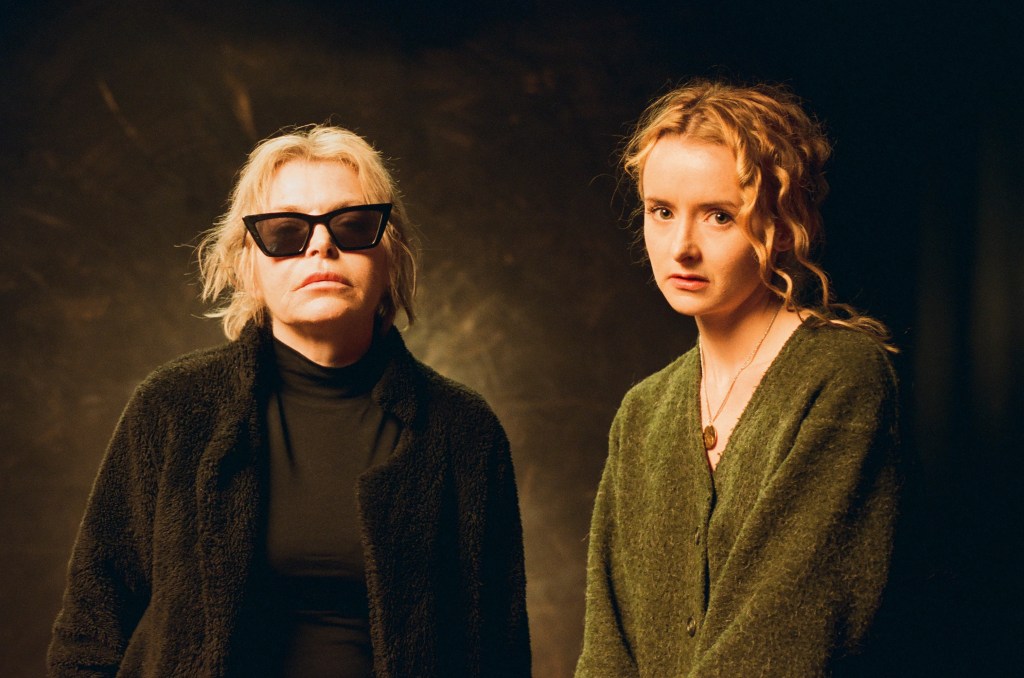
Documentary filmmaker Myrid Carten’s profoundly personal debut feature, A Want in Her, is an autobiographical account of the filmmaker’s relationship with her mentally unstable, alcoholic mother.
Carten is brought back to Ireland following her mother’s disappearance – an occurrence we quickly learn not to be uncommon, as the story unfolds to reveal Nuala’s repeated struggles with alcohol, mental instability, and institutionalisation.
The documentary is led by Carten’s resolute hand in a warts-and-all account of her family dysfunction. From the opening scenes, tragedy and ruin perforate the exchanges as we are introduced to her uncles, Kevin – the sole inheritor of the family home – and Danny – himself a veteran of addiction and illness – who inhabits a derelict mobile home at the bottom of garden. Fractures begin to appear, punctuated with drink, resentment, and despair.
Phone messages and conversations serve as plot devices to infill narrative context, from calls from the authorities to desperate messages left in Carten’s voicemail. ‘A lot happened with the family and the house when [Granny] died,’ we hear Carten explain to Danny’s sectioning officer, alluding to a potentially crucial event in their family’s disintegration.
When we first meet Nuala, in the passenger seat of Carten’s car as she collects her from a rehabilitation facility, her eyes are glazed and her speech is slurred. The mother-daughter relationship is the heart of this film, where the roles are too often reversed to devastating effect. ‘There’s nothing you could do that would make me turn my back on you,’ Nuala insists, although the burden of loyalty has starkly fallen disproportionately with Carten.
From inserts of archival footage from an interview a with Gaelic TV channel, we understand that Nuala had been a successful social worker and manager of a woman’s centre for survivors of domestic violence. Her descent into self-destruction and addiction is all the more confronting in light of her former post.
In moments of profound lucidity, Nuala articulates what it means for her to have mental illness: ‘Sometimes I think I’m learning something no one else is getting,’ Nuala says. ‘And then other times I feel it’s just bullshit; I just went mad.’
Present scenes are interspersed with flashbacks to Carten’s teenage camcorder experiments, revealing raw moments of art imitating life. Two young girls are parodying the dysfunctional behaviours of the adults around them – once in a possible recreation of an exchange between Nuala and herself – with verbal jabs turning into physical blows.
The camera work is unflinching, with Carten going so far as to film her mother slumped over on a public bench during one of her benders, before turning and walking away. It’s oftentimes hard watching, but the bleak cinematography, set against a backdrop of dirty dishes and cigarette smoke, yields great depth and intimacy, lifted by moments of beauty and fragility.
It’s clear filmmaking has served as an outlet for Carten throughout her life, with the camera playing a self-referential role throughout the feature. The documentary becomes an attempt to better understand her mother, and in doing so, herself. ‘Why is Mammy the way that she is then?’ Carten at one point asks her uncle Danny. ‘It’s in the genes,’ Danny says. ‘It’s in the genes. It’s an allergy.’
The dialogue is incidentally profound, meticulously organised by a skilled hand to create a resolved composition of depth and substance. Casting back to her opening scene, Nuala’s apparently incoherent ramblings take on an edge of significance, perhaps alluding to the asphyxiating struggle that has afflicted the generations in their family. ‘It’s all under sands,’ we hear her say to Carten. ‘Maureen, Danny, your granny…’
The shaky camera work at times feels like a horror movie, which is perhaps not a miscategorisation given some of the themes of cyclical neglect and domestic trauma, and the chronology is jumbled, indicative of the disorienting but cyclical nature of addiction.
Some shots feel a bit on the experimental, only sometimes verging on the heavy-handed; the recreated vignettes of her mother’s wayward wanderings could have felt trite and melodramatic, if it weren’t for the endearing petulance in Carten’s tone as she attempts to direct Nuala. Some of the jankier camera work reclaims a sense of Carten’s youthful naivety that is lost in her mothering role, reminding the viewer of the tragic unfairness of caring for a parent with addiction.
Through episodes of seething bitterness, evasion and finger-pointing, it is the filmmaker’s voice cuts through with incisive clarity: ‘We are powerless,’ says Carten to her uncle Kevin. ‘Nobody can stop her from drinking. She has to do it herself… I cannot take responsibility for saving her. She doesn’t want to be saved.’
Ultimately, it is a story about the inescapable bonds and burdens of family, and the cathartic potential of returning home to confront your ghosts. It’s a bold, courageous and incredibly affecting example of documentary making at its rawest and most personal.
Stills courtesy of the Irish Film Festival
Bring Them Down, directed by Christoper Andrew
A film review by Isla Sutherland
A brooding, bloody and biblical caution against jealousy, vengeance and masculine hubris
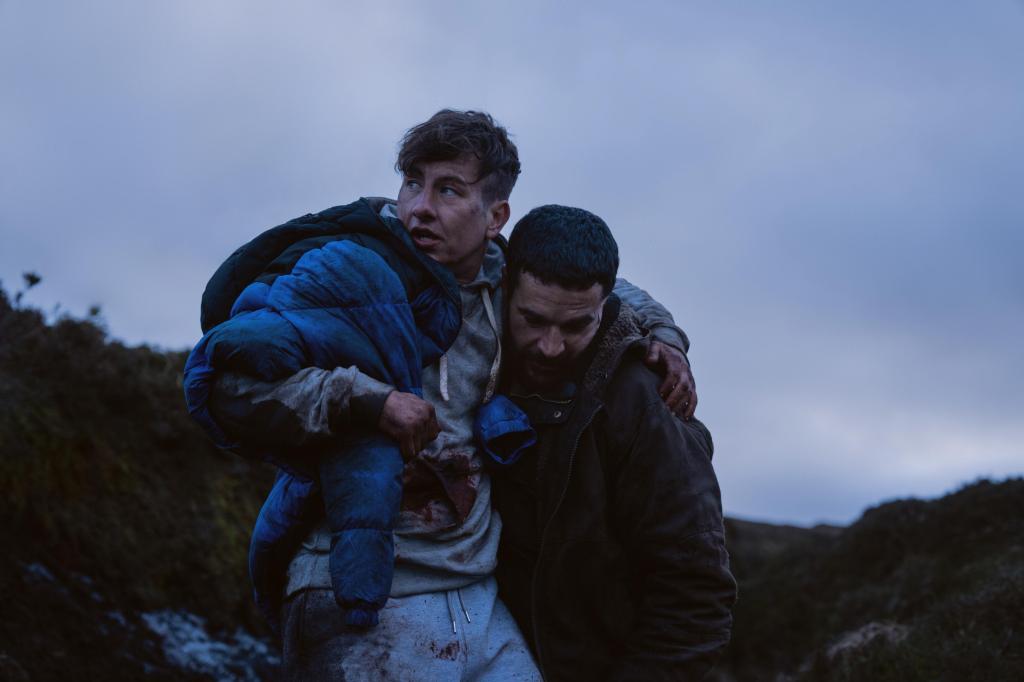
Bring Them Down (2024) is Christopher Andrews’s debut feature starring Christopher Abbott and Barry Keoghan in a harsh-but-earthy depiction of Irish rural life. Set in Connemara, the film centres around a decades-long feud between two neighbouring shepherd families, the O’Sheas and Keeleys.
The story follows Michael O’Shea, who subsists with the gnawing guilt of a reckless adolescent incident that led to the death of his mother and permanent disfigurement of his then-girlfriend, Caroline. His penance assumes the form of his infirm and emotionally abusive father, Ray, whom he lives with and cares for.
Sharing grazing land in the Connemara highlands, the two families protect their grievances at all costs, their conflict fuelled by bitterness, envy, and financial desperation – further complicated by Keeley’s marriage to Michael’s childhood sweetheart (the same one he left permanently maimed).
Keoghan plays Keeley’s son – a disturbed, reckless adolescent-type that won’t be unfamiliar to Keoghan fans. Jack Keeley kickstarts the escalation the festering family tensions by stealing two of the O’Sheas’ rams at the beginning of the film. Keoghan relies on his youthful vitality and childish idiosyncrasies to play a character likely half his real age, although in this case it’s not quite enough to suspend disbelief.
It’s a relatively quiet film, but for the soundtrack: an original instrumental score by Hannah Peel, which is both brooding and spectral, charged with a tense percussive beat that infuses scenes of spectacular Irish scenery with deep intensity and suspense.
There’s tension between tradition and modernisation, with the “old ways” embodied by the senior O’Shea (“We haven’t brought animals down for five hundred years,” Ray protests against Michael’s insistence that they bring the flock down for the winter), while the Keeleys symbolise change, good or otherwise (Keeley is developing his property for vacation homes – a move that Ray bitterly describes as “diversifying”).
The film takes place in both English and Irish language (American Abbott reportedly learnt Gaelic for the film), which further exacerbates inter-family tensions (Gary and Jack Keeley don’t speak Gaelic).
The tale explores themes of patriarchal violence, intergenerational trauma, and masculine hubris. It’s a familiar story – with aspects of even the biblical – and a salutary warning of the bloody repercussions of revenge and resentment. It’s a deliberate and potent first feature for Andrews, but not one for the fainthearted.
Stills courtesy of the Irish Film Festival
Isla is a content and communications specialist for a global architecture and design firm. Her expertise includes writing for print and digital genres. She is a member of the Celtic Club’s (Melbourne) Cultural and Heritage Sub-Committee, passionate about preserving Celtic cultures and traditions.
Fran the Man, directed by Stephen Bradley; written by Richie Conroy. Starring: Darrah Humphreys, Ardal O’Hanlon, Amy Huberman
Part of the Irish Film Festival, playing at cinemas around Australia and online during October 2025
A film review by Steve Carey
When an Irish football club becomes embroiled in an international match-fixing scandal, their…
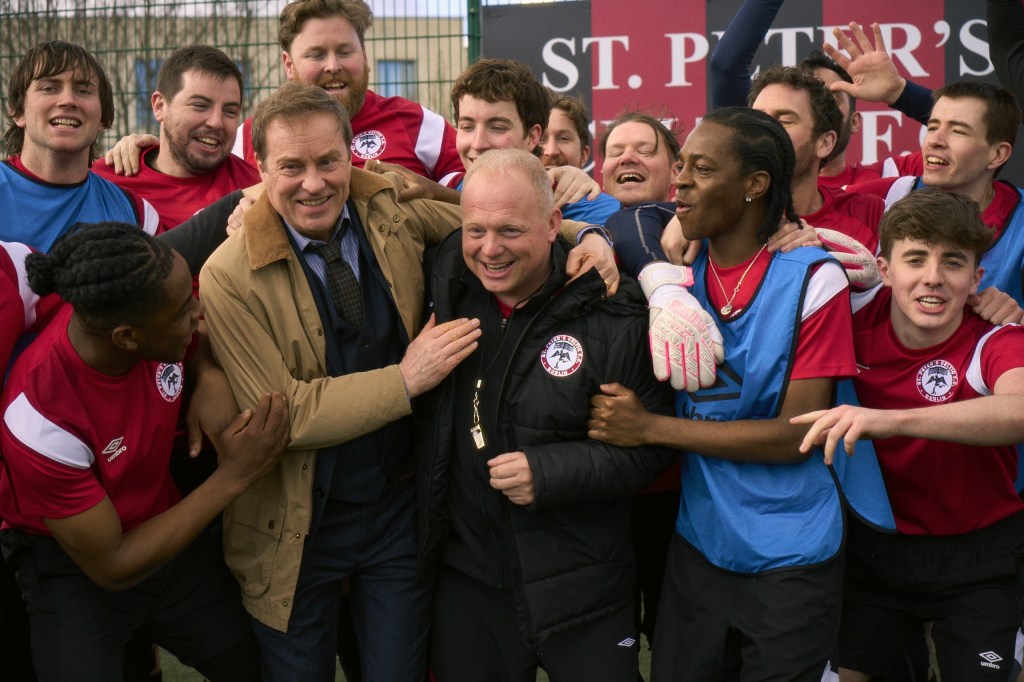
It’s OK: relax, no hankies required. Unlike many independent movies from Ireland in recent years, this is a gentle, low-key and amusing film. Fran the Man, a spin-off from a TV series from fifteen years ago, adopts the well-worn trope of a documentary crew following a character and their social environment – The Office, Parks and Recreation, Spinal Tap, Best in Show, A Mighty Wind. In this case it’s Fran Costello (Darrah Humphreys), Assistant Manager of St Peter’s United, who finds himself in the spotlight when his tiny Leinster club come up against mighty Shamrock Rovers. Gambling criminals from around the world target the match, which attracts the police and just about gives the ‘documentary’ something to get its teeth into.
In truth the film crew conceit falls apart on a moment’s reflection, but it does its job well enough (including enabling the climactic match, too expensive to shoot, to happen offscreen). Characters are lightly sketched, in particular Ardal O’Hanlon’s club owner, who exists only as long as he’s in shot, and it’s refreshing I suppose to see Dublin teenagers who aren’t mugging or dealing drugs but instead love their football and hate their homework, but as a result the stakes never feel particularly high. Even when Fran makes a similar sacrifice to Rocky Sullivan (The Dead End Kids, 1938), the price he pays is more than compensated for both romantically and professionally.
But that’s all to say that there’s absolutely a place for film that doesn’t require gritted teeth and that passes a pleasant ninety minutes.
Stills courtesy of the Irish Film Festival
Steve is Treasurer of Bloomsday in Melbourne. His play, Samuel Beckett and The Rainbow Girl, staged at St Martins, South Yarra, in June 2024, covers the time Beckett spent in Paris with James Joyce and his daughter Lucia.
Housewife of the Year, written and directed by Ciarán Cassidy, produced by Little Wing Films, 2024.
This documentary flirts with being a mockumentary or a faux documentary, but functions better as a critique of a social institution that even in its earliest days was being questioned by some of its diffident young participants, and ever more so as they became older. It typically counterpoints the winners with their older selves. But there is much sadness to be found in their growing realisations of the traps enacted by huge families, poverty, unreliable sodden husbands, husbands who abscond to Alaska without notice, neglecting to provide financial assistance for the mother and her large brood. The past is a different country.
It was a competition that some years boasted 1000 entrants annually, and featured women from different classes and of different ages. In its hey-day, Gay Byrne would host it, and garner bigger audiences for the annual event. His range of jokes and gestures (like pretending to listen to embryonic child number seven), would never be tolerated today. He played it for genial laughs, and basked in the admiration of the women and his audiences, but would in the end scuttle the show in the late ’nineties, after a brief experiment of allowing homemakers (male) to participate.
There’s some fun to be had at the expense of the criteria by which they were judged: it takes the form not of a beauty pageant, but the women had to demonstrate their ability to cook a ‘simple meal’ and to budget. ‘Sincerity, a sense of humour and civic-mindedness’ were lesser requirements but presumably used to discriminate. We are treated to grainy footage of such dishes as ‘Banana Surprise with Luscious Meringue and Cherries’.
Awkward body language was often endearing but also sad for this viewer. Some contestants, right from the start were asking themselves ‘why did we do that?’ and others wondered in middle age: ‘it seems alien now, but it was huge’. An early contestant eloquently and pointedly commented: ‘the more downtrodden you are, the more afraid you are, the more apathy you have, the more you will support the establishment’. She had the effrontery moreover, in the presence of a pompous cleric, to question St Paul authority to define women’s place in society.
It was a source of recognition and mirth for the audience when Gay Byrne presented the kids in big families popping up from behind a couch, often in matching outfits. Or sometimes, if there was a gap of a year or two in the production line (the woman’s declared preference), he would query why, to the obvious satisfaction of his audience who numbered young women alongside cheer squads of older women. This was to embed and normalise the government regime of keeping women at home. Often, the money did not stretch, and one woman farmed 450 turkeys for Christmas (down to their chiropody) for little return. There was, for her, no remission of the housework.
There were heart-breaking stories of loss of control, too: Ellen was punished for taking photos of her friends swimming in Waterford and the pharmacist who developed them reported her to the priest who had her installed in a ‘Magdalen Asylum’; and there are accounts of boredom, of ‘doing things that did not really need doing’ and images of soda breads lined up in dozen lots. Economising on the Calor gas-bills? Sometimes good graphics were available to spice up the imagery of women in their finalist sashes, but not often enough for this viewer.
This documentary is useful social commentary on the huge changes that have happened in just a few decades in Ireland since the ’fifties and more rapidly since the ’nineties. I found myself heartened by the perhaps 10% of the women who were critical of the church that underwrote and enforced the government policies. These changes were signalled by two divorce referenda, the challenges by the nascent second-wave Women’s Liberation movement (which took many shapes in Ireland as Evelyn Conlon and Rebecca Pelan have recently documented), allusions to the contraception train stunt, and the rise and rise of Mary Robinson, which would eventually signal the end of embedding housewifery as a compulsory state for married women, and a national programme. These are pictorially and quickly alluded to but not well explained for the viewer outside Ireland.
It’s not the best documentary I’ve seen but it gives many opportunities for nostalgic recall of the days, if not of kitchen goddesses, then of the batallions of women who produced cricket teams of children and baked, sewed and knitted on a daily basis.
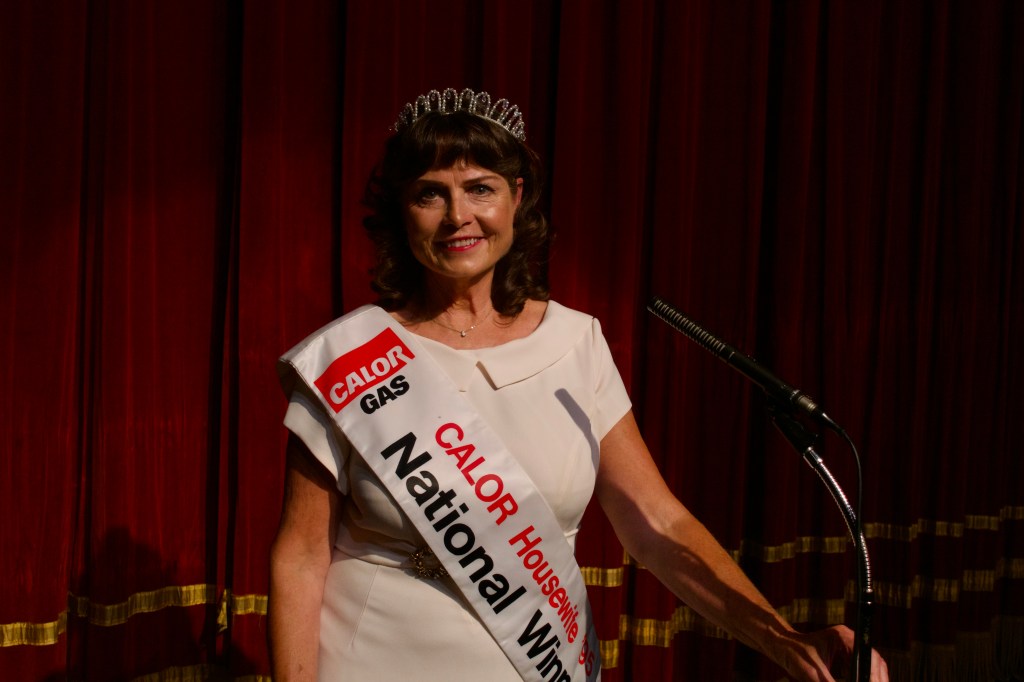
Frances Devlin-Glass
Frances is a member of the Tinteán editorial collective.
Froggie, directed by the Morgan Brothers
A film review by Dan Boyle
Brothers Fiachra and Tadgh peaked at the age of seven when they appeared on national TV singing…
Creator of Muppets, Jim Henson, has a lot to answer for. Generations of impressionable children have been beguiled by his bizarrely cute puppetry as children’s television entertainment for the last fifty or so years, espousing a simple-minded optimism and the unshakeable belief that everything will work out for the best eventually.
The creative team of Froggie featured at the IFF are two brothers. Luke and Jake Morgan joining the list of brotherly film creatives such as the Coen, Farrelly and Duffer Brothers. Co-writer director, Luke and co-writer and composer, Jake present their version of the feelgood comedy with an unlikely premise. Froggie switches at will between subtitled Gaelic and English
Brashly delivering a plot that could have been dreamed up by Martin McDonagh of Seven Pychopaths renown, two brothers, Fiachra (Sean T. O’ Meallaigh) and Tadgh (Georoid Kavanagh) Fitzgerald, who at the age of nine and six respectively became a sensation on a local TV Talent Show in their native Galway with an act featuring a soft cloth puppet named Froggie which spoke and sang in a muppet like accent and attempted to rivet a children’s audience with a sweetly innocent message of ‘following your dream’.
Froggie commences 25 years later, and the showbiz dream has long since become tattered, and the brother’s act is about to be cancelled due to a perceived lack of Woke. The Fitzgerald brothers also haven’t worn well. The elder Fiachra, a scruffy obsessive creative has been reduced to living in a shipping container in a storage facility and the younger Tadgh, who is more conservative and is feeling the pull of a respectable job and marriage. Time to face the fact that the show biz dream is over.
The brothers bicker and tussle and younger brother, Tadgh, sick of his longtime side kick role, hatches a scheme to make Froggie a social media sensation. There are a series of unlikely plot twists. Mephistopheles appears in the form of a gormless but ruthless producer (Paul Oakley Stovell)) who smells a property to monetise. The idea of following your show biz dream resonates with a kindly solicitor (Lucy Evans) who attempts to rescue the hopeless dreamer and original creator of; Froggie, Fiachra from his downward spiral.
But the rules of feelgood comedy must be observed. Everything must be put to rights before the end credits roll. Yes, indeed, everything does work out for the best eventually! Froggie reels along at a cracking pace. All in all, a thoroughly entertaining joyride of a film.
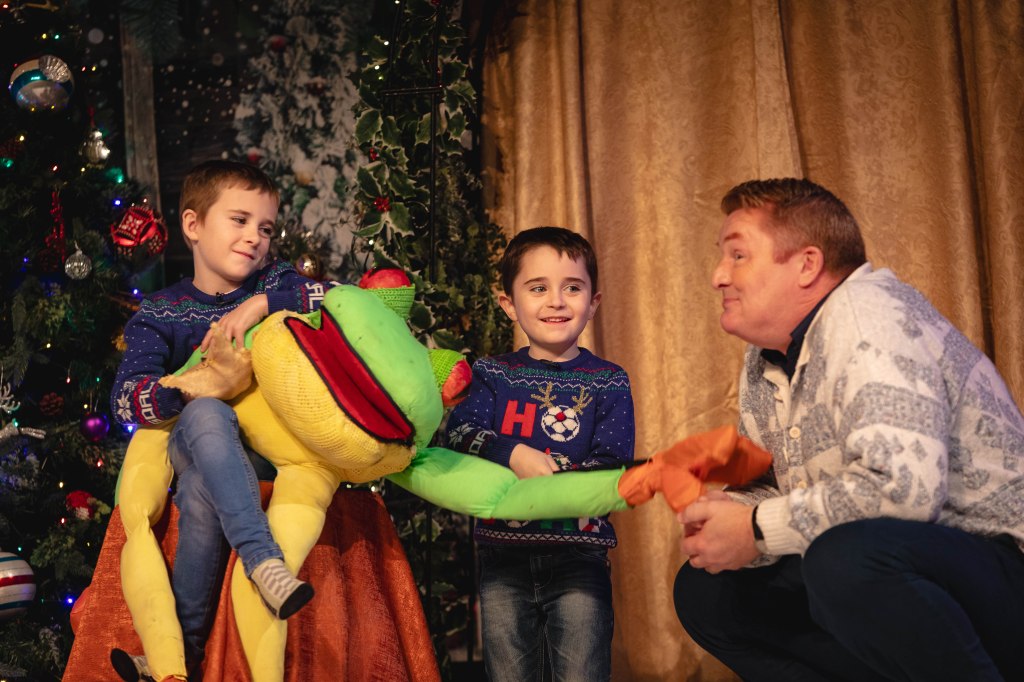
Stills courtesy of the Irish Film Festival
Fidil Ghorm (The blue fiddle), directed by Anne McCabe
A film review by Dan Boyle
A beautiful, contemporary Irish-language movie, FIDIL GHORM is one for all of the family…
There’s something magical going on at the Tir Na nOg rehab facility. Gruff sea dog Malachy, grieving the loss of his wife has a broken and ailing heart and is perhaps embittered that his prowess with the Irish fiddle has not received the earthly reward his thinks it deserves. Malachy is played by great actor Barry McGovern with his magic cello voice. The Bloomsday in Melbourne people know him through his magnificent Naxos recording as narrator of Finnegans Wake.
We are introduced to young Molly (Edith Lawlor) who is still reeling from a family tragedy. Her father Ruraic (Aindrias De Staic) has been sent to the Tir Na nOg in a coma caused by a car accident which also traumatised Molly’s younger brother Jack( Ruadham O Flatharta) into muteness. Molly hears Malachy play his blue fiddle (Fidil Ghorm) and experiences the childish fancy that Malachy is some sort of druid with the power of healing magic in his great playing. Molly is processing her family’s tragedy by leaning heavily into Irish folk lore.
Screenwriter Patricia Forde has written a script which owes something to children’s classic Heidi. Instead of the Swiss Alps we have the breathtaking views of the Donegal coast at Rathmullen. Cinematography by Ronan Fox. Molly’s simple goodness and determination rescues the grand father figure Malachy from his end of life despair. Molly inveigles Malachy to teach her play the fiddle. This is key. Malachy realises that music is a gift that must be passed on to the next generation. Molly believes that Malachy magical playing can awaken her father from his coma. In Irish folklore, the use of magic was a devil’s bargain that came with a ghastly price. Who will pay it?
Patricia Forde’s script alludes freely to Irish folklore. Characters Niamh (Sarah Jane Scott) dedicated rehab nurse and Oisin (Marcus Lamb) dedicated son, hover about. Having improved enough on the fiddle to compete at a festival, Molly convinces Malachy to take her and her brother Jack across the water to the Knockbally Music Festival. Tir Na nOg is the land of eternal youth. The Irish hero leaving the realm faced a dreadful consequence. Heart patient Malachy faces a similar fate.
Fidil ghorm despite the fantastical conceits is sensibly directed by Anne Mc Cabe and avoids the potential for too much sentimentality. It moves freely between subtitled English and Gaelic. Strong performances from the parents Laura (Siobhan O’Kelly and Ruraic (Aindrias De Staic). Fidil Ghorm was awarded best film for children by children at the European Children’s Film Award at the Schlingel Festival in Germany. The children have spoken This reviewer will be hushed.
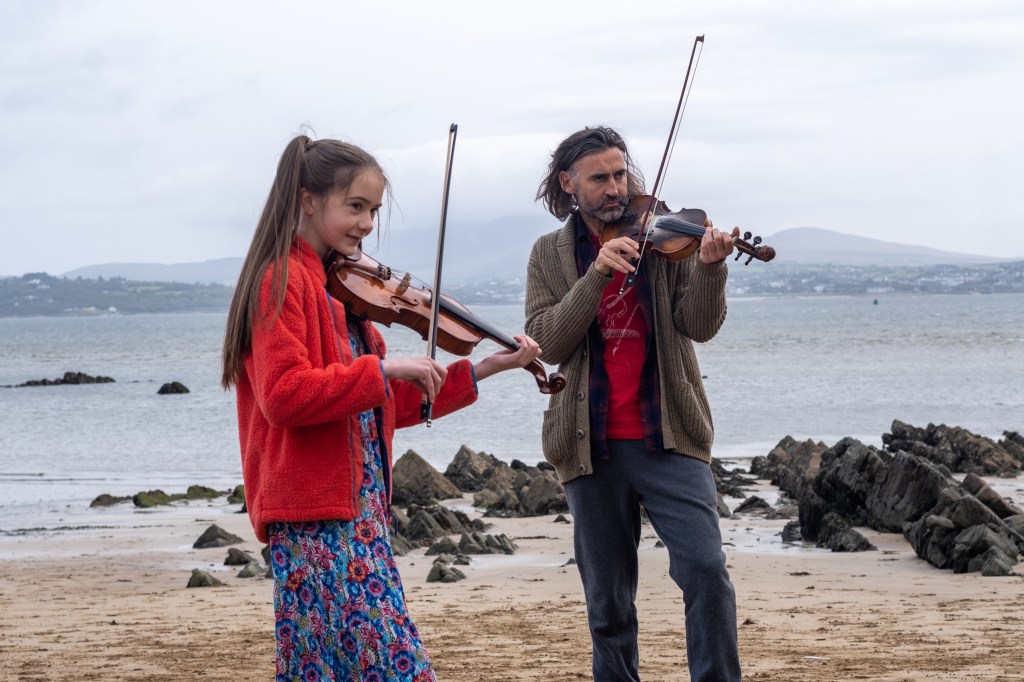
Stills courtesy of the Irish Film Festival
Daniel Boyle is a Melbourne actor/performer/ director who has done everything from Shakespeare to the Broadway musical.
David Keenan:Focla ar Chanbhás/Words on Canvas, Tua Films, Director Paddy Hayes, Cinematographer Colm Hogan
In January 2024, Irish musician and songwriter David Keenan was interviewed in Australia by Andrew Ford for the ABC’s ‘The Music Show’. Now Australian audiences can see the musician in the documentary David Keenan:Focla ar Chanbhás/Words on Canvas as part of the touring Irish Film Festival.
The purpose of the documentary is to explore Keenan’s return to album-making since 2021 and his ‘phenomenal debut’ when he was ar mhuin na muice on the pig’s back’. He had been likened to Tim Buckley, Brendan Behan, Patrick Kavanagh, Dylan, Anthony Cronin, and Jack Kerouk, which he found burdensome, ultimately, as is often the case for those who achieve fame quickly. At its heady height, though, he felt like ‘a dog with two tails.’
Through a series of one-on-one chats with family members and other musicians and a return to his hometown Dundalk, we learn about Keenan’s early development as a musician coming from a disadvantaged suburb where you address could lock you out of the job market, with family dysfunction that drove him out on the streets until rescued by an uncle who took him in and introduced him to literature and music. The return to Dundalk has been ‘an unravelling, and letting go.’ He has found out that a real artist does not need to be trom agus dáiríre, heavy and serious.
At the same time, making money from music is not easy. Keenan ruefully explains that what he makes from his Spotify license and agreement ‘keeps his moustache waxed’, but acknowledges that it helps with exposure. The real money comes from live concerts, but that leads to the dilemma of making new music to keep the concerts fresh and the creative time neeed to do that.
Although calling himself an ‘introvert’, Keenan has had many supporters in his development as a person, an artist, and a songwriter. Featured in the documentary are Megan Nic Ruaraí, Jinx Lennan, Neil Watters, Conor Cunningham, Seamas Hyland, Paul Baldwin, and Liam Ó Maonlaí among others, along with his páirtí partner Evanne Kilgannon who found Keenan when he was ‘a rudderless kite’ and she offered him ‘cosiness.’ Kilgannan is also an Irish language speaker and offers te teolaí to his ‘cosiness.
The documentary won the Best Cinematography award at Docs Ireland Festival in Belfast.
Intermingled with the sit-down chats, are snapshots and short clips: a far off hill, a Dublin boardwalk, a garden wall, a soccer pitch, a café, a train. There are recurring images of Keenan’s canvas on an easel being filled with song lyrics, some transposed from his notebook, his ‘friend.” His songs are ‘painted pictures’ in his head. Although comparisons can be annoying, I too couldn’t help hearing musical influences such as Elton John, John Lennon, and in one harmony clip that song from the movie Once. And the progression in this music documentary reminds me of the Beatles Get Back on a smaller scale.
Draíocht/magic is a recurring word, from the magic involved in the creative process to the transformation that is the final product. An alter ego, retro-dressed is presented in black and white until the end when it bursts into joyous red. We then see Keenan at a famous spot, The Jumping Wall in County Louth that has moved mysteriously three feet from its foundations.
This is a bilingual documentary with subtitles. I just wonder at the spelling of the word Focla in the title. The plural for focal is focail. Maybe it’s an in-joke?
We can also liken David Keenan:Focla ar Chanbhás/Words on Canvas as a video you might see before going into an exhibition of a famous painter that enhances your appreciation of the paintings. Apart from increasing my appreciation of the creative process of the musician, this documentary has made me want to purchase Keenan’s new album whenever it is released. And I’d like to see a follow-up documentary; perhaps they are making one of the final recording in Black Mountain Studios? But also a follow-up documentary could show whether Keenan’s search for personal and artistic identity is resolved, and whether the Irish language remains part of his current mantra of ceann, croí, agus putógaí, head, heart and guts.
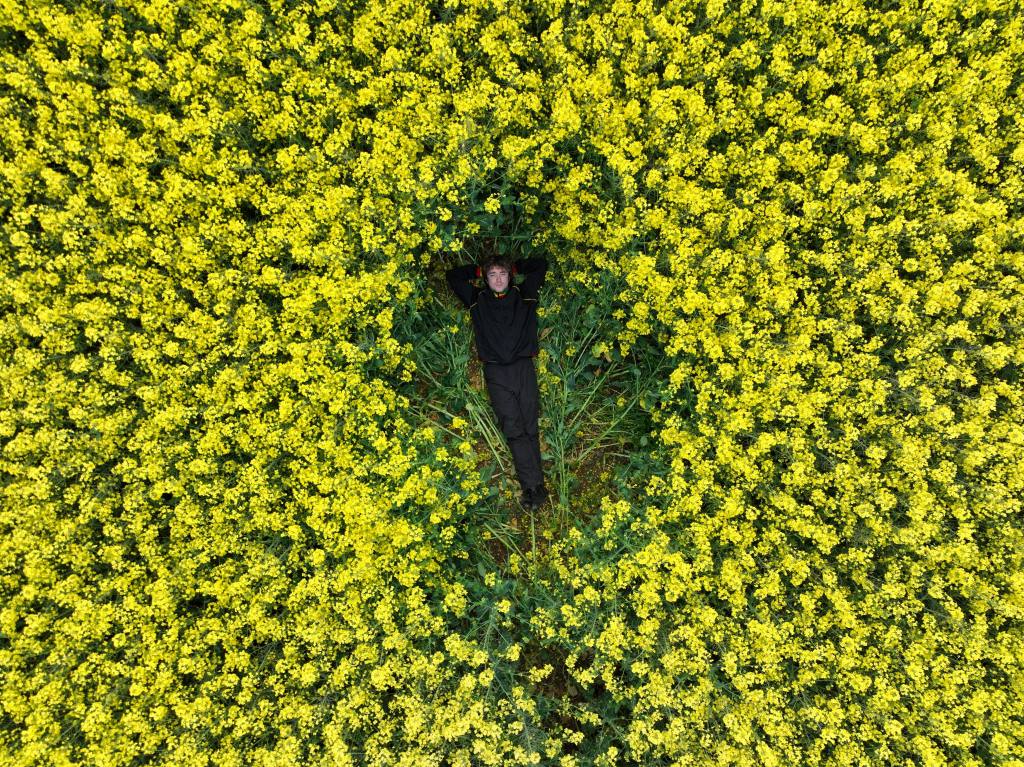
Stills courtesy of the Irish Film Festival
Dymphna Lonergan is a member of the Tinteán collective.
The Spin, directed by Michael Head
A film review by Karen Lochhead
Four months of overdue rent, three valuable records, two clueless friends and one hell of a journey!…
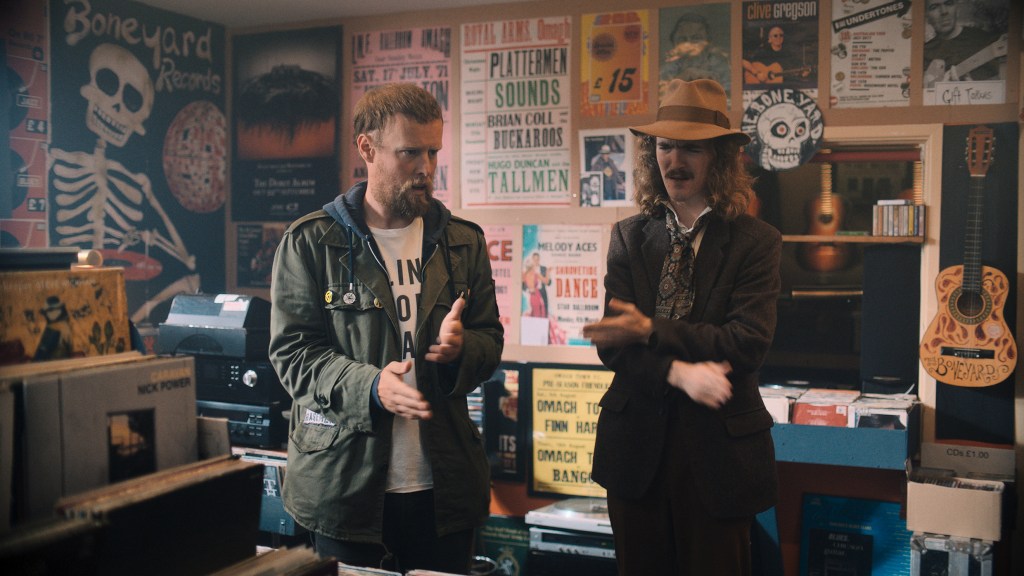
In this feel-good movie, two struggling, record store owners embark on a road trip from Omagh, Tyrone to Cork to save their store.
Long-time music fans and friends, Dermot (Brenock O’Connor) and Elvis (Owen Colgan) are under pressure from their very unlikeable, brassy landlady, Sadie (Tara Lynne O’Neill) to come up with their long overdue rent or face eviction. Sadly, business is very slow and the future is looking bleak until an opportunity arises to buy some classic vinyl records at an unbelievably cheap price. The only catch is that they need to drive to Cork to get them. With little money and both confronting personal troubles, they set out. On the way they encounter some quirky characters and some minor difficulties.
At the heart of this movie is Dermot and Elvis’s enduring friendship and mutual support. The warmth between the two is clear from their amicable and constant banter about anything and everything. It sustains them on their long drive through the Irish countryside, even though their own troubles are bubbling away in the background. Dermot is despondent about his failing store and relationship, and perhaps still hanging on to the hope of reviving his musical career. Elvis is trying to prove he’s a good father to Lily, his adoring young daughter, and not wanting to be like his own father who left him twice during his childhood. However, an impulsive promise to give her a pony seems unlikely to be fulfilled, much to the exasperation of his ex who is now living a comfortable life with her new successful partner.
As you would expect, the road trip showcases the Irish countryside, in its contrasting forms and differing weather patterns. It’s not a rose-coloured version but realistic. The lads manage to stop enough (not always by choice) which gives the chance to see lush green hills, windy beaches and small towns. Naturally, music plays a large part in a film about record store owners. There is plenty of great music, both as part of the narrative and as background. A bonus is the original music contributed by Mark McCausland (best known as one half of The Lost Brothers).
The premise of the film came from McCausland, also a record shop owner. He related his real-life experiences to writer, Colin Broderick, who has developed a script with a simple story with great dialogue. There is plenty of scope for the actors who some will recognise from their other work – O’Connor from Game of Thrones, Colgan from Hardy Bucks and O’Neill from Derry Girls. Michael Head, of Bermondsey Tales fame, directs this small independent production.
The film maintains a light-hearted nature throughout with plenty of comedy and dialogue allowing for a steady pace. The characters and situations are realistically drawn (although Sadie may be a little over the top but worth it as the only one trying to thwart our heroes’ plans). The ending is beautifully and quickly wrapped up with everyone getting the reward (or punishment) they deserve. Stay for the credits with a surprise extra clip, one year later. The whole is an easy, fun 90 minute watch.
Stills courtesy of the Irish Film Festival
Karen Lochhead is a long time avid film viewer. She has been a member of AFI/AACTA and MIFF for many years and works as a librarian in Victoria.

