A theatre review by Philip Harvey
Photography by Jody Jane Stitt
Bloomsday in Melbourne 2025, Circe’s Carnival of Vice Directed by Wayne Pearn, at fortyfivedownstairs, Flinders Lane, Melbourne
The nighttown episode of Ulysses, set in the red-light district of Dublin, invites the reader by every imaginable literary trick or treat to experience both the strange otherworld of the Hibernian Metropolis and the inexplicable creations of the individual unconscious. In his schema for the novel, James Joyce prescribed the creative technique ‘hallucination’ for this episode. Hallucination is an abiding form of character presentation (both animate and inanimate characters) throughout. It is also, in Flaubertian manner, an effect whereby Joyce would induce, seduce and influence the sensitive reader. But how do you make hallucination happen onstage?
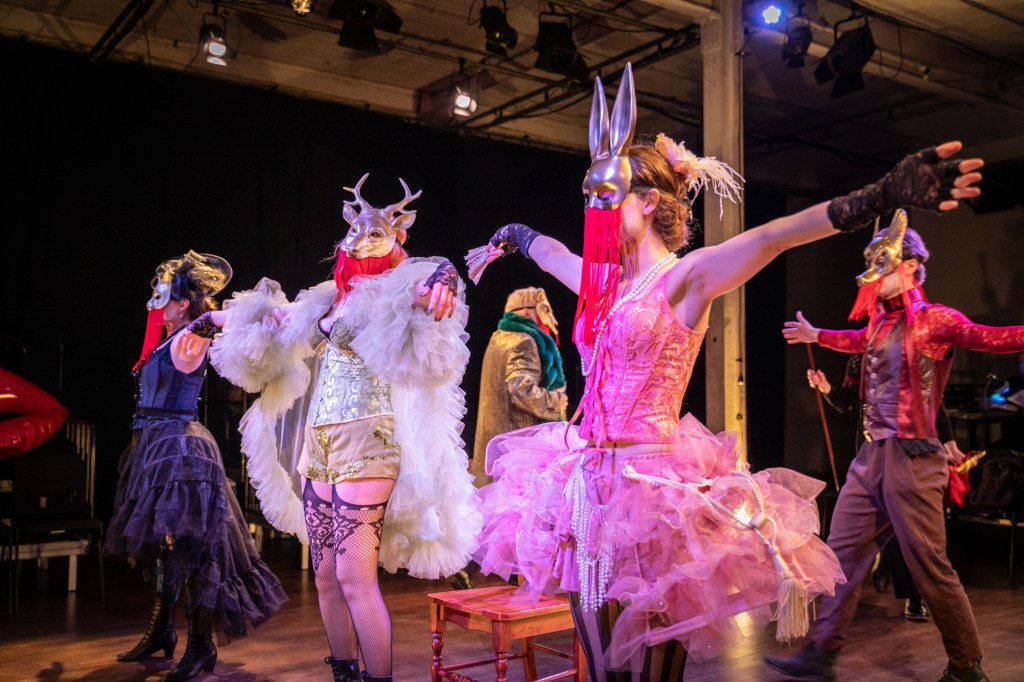
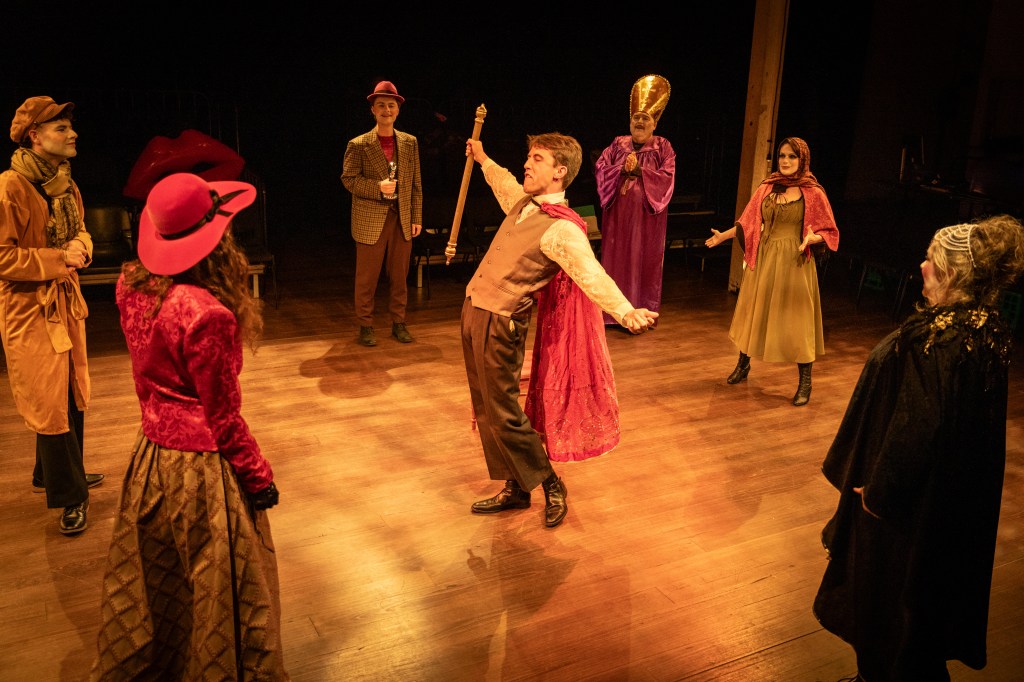
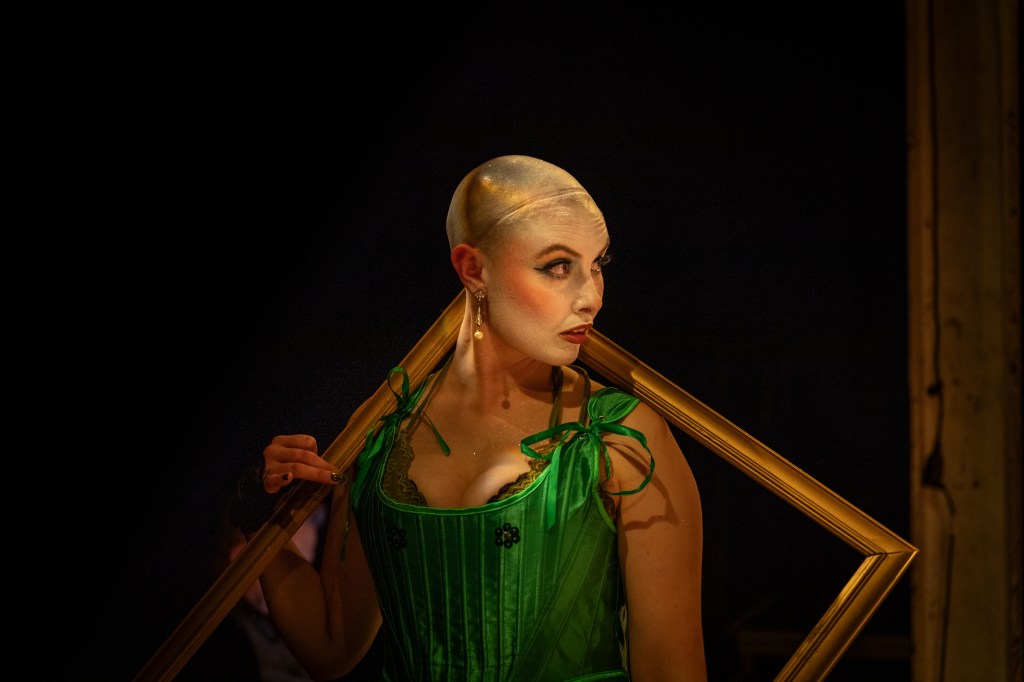
One answer is in this year’s Bloomsday in Melbourne production. The collective obsession of the scriptwriters for this episode, the longest in the novel, has prompted all their best and worst instincts, as we would expect from this theatrical company. Frances Devlin Glass, at the Bloomsday Seminar, called the episode “extravagant, over-the-top, dense,” things on show from the start in the costumes (Zachary Dixon), their wild variety and expressionist meanings a pleasure to behold. Joyce uses clothing here, from the most dishevelled to the most ludicrously excessive, to reveal exhibition, disguise, attraction, and even disgust. Joyce’s directions for dress sometimes defy belief, or functionality; it’s all part of his art. Dixon happily met this defining feature of the episode with a corresponding flair and humour.
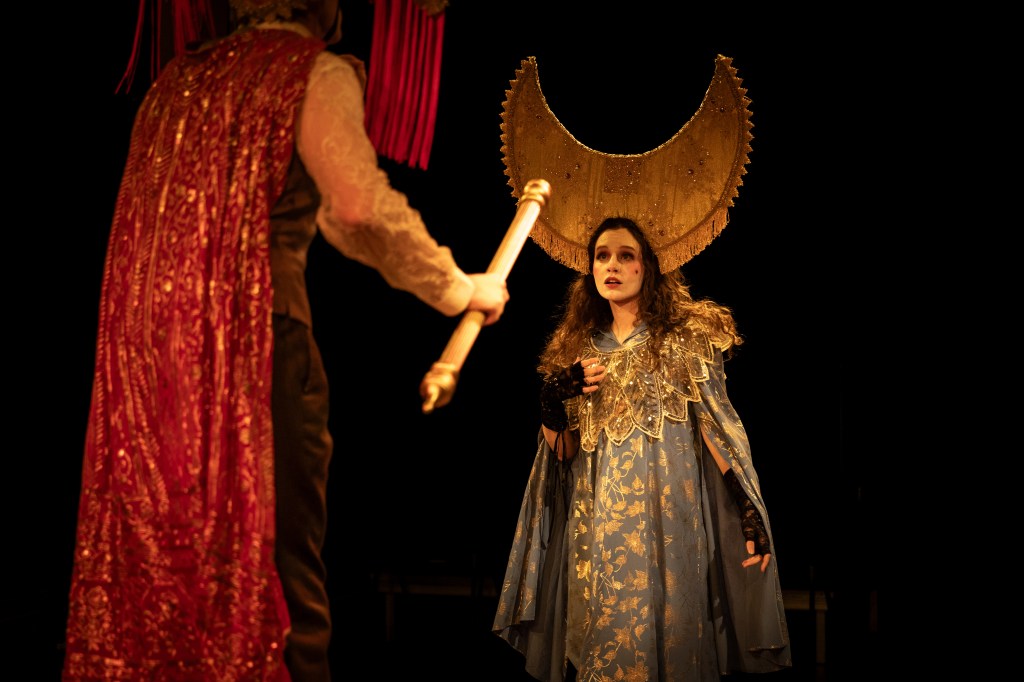

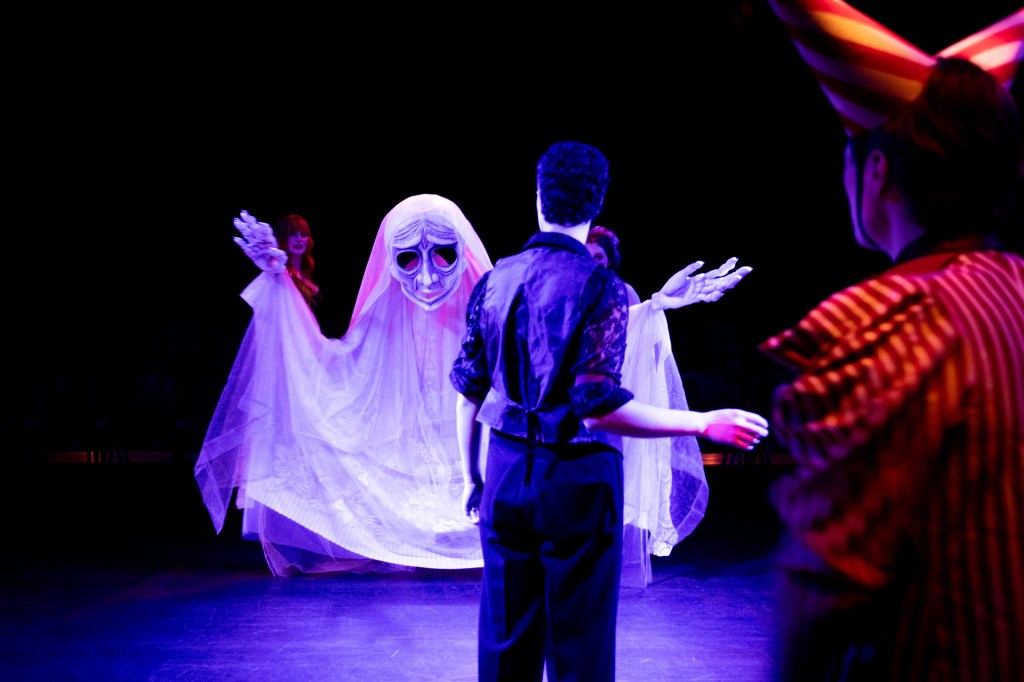
Hallucination was increased by other theatrical devices, too. Lighting (Stelios Karagiannis and Frankie Lupton) enhanced the unexpected changes of the dream world, whether glaring, spectral, intimate, or shadowy. Music and sound (Felix Meagher and Cyril Moran) augmented further the unlikely juxtapositions of time and place that occur when they are serenaded free of reason. Puppets (Ellana Hedger) and all manner of warped props held the audience in thrall, very memorably the wraith of Stephen’s mother, a skull with flowing white graveclothes transported across the theatre space by a supporting cast. Dance (Veronicka Devlin), notably in the Bello/Bella scenes, but in different styles throughout the play, lifted the inner landscapes of the characters into high relief, sometimes with exuberant glee, other times with haunting comedy e.g. Bloom’s ancestor Virag, even into the pandemonium of the end of the world.
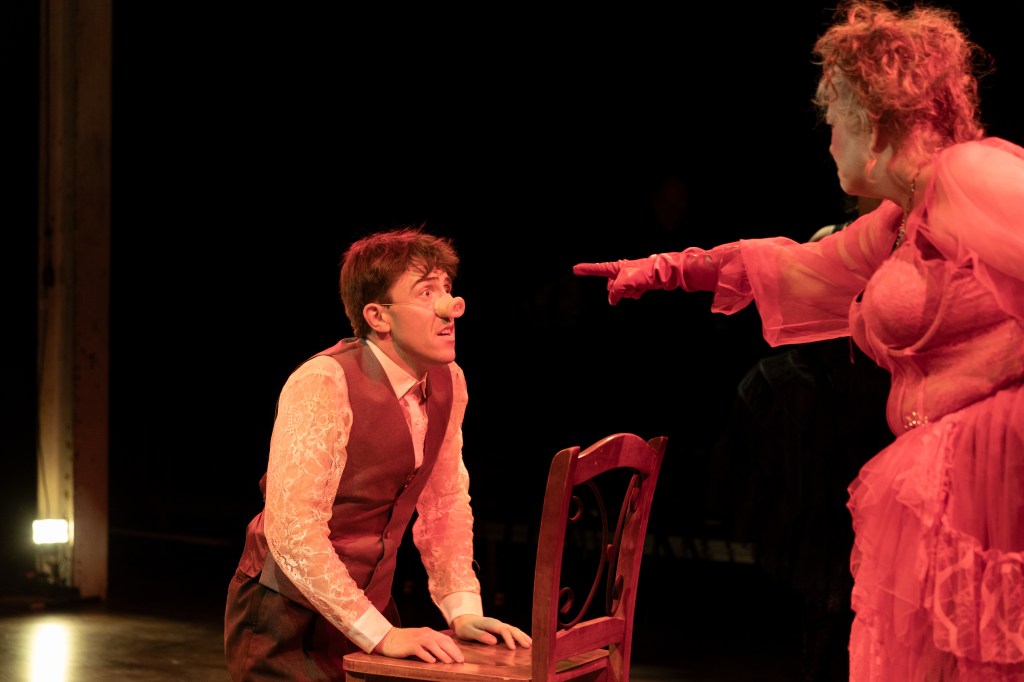

Circe, as it is known by its Homeric parallel, is an episode written as a playscript, even if a playscript gone troppo. Good luck finding a sensible dialogue, where even the Shakespearean soliloquies often show no immediate connection with other things being said. In fact, scriptwriters know quite well it is pointless performing this script word-for-word from the page. Hallucination is its own reality. They have to turn this into action, with one eye on the crazy dream world and the other on the crass, lurid spaces of the brothel. Extremes are taken past breaking point as desires are manipulated and clash in language that is a harbinger of Finnegans Wake.
Leopold Bloom beats with anguish as inner thoughts grow beastly and foul. Bloom is the guiding force of this nighttown theatre. Eric Moran’s Bloom was one of youthful vim and curiosity. His agile facial expressions, versatile verbalism, and choreographed body movements took observers (or are we participants?) through the cyclic processes of furtiveness, disclosure, confrontation, apotheosis (the new Bloomusalem), humiliation, degradation and transformation. Manuela Hrasky at the Bloomsday Seminar explained that Circe is highly psychoanalytic, giving dramatized insights into Bloom’s id and superego; all his perversions are on display, and Moran ran the gamut with considerable style, even with a smile. Hrasky believes Circe is a celebration of the embodied ego, so the scriptwriter’s focus on Bloom’s trials and triumphs played well to that assessment.
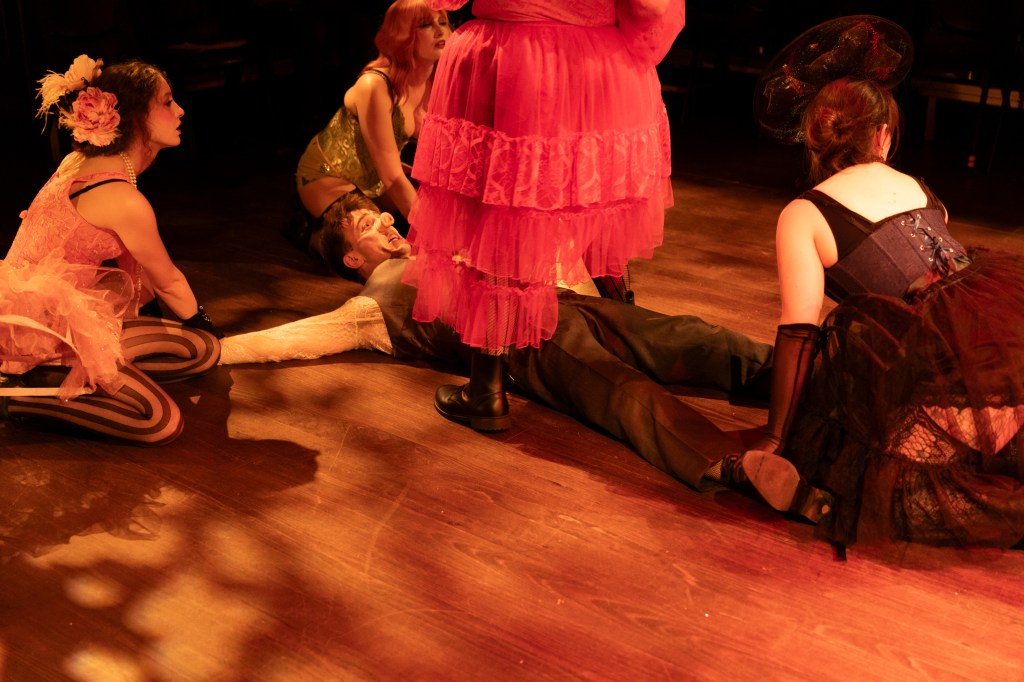
At the Seminar, Dan Boyle spoke of Monto, Dublin’s circumscribed red-light district in 1904, as a place of “discreetly well-organised crime”, but also as somewhere where women, rather than men, are in control and manage the networks amongst themselves. Enter the prostitutes (Elisheva Biernoff-Giles and Veronika Devlin), and the master/mistress Bello/Bella (Kelly Nash), who dominate the space in every sense of the word, keeping to their own unstated pecking order but always taking care of business, and one another. Their exacting performances set the standard, being essential to why everyone is there and to the meaning of Circe itself. Bello’s role is given particular centrality in this version, with Nash delivering a riveting rendition of what Hrasky calls, in the person of Bello, a projection of Bloom’s unconscious fears and desires.
The other woman, the one who is really in control and pervades Bloom’s daily life, his wife Molly (Kim Devitt), will not be found in Monto, but she is given significant walk-ons in this production in order to add revealing perspective to a man, a new womanly man, who has already been the subject of sensational revelations. A cooling presence is required in this hothouse environment and Devitt plays well the role of a woman who always knows more than she says. Indeed, nighttown is an immense reprise of the daytown story we have been reading in Ulysses up to this point, a story in which Molly is everywhere present, even if not usually visible.
Dan Boyle, the very same, turned his raucous skills to outlandish characters like Virag and the hellfire preacher, while Mitchell Bell generated havoc as a reporter, but it was Ryan Haran who carried the difficult task of rendering the “manly man” Blazes Boylan, the less than “stately, plump” Malachi Mulligan, and the ”impossible person” Stephen Dedalus. Haran’s gift for cameo and special parts was a treat; Dedalus especially is at his most drunken, disconnected and vulnerable at this stage in the narrative, a part requiring considered gesture and speech as he spirals to disaster. His wounded exit from the brothel brings down the curtain on the phantasmagoria we have just experienced, leaving us with the stone-cold reality of the peacemaker Bloom carrying Stephen Samaritan-fashion out into the night, just possibly home.
Myriad facts, memories, echoes, references of the daytown story reappear throughout the nighttown episode in unexpected, inappropriate, comic, haunting repeats, upending any idea that we can compartmentalise our experience after we close the door on daily reality. Emotionally and mentally, we carry everything we have with us, even into sequestered or forbidden places that could help us forget or leave behind. This year’s scriptwriters (Bruce Beswick, Sian Cartwright, Dan Boyle (the same), Linda Rooney, Frances Devlin Glass (the same), and even this reviewer at times) are aware of this world-within-world, how Joyce’s grasp of the interior life is on show in Ulysses, even though his metier is comedy. The results are a pared back drama, with clear and clean blocking and directions, free of the thousand elements in the text itself that could distract unduly or add little to the main focus set up by the script. That focus being the psychological and sexual conditions of Bloom and Dedalus.
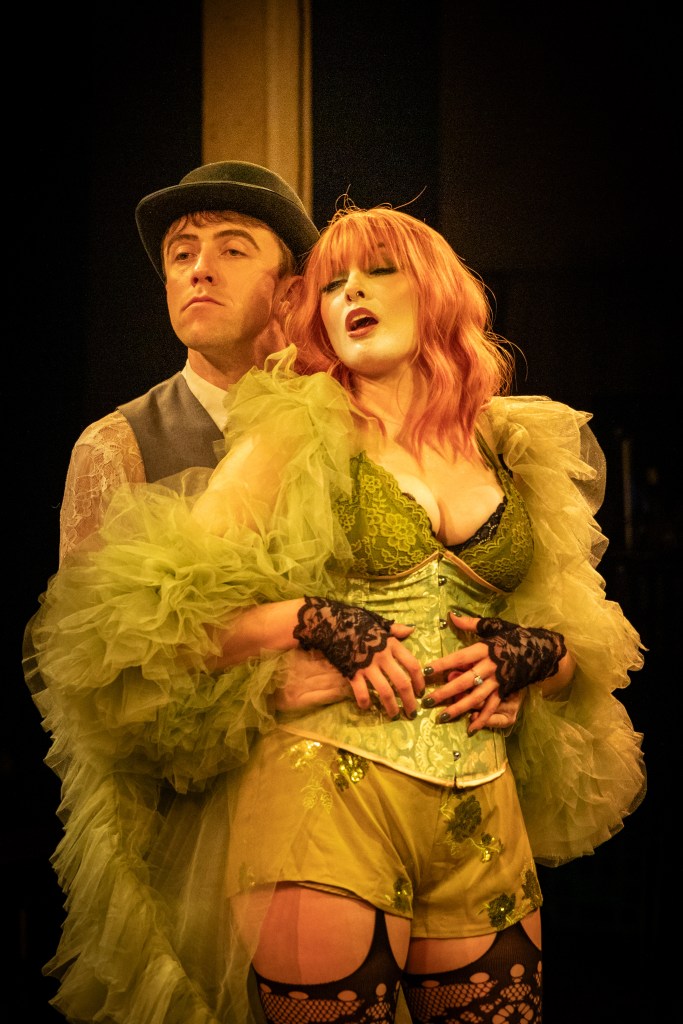
Staged in the round, the effect of nighttown in here and Dublin out there beyond the footlights and the darkened theatre was a marked success. Director Wayne Pearn, dramaturg Steve Gome, and producer Steve Carey have turned this way of performing Circe into a satisfying interpretation that can speak to the newcomer, the Joyce-curious, and the card-carrying Bloomsdayer alike; even the most jaded Joycean could find something new in this production. Joseph Strick’s 1967 film adopted the circus as the theatrical vehicle to contain the sprawl of Circe’s imaginative ambition. Bloomsday in Melbourne 2025 adopts carnival, with the added attraction of Circe – the witch who puts spells on those she encounters, turns men into swine, and gets people to make pigs of themselves – as the presenter of the carnival. Their focus is on the dynamic of direct relationship, rather than the episode’s many bagatelles, diversions and titillations. Sexual fantasy, shifting identities, and multiple quick costume changes make for heady entertainment, leaving us asking, along with Manuela Hrasky, is this the unconscious of us all?
Philip Harvey
Philip is one of an active group of Joyceans in Melbourne, a poet, recently retired poetry editor at Eureka Street, and a blogger.
The Digital Programme for Circe’s Carnival of Vice is available at https://heyzine.com/flip-book/4c1cab6524.html#page/1
 Tinteán