le/with Julie Breathnach-Banwait
Irish language poetry, known as ‘Filíocht na Gaeilge,’ is a rich and ancient tradition that spans centuries. Rooted in the oral culture of the early Celts, it has evolved and grown, through various historical periods, reflecting the social, political, and cultural landscapes of Ireland. From the early medieval bardic poets – who composed intricate and highly formalised verses – to the modern poets who explore contemporary themes with innovative styles, Irish language poetry captures the heart of the Irish experience and culture. It is known for its beauty, connection to land and place, its rich and elaborate expressions in the ancient language of gaeilge – a language that is still surviving despite aggressive colonisation and oppression.
More recently, Irish language poetry has continued to prosper and evolve particularly in the 19th and 20th centuries, with notable poets like W.B.Yeats and Seamus Heaney engaging with the language. Today, contemporary Irish language poets contribute to the continuation of this tradition. This series will explore some prominent contemporary Irish language poets and explore some of their reflections on their own works and writings, beginning with one of the most prolific poets and writers, Áine Ní Ghlinn.
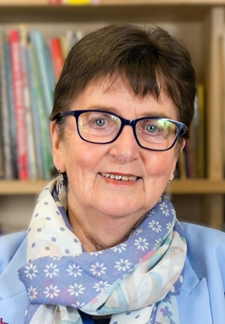
Áine Ní Ghlinn is a poet and children’s writer and was Ireland’s Laureate na nÓg,(https://www.artscouncil.ie/Initiatives/Laureate-na-nOg/) Children’s Literature Laureate for 2020-2023. She was the first Laureate na nÓg who writes exclusively in Irish. Her flagship Laureate project involved encouraging children to read in Irish for pleasure (as opposed to just being part of school and homework). With funding from the Arts Council and Foras na Gaeilge, (https://www.forasnagaeilge.ie) the 2020-23 project spent approximately half a million euro on An Bosca Leabharlainne, a box of 25 specially selected Irish language books for school libraries.
In all, Ní Ghlinn has had 38 books published. These include young fiction, stories, novels, picture books and drama for young readers as well as poetry (for adults and children). She has won a range of awards, including the Patrick Kavanagh Poetry Fellowship (2019), Children’s Books Ireland Fiction Honour Award and the Irish Literacy Association Book of the Year for the Young Adult novel Daideo (2014/2015). She has also won Gradam Reics Carló, (Gradam Reics Carló -The Reics Carló Award, is an annual award given by Oireachtas na Gaeilge to honor the best children’s book written in the Irish language) along with Irish Language Young People’s Book of the Year on three occasions (2014, 2016, 2019) for the novels Daideo, Hata Zú Mhamó and Boscadán. She has also won various Oireachtas awards for poetry and teen fiction as well as several poetry awards at Listowel Writers’ Week and Strokestown Poetry Festival. She was one of Ireland’s three nominees for the Astrid Lindgren Memorial Award (ALMA) in 2022 & 2023. This year, two of her children’s books are on the shortlist for Gradam Reics Carló and another will be included in the 2025 World Book Day selection.
Recently I have had the pleasure to put some questions to Áine in order to gain some understanding of her creative processes and gain some insight into her long career as a versatile Irish language writer and poet. Here are some of the insights she generously offered.
On what she writes about:
‘I write for children and teenagers as well as writing poetry (for both adults and children). The inspiration is different in every case. As a poet, I am often inspired by issues relating to women. This would include the #MeToo campaign, issues regarding sexual violence and sexual abuse, the invisibility of women in so many areas over the years. Women have so often lost their voice – in some of my best poems, I have tried to give them back that voice. When writing for children, inspiration comes from so many other different sources – different for every book. I have written about artificial intelligence, dementia, grooming, as well as writing fun, non-issue based books for young readers. Themes for younger children include Santa’s Christmas journey, How Christmas is celebrated at the North Pole, verse versions of old stories (The Three Little Pigs and Goldilocks), stories relating to sport, to making a toy robot. I am passionate about encouraging children to read in Irish and to continue reading in Irish as they get a little older.’
On who and what inspires her:
‘It’s difficult to pinpoint one single poet that has influenced me. I read widely and am probably influenced in some way by every poet I read. Poets whose work I have enjoyed include Mary Oliver, Mayo Angelou, Seán Ó Ríordáin, Seamus Heaney, Paul Durcan, Fady Joudah, Jane Clarke … the list is endless. Fady Joudah is a poet whose work I have come across only recently – She writes in a beautifully simple style with powerful statements about migration.’
On a piece of writing that she feels strongly about:
‘I am working at present on a series of poems about forgotten women. One of these women was a nurse, Elizabeth O’Farrell, who fought in the 1916 Easter Rising in Dublin. She was the one who walked alone to the barricades, carrying a white flag to negotiate a surrender. She later walked with Pádraig Mac Piarais as he surrendered. In the final moment of surrender, she took a step back and when a photograph was taken, only the hem of her skirt and her legs could be seen. A decision was somehow made to airbrush her totally from the picture – so that young students studying the history of the 1916 Rising in school would have no idea that she existed. They would see only Pádraig Mac Piarais and would assume that he negotiated the surrender alone. This to me is symbolic of the loss of voice of women that has occurred again and again throughout history. I have written an Irish poem ‘Cad d’Imigh ar mo Dhá Chos?’ (translates as ‘What Became of my Two Feet?’) The poem is just one of a series which will commemorate women who have been forgotten, ignored or airbrushed out of history.’
‘In poetry, I am constantly drawn back to issues relating to women, to voiceless and forgotten women. In writing for children, I move from theme to theme.’
One of the most striking poems on this theme that comes to mind is ‘Cuair.‘ A poem of loss and longing. This poem is translated by Celia De Fréine as ‘Curves.’
Cuair
Ó ghoid máinlia
a banúlacht uaithi
bíonn sí de shíor
ag stánadh
ar éirí na gréine
ar chomhchruinneas na gcnoc.
Ar pháipéar déanann
stuanna ciorcail
ceann i ndiaidh a chéile.
Ó fágadh coilm sceana
mar a mbíodh a brollach
tá sí ciaptha ag cuair.
Curves
Since a surgeon
stole her womanhood
she is forever
staring
at the rising sun
the roundness of hills.
She etches arc-circles
on paper
one after the other.
Since scar tissue
replaced her breast
She is plagued by curves.
On advice for other writers:
‘I would advise writers to get the story or poem or drama down on paper. The first version might not be wonderful – but if you don’t write it down quickly it will be gone. The next twenty versions and rewrites cannot happen if it’s not written down the first time! After the first or second draft, I would suggest putting the work aside for a while (a week/a month – whatever works for you) and then coming back to another draft with a fresh eye. I generally do up to twenty drafts of a poem or story before I am happy. After that, I would suggest being open to an editorial eye – Sometimes I think I have written something wonderful … but when someone else reads it, it may not work at all. I always like an editor or a friend (or one of my sons who has a good critical eye) to give me feedback. If I am happy with the next draft, I send the story or collection of poetry to a publisher. I am not in favour of self-publishing as I think it often lacks that objective, independent second eye.’
On future writing projects:
‘I have just finished working with Mr Ando (illustrator, Andrew Whitson) on a new Christmas book for children ‘Saintí sa Bhaile’ (due for publication shortly). He and I have collaborated on a few books so far and we work very well together. One of our books ‘Ag Buzzáil sa Ghairdín’ has been included in the selection of books for World Book Day 2025. We have plans for two more books over the next year or so. Mr Ando is also one of the directors of An tSnáthaid Mhór Publishers. I am also working on a middle grade novel about bullying, and I am working with one of my sons on a Young Adult novel on the theme of homophobic bullying. These are just two of several children’s projects I have in hand at present. On the poetry front, the poet Theo Dorgan has translated a selection of my poetry to English. This will be published at some stage over the next year or so.’
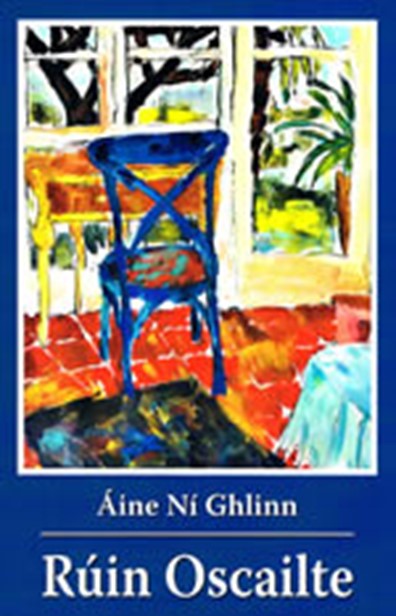
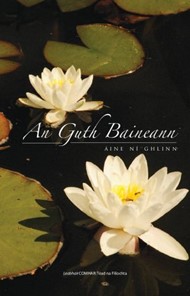
Some of Áine Ní Ghlinn’s books are seen below, with many more of her books, particularly her extensive collection of Irish language children’s literature being available to view online. Further information on Áine’s writing and varied career is available at Áine Ní Ghlinn – Wikipedia and ainenighlinn.com.
Julie Breathnach-Banwait
Julie has been a regular contributor to Tinteán for many years and has recently joined the Editorial Collective. She is an Australian based Irish-language poet and writer. To date she has published four collections of poetry. Dánta Póca and Ar thóir gach ní are Irish language poetry books published through Coiscéim (Dublin). Bobtail Books (Australia) have recently released two bilingual books of hers: Cnámha Scoilte/Split Bones – a bilingual book of prose poetry and Ó Chréanna Eile/From Other Earths – a bilingual book of poetry, co-authored with the Australian Irish language poet and writer Colin Ryan. Both are available at http://www.bobtailbooks.com.au


Dear Editor,
I cannot find a email address to send you an article for your consideration.
Regards,
Peter Lalor Philp