She points out how the dog is happy to see him home too and the cat in her own way. The bougainvillea has grown wild without his care, the olives need picking. She then notices his inability to respond and offers her arms, in which he finally releases his emotions, relieved to be home again. Continue reading

Filed under Irish poetry …
English exam board removes works of Irish writers to promote diversity
Heaney’s poem ‘Punishment’ will also be removed from the OCR’s GCSE poetry anthology from September 2022. GCSEs are the basic level of qualification in British education, while A-levels are taken by secondary school students aged between 16 and 18. Continue reading
Seasonal Poems
Vermeer would have made much of it Continue reading
What’s On
Upcoming Melbourne Irish Studies Seminar on Heaney’s visit to Australia in 1994. Continue reading
A Tribute to the Irish poet Máire Mhac an tSaoi (1922-2021)
Tá racht agus tnúth ann, agus ní cheiltear an chollaíocht.
Her voice is the voice of a young woman who did not hide her sexuality. Continue reading
Thomas Kinsella (1928-2021)
Many of his poems are celebrated and loved for their profound personal candour and sensitivity, but he has also been a poet of searing political and public critical insight. Continue reading
Recognition for Irish Australian poets on Imram
We send ‘comhghairdeas’ to both for this important recognition of their work. Continue reading
Dánta Nua le Colin Ryan
agus an ciúnas/a d’fhág an té a chuaigh
in airde fadó/ina dhiaidh
and the quietness left by the one who went up long ago Continue reading
What’s in the name ‘Sheila’? new research
According to Diarmaid Ó Muirithe, the name Sheila derives from Cecily, ‘the English form of the Latin name of the…virgin martyr St Cecilia…The Anglo-Normans brought the name to Ireland and in time it became in the Irish language Síle.. Continue reading
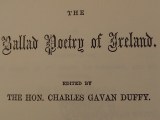
The Nation writers emigrate to Melbourne
It is a remarkable fact that three writers associated with The Nation newspaper emigrated to Melbourne in the mid-1850s: Edward Hayes, Charles Gavan Duffy and Gerald Henry Supple. Professionally diverse, they shared a deep love of poetry and song. Continue reading