Although there has been continuing interest in Dr Mannix, especially since the celebrations for the centenary of his arrival in Australia, a number of puzzles about his career and personality remain. Continue reading
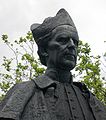
Although there has been continuing interest in Dr Mannix, especially since the celebrations for the centenary of his arrival in Australia, a number of puzzles about his career and personality remain. Continue reading
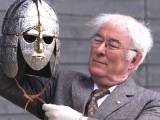
For hard-line Republicans, Heaney has always been far too reluctant to take sides; for moderate nationalists, his efforts to locate the violence in the North within historically-based atrocities was seen as a compromise of his creative principles; whilst for many hard-line unionists, Heaney is, without qualification, a Catholic/nationalist and, thus, political writer, whose loyalties are already fixed to one side of the conflict. Continue reading
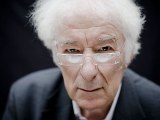
Another in Tinteán’s ongoing series of tributes to Seamus Heaney, arguing that Heaney’s rapid canonisation was due to his attractive subjects and themes, and to his poems’ suitability for contemporary criticism. Continue reading
In its heyday, however, Ballyshanassy rivalled its northern neighbor, Box Hill, in importance and could have become the seat of local government. Continue reading
Fr Harold’s informal priestly work attracted the suspicions of the authorities not least among them Captain William Bligh of ‘Mutiny on the Bounty’ fame Continue reading
The threat of sudden and violent death from those operating outside the expectations of civilised life is a resonant one for so many other places in our world, not least in Ireland. Continue reading
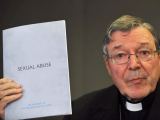
Whether his apparently tin ear in dealing with victims and their families is personal inadequacy or an effect of his hierarchical remoteness from his flock is hard to say but maybe, as Marr reports, it is because ‘He’s Roman and that’s the Roman way’. Continue reading
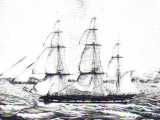
…we have to take a terrible bad set with us – they have set the ship on fire five times during this last fortnight. The Guard was obliged to shoot one of them. Continue reading
Dubbed ‘the champion spy of the century’ for twenty five years Henri Le Caron operated as a British mole inside the Fenian movement. Continue reading
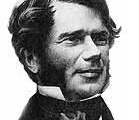
In 1849 William Smith O’Brien’s interest in foreign travel was boosted on his transportation for High Treason to Van Diemen’s Land, and despite all the problems and irritations of foreign travel in the nineteenth century, O’Brien never gave up foreign travel, and assiduously recorded his experiences Continue reading
 Tinteán