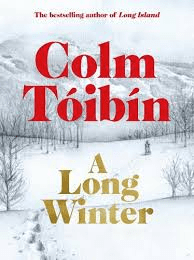
Colm Tóibín A Long Winter (Picador 2025)
Yes, ‘you should never judge a book by its cover’ is a cliché, but sometimes it is literally true. I was looking in vain for a particular book in my local bookshop when on my way out, I stopped to look at the new releases. I was drawn to a white landscape, then the title, A Long Winter, and only then the author’s name (in bold red!), Colm Tóibín. Sold. I took it home with no idea as to the content but with complete confidence that I would be taken to a deliciously cold landscape and my mind and ears soothed by Tóibín’s voice.
The story is set in La Sue, Spain. An unhappy woman sets off on a walk to her ancestral home town of Pallosa, leaving behind her husband and adult sons. Another woman leaving home! I could not help thinking about Breakdown and Nesting, two other books on that theme, and I wondered how Tóibín would deal with the topic once I had read a couple of chapters. Very differently, it turned out. A Long Winter is concerned with those who are left behind, Jordi who has been called up for military service, his brother Miquel, and his controlling father. We can guess what drove her to escape the family, but we never know for sure. Nor do we find out if she reached Pallosa and if she ever returned. The roads are impassable because of the snow. There is only so much the search party can do. In the meantime, Miquel and his father must continue with their daily routines of their sheep farm while fending for themselves. Neither can cook, nor do they know how to shop for provisions. Things fall apart until an orphan comes to work on the farm, ‘not yet twenty,’ and he can cook. In time a love interest develops.
This is a long short story originally published in the 2006 collection Mother and Sons, with the bonus of a ten-page Afterword. Here Tóibín shares his writing approach to the story, the writing decisions and their careful weighing. A Long Winter is a treat to have and to hold, to read and to savour, especially during an Australian summer. The cover that drew me in was designed by Federica Benegiamo.
Anne Enright Attention (Jonathan Cape 2025)
This is a collection of Enright’s writings on ‘Life, art and the World’ in three parts: Voices, Bodies, and Time. The first item in Voices is a musing on how male and female writers are treated differently. It begins with the story of novelist Catherine Nichols who having received little response to a book outline sent to fifty literary agents, had greater success when she penned herself as George Nichols. She wryly concludes that ‘George’ is ‘eight and a half times better than me at writing the same book.’ To add to this, Enright then suggests that a sentence such as ‘The cat sat on the mat.’ would also receive different response if written by a male or a female: the female writer is only concerned with ‘the domestic’, while the male writer of ‘The cat sat on the mat’ exhibits ‘toughness and precision’, and if he is Irish, will be seen to follow in the tradition of Pangur Bán.
Next is a review of Australian novelist and diarist Helen Garner’s How to End a Story, much appreciated by those of us who are Garner fans. ‘Priests in the Family’ provides Enright’s intriguing family connection to James Joyce, followed by an ‘Introduction to Ulysses’ where she talks about her personal experience of starting to read that famous book at the age of fourteen, ‘mainlining language, getting high on words’ only for it to be confiscated and kept until Enright was eighteen. Other ‘Voices’ in this segment are writers Angela Carter, Toni Morrison, Maeve Brennan, and Alice Munro.
The Bodies segment covers the Tuam Mother and Baby Home, Ireland’s referendum on Abortion Reform, and talks on women’s experiences of medicine, including her own, that she gave to medical students on. That fewer men complain of pain than do women but are given more painkillers is one of the many discussion points here.
Under Time she muses on how she is ‘a Dubliner born and reared,’ her two years at an international school in Canada, experiencing a Samual Beckett play in Irish on Innis Óir, a return to her old family home, and travelling with her husband.
These direct, perceptive, and often amusing pieces that make up Attention are very much appreciated especially by those of us who missed them the first time around.
Merryn Glover: The Hidden Fires: A Cairngorms Journey with Nan Shepherd. (Polygon, Edinburgh, 2023).
It’s a great moment when a friend and colleague puts into your hands two new(ish) books by a writer you’d taught way back last century and to whose first novel you’d indirectly directed her (by way of a recently deceased mutual friend who had it by his bed at the time of his death). Says something profound about how the community of readers sustain one another’s lives in letters.
Merryn Glover is a woman of the world, a cosmopolite in the best senses: born and educated in Nepal, she moved with her missionary/linguist parents to many parts of the world including Australia (where she did an undergraduate course in drama, dance and literary studies), ultimately marrying a Scot and raising boys and setting down roots in the Highlands, near the Cairngorms. Her genealogy is similarly transnational (incorporating much by way of Irish ancestry). However, I think it’s of intrinsic interest to many different readerships. And for readers of this magazine, specifically because it deals so thoughtfully and poetically with issues to do with migration and buying into a new culture and especially landscape. I see Merryn Glover as writing herself into the landscape of her chosen newish home in a way that migrants who settle must do.
This book takes many paths into its subject–the Cairngorms–and it will appeal to a wide range of readers: the would-be hiker will find desired destinations made extraordinarily alluring, and s/he will find an injunction to taste and digest rather than rush the walk; the historically minded will find the work deeply informed, and the palaeo-geology of the Caledonian Orogeny (whereby massive granite from the Gulf of St Lawrence crashed into sediments which originated off the coast of what is now the Australian landmass as Gondwanaland broke up), forming originally as a huge upthrust alpine range (not unlike the Himalayas or the European Alps) which over the subsequent 425 million years slowly weathered. To invoke these geological timeframes is to take a cosmic perspective on the fleeting quality of human life and to walk among ‘elementals that are not governable’, beyond human control. Something to be encountered as radically different from the human life that inevitably impinges on it.
The entire work is a dialogue with difference and a love-affair with the sensuous nature of the Cairngorms – with the poetic colours of snow, and of the granite itself with its ‘dusky roses, peaches and wine’, and with the terrors and the strange innocence and freedom of a first descent, and its overt and hidden pleasures. It’s also a book for the lover of words. Her discovery of the mountains is ‘a life stretched large by a mountain’s life’. The rapture she experiences has in it a quality of a sacred encounter. She comments: ‘(t)he mind cannot even begin to receive it all, let along retain or understand it, but in the act of trying, the self is enlarged’. The lust for summits is supplanted in this narrative by a subtler apprehension of the beauty of the tarn tucked away modestly, ‘so open and yet so secret’. What emerges is a sense of the mountains as a complex interrelated system, and not merely a series of peaks that invite the marathon climb.
What I most enjoyed about this memoir is the sense that Merryn Glover creates of an emigrée labour of love: that of writing herself into a landscape, for the love perhaps of her spouse and sons. The Cairngorms are familiar and not yet homely (and familiar because her soul’s first country was serried mountains – Himalayan, in fact). The act of writing this Scottish landscape makes it homely and simultaneously other. Her guide is Nan Shepherd’s The Living Mountain: Nan had first encountered the Cairngorms in her twenties, but published 30 years later, by which time Nan’s intimacy with this landscape had grown exponentially. Merryn Glover, encountering Nan’s writing some 45 years after its publication, is energised by Nan’s emotionally deepening encounter with the mountains, and far from being a passive follower, writing back to her mentor, updating her insights, as she does to John, her mountaineering teacher.
This is an exhilarating account of what it is to be a migrant and to find ways of belonging, specifically to a challenging environment. It’s thoughtful, philosophic, occasionally theological, and always engrossing. It’s especially valuable as an account by someone who has made these adjustments and forged new relationships with different landscapes many times.
Frances Devlin-Glass
Melbourne Hosts successful two-day symposium on Irish Language
Val Noone (host) Julie Breathnach-Banwait, Colin Ryan, Dymphna Lonergan, Louis de Paor, Brian Ó Conchubhair
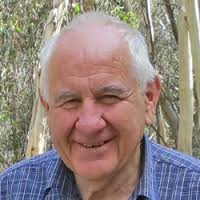
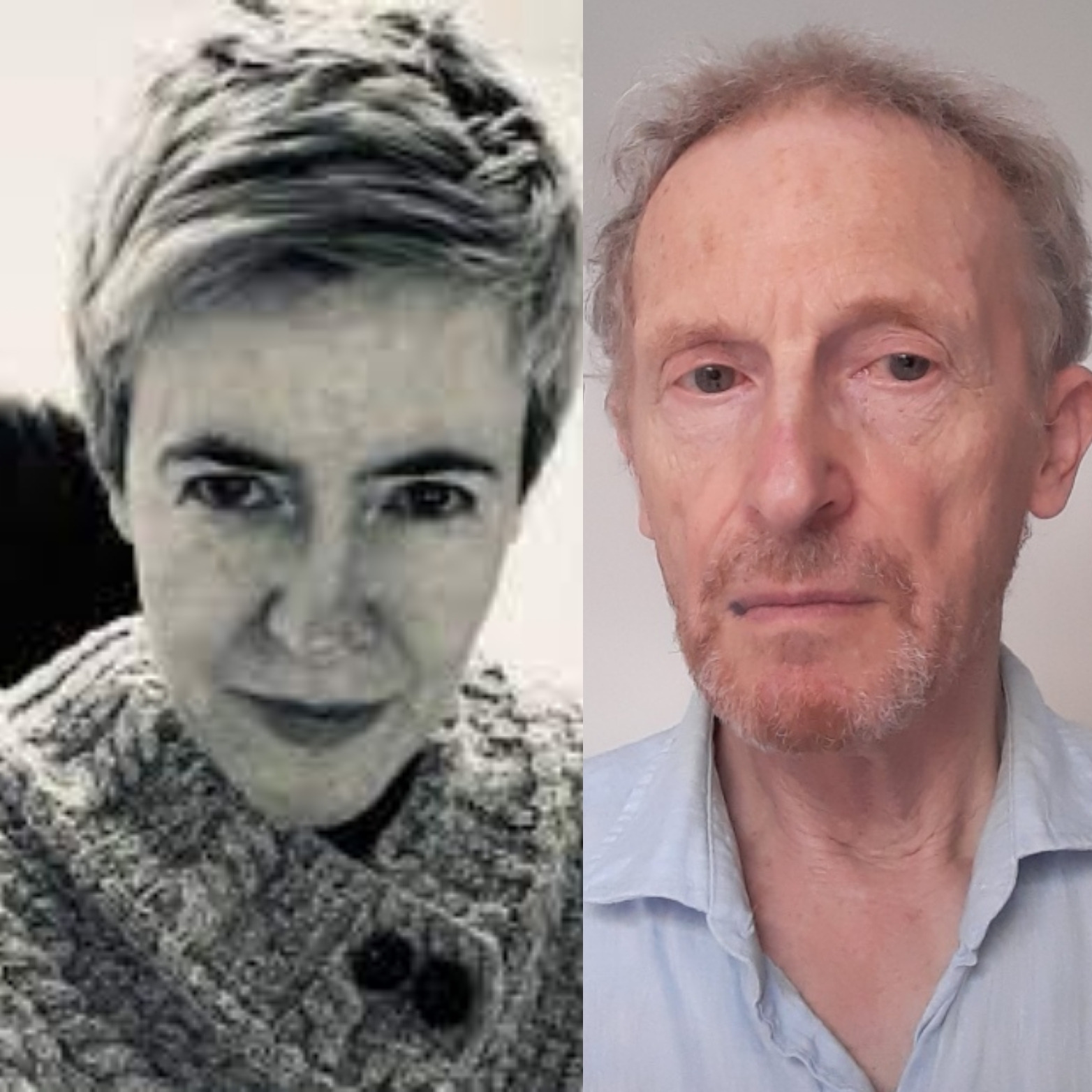

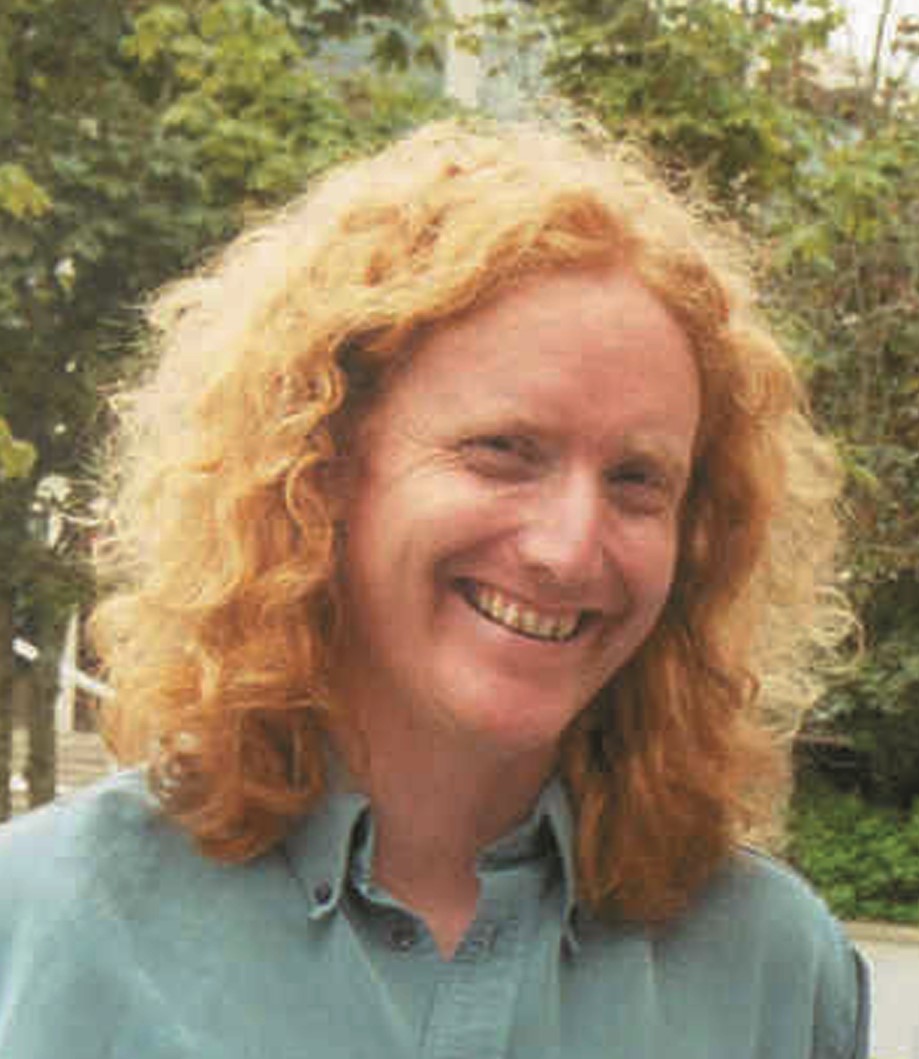

Two Irish-language seminars in Melbourne on January 17/18 discussed new research on Patrick Pearse’s European connections, the Irish language in America and Australia, readings by poets born or resident in Australia, and interviews with them.
The events were initiated by Dr Val Noone, a Melbourne social historian with a particular interest in the story of the Irish language in Australia and who went to the trouble of learning the language. Distinguished guests were Louis de Paor, a poet and ex-academic from Cork who spent time in Melbourne in the 1980s and published Irish language poetry there. In addition there was Professor Brian Ó Conchubhair, from the University of Notre Dame in Indiana. Both were taking up the Nicholas O’Donnell Fellowship, a fellowship given to researchers to examine the collection of Irish language books at Newman College at the University of Melbourne donated by Nicholas O’Donnell.
Both fellows have been prolific in Irish language publication, and both are interested in the language outside of Ireland. Ó Conchubhair’s Fin de Siècle na Gaeilge: Darwin, The Revival and European Thinking, describes the influence of writers and theorists from the continent on the debate in Ireland about dialects, spelling, print, grammar, criticism, and writing. He is currently writing a biography of Flann O’Brien (Brian Ó Nualláin).
Louis de Paor is well known as an Irish poet, and has written works of literary criticism. He received his PhD from the National University of Ireland, Galway, in 1986 for a dissertation on Máirtín Ó Cadhain, and in 1987 he and his family went to Australia, where he flourished as a poet and broadcast in Irish. They returned to Ireland in 1996 where he was appointed as Director of the Centre for Irish Studies at Galway University. He has now retired. His recent publications include the bilingual anthology Leabhar na hAthghabhála / Poems of Repossession in 2016 and Crooked Love / Grá fiar (Bloodaxe Books / Cló Iar-Chonnacht, 2022).
The event was opened by Seán Ó Séaghdha, secretary of the Australian Irish Language Association in Melbourne with financial support from The Keogh-Naughton Institute of Notre Dame University.
De Paor’s lecture ‘Recent research on Patrick Pearse’s Irish-language writings’, gave an insight into Pearse’s European perspective and his understanding of culture: he was a subtle and prudent man. Ó Conchubhair’s lecture was on the ‘Irish-language in the USA today.’ It outlined the history of the language there and current activities. The lectures were followed by bilingual readings by De Paor and three Australian-based poets: Julie Breathnach-Banwait (originally from Connemara). Dymphna Lonergan (originally from Dublin) and Melbournian Colin Ryan.
The next day there was an Irish-medium session in Newman College, with ‘Writing in Irish in Australia’ as its theme.
This is an English translation by Colin Ryan of his account of the weekend in his recent Irish Language newsletter An Lúibín. Subscription to this monthly discussion on minority languages and the Irish language in particular is free: email rianach@optusnet.com.au or rianach965@gmail.com
 Tinteán