A Family History of an Earl Grey Famine Orphan by Peter Hansen
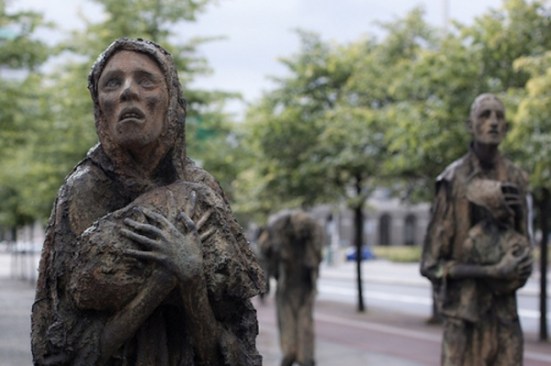
This a sad story of one of the Irish workhouse famine orphans, my ancestor Eliza Fitzpatrick.
Her story is one, initially, of normal native Irish family life, then blighted by the Famine, the workhouse, and being sent to Australia, where her marriage, children, and oversall loss apparently sent her into a downward spiral and a tragic death. The naming of her daughters seems to reflect a memory of and desire for a better time in her life.
Eliza was the second of six children born to Stephen Fitzpatrick and Eliza (Betty) Bryan (Brian) who married 7 October 1827 in the Catholic parish of Maryborough (Portlaoise), Queen’s County (County Laois). Maryborough was a farming town with cottage industries, flour milling and worsted manufacture.
Stephen Fitzpatrick’s occupation was coachman, dealing with horses and carriages for those in the ‘big houses’. However his work was not permanent as his family moved every few years within a short distance from Maryborough.
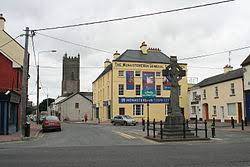
Eliza’s older sister Marianne was born in 1829 in Mountmellick, Queen’s County, a prosperous industrial town of tanning and textile industries. Eliza was baptised 26 December 1830 in the Catholic parish of Monasterevin, Co. Kildare, as was her brother James in 1833. Their residence was Clogheen, a townland just west of Monasterevin.
A sister Catherine was born 1836 in Kildare town, a prosperous pasture, horse breeding and crop farming district. She died and another sister also named Catherine was baptised 1840 in Maryborough.
Eliza’s youngest sister Ann was baptised 1843 in the Catholic parish of Athy, a small market town in County Kildare.
Nothing more is known of Eliza’s family between 1843 and 1849 when Eliza then appears in the New South Wales, Australia Immigration lists. She arrived in Sydney, 3 July 1849 on the vessel Lady Peel among a group of 18 girls from the Athy Workhouse. Her parents were listed as ‘both dead’.
The effects of the Famine varied from place to place but were severe in both Athy and Monasterevin. The Athy Workhouse in County Kildare, built to accommodate 360 adults and 240 children, housed 1,528 people by February 1849. Twelve hundred people died in the Athy Workhouse during the Famine. Eliza was an inmate at this time as was, most probably, her 9 year old sister Catherine who survived the Famine. Eliza would have left her only remaining family member behind when sent to Australia.
Between 1848 and 1850, over 4000 Irish female orphan girls aged 14-18 were chosen from Irish workhouses to be sent to Australia as domestic servants, known as Earl Grey’s Orphan Emigration Scheme.
At a meeting of the Athy Workhouse Board of Guardians in early 1849 a group of 18 females who had been selected from the workhouse children to emigrate to Australia were introduced to the Board. A report of that meeting noted ‘their appearance both as to good looks and comfortable clothing spoke well for the care they had received in the workhouse’. The girls were told that they were going to a more favoured land…they had the best chances of independence and happiness if they discharged their duties with honest industry and zeal….and trusted the accounts from Australia would always be in their favour. The report concluded a description of the girls withdrawing from the meeting with ‘many respectful courtesies’.
The Immigrant passenger list for the Lady Peel recorded that Eliza Fitzpatrick was aged 19, her occupation – house servant, native place – Monasterevin, Co Kildare, literacy – she could read and her health was good, wages 10 British pounds for one year.
Sydney, founded in 1788 as a convict settlement, soon grew to a freer society. By 1851 its population was about 39,000 and experienced rapid growth to 95,000 in 1861.
The orphan girls, soon after arrival, made their way through Sydney city to the Female Immigration Barracks, formerly the Hyde Park barracks, which until 1848 had housed convicts transported from the United Kingdom. Eliza was soon placed in domestic employment at nearby Waverley at 10 British pounds for one year. It’s highly likely that her employer Joseph Vickery, a boot and shoe manufacturer who established a tannery in Waverley. He had two sons who became prominent businessmen. It’s unknown how long Eliza stayed in this employment.
Later records show that around 1853-54 Eliza gave birth to a daughter Mary Ann (surname unknown). It’s also unknown if Eliza was married or had the child out of wedlock. Church marriage and baptism records for that period in New South Wales have been searched without success. Mary Ann later took the surname of her step-father Henry Parker.
Eliza, a spinster, at the late age of 25 married Henry Parker, bachelor, storekeeper, aged 25 on 17 March 1856 at Christ Church, parish of St Lawrence, Sydney. The residence for both was Swan Street, Sydney.
Eliza was about two months pregnant at her marriage. Her husband Henry Parker was born near Cockermouth, Cumberland, England in 1831. His father was a farm labourer, and a carter. In the 1851 England Census Henry was listed as a miller’s apprentice in Workington, Cumberland. His brother Joseph and family emigrated to Sydney arriving February 1853, and stated that they had no relatives in the Colony. It seems that Henry arrived between 1853 and in time to make Eliza pregnant around January 1856.
On 28 October 1856 at 20 Crown Street, Woolloomooloo, Sydney, Eliza gave birth to her daughter Catherine.
In 1858, the family was living at 51 Crown Street, Woolloomooloo. Their son Joseph William was born on 15 April in Crown Street. Eliza was the informant for the birth and stated that she also had one girl living (actually two girls living). Sadly Joseph died on 2 September 1858 from bronchitis, duration 14 days. His abode was given as the Benevolent Asylum but he doesn’t appear in their records. He was buried at Camperdown.
A daughter Ann Sarah was born 6 August in Crown Street. Elizabeth (sic) was the informant and this time she stated that she had two girls living and one boy deceased.
Their youngest child Eliza was born on 4 November 1860 at Crown Street. The informant was Henry, no longer a storeman but a labourer. Three girls living and one deceased. Sadly Eliza died on 9 November at Crown Street, aged 5 days and buried at Camperdown cemetery. The 1861 Sand’s Directories lists Henry Parker as living at 60 Crown Street, Sydney. His occupation was not given but his neighbours included a compositor, carpenter, printer, tailor, clerk, draper and a professor of music.
From this time Henry’s and Eliza’s addiction to alcohol became apparent. Both, but especially Eliza, feature in court and newspaper reports. An intriguing question is why turn to alcohol? Did Eliza’s experience of the Famine and loss of her family traumatise her? Were there marriage problems? Or was it grief over the loss of two of their children. Did Henry have enough income to support his family? Did circumstances overwhelm them? Did they lose hope? Why did Eliza slip into prostitution? Was it through a lack of self-respect due to her alcoholism? On 2 May 1861 the Empire newspaper reported Henry Parker before the Police magistrate, Central Police Court, ‘charged by a constable with being drunk and using obscene language, was fined only 5 shillings, as he resolved a good character, as a steady hard working man.’ From 1860-70 there are numerous references to Eliza in Sydney’s Central Court records, Darlinghurst Gaol Entrance books and various newspapers. Eliza’s ship of arrival Lady Peel is sometimes included which confirms her identity.
Eliza’s list of convictions becomes tedious reading. Obscene language, insulting language, assault, vagrancy, prostitution, drunk and disorderly, theft, drunk and riotous. Her court sentences were usually a fine or gaol. Invariably she went to Darlinghurst Gaol with short stays of a day or two, sometimes a week or a fortnight, or a month’s labour and even two months. In October 1864 Eliza was found guilty of having assaulted her daughter Mary Ann aged about 8 (sic) by striking her twice with a broom handle. Charges had been laid by her husband Henry because Eliza often left home and returned under the influence of liquor. He’d instructed Mary Ann not to let her mother into the house. Hence the assault and beating for obeying her father. As usual Eliza went to gaol, a fortnight, instead of paying the 20 shillings fine.
On another occasion in December 1866 Eliza along with James Frost (her pimp?) were charged with stealing from John Leftwidge. Leftwidge had met Eliza at the Haymarket and went home with her. During the night Frost took 2 Pounds 5 shillings from Leftwidge’s trouser pockets. In the morning Leftwidge complained to Eliza who told him to ‘go to ……’ The complainant never turned up at the Quarter Sessions trial in early February 1867 so Eliza and Frost were not prosecuted. However Eliza was soon arrested a few weeks later as being drunk and riotous and spent 7 days in Darlinghurst Gaol.
In July 1867, Eliza’s daughter Mary Ann Parker came to the attention of New South Wales authorities. A letter from the Police Department, Inspector General’s Office concerned vagrant girls who might be dealt with under the provision of the Industrial Schools Act 1866. The list of girls included Mary Ann Parker aged 14, robust, unknown if she was a prostitute, her father, respectable, residing in Devonshire Street, Mother a dissipated character. Mary Ann Parker the constant associate of Thieves and Prostitutes.
Eliza was sentenced to two months in Darlinghurst Gaol in late August 1867 for Vagrancy (idle and disorderly) shortly before Mary Ann was sent to the Refuge. Newspapers reported on the squalid circumstances. A police constable saw Mary Ann Parker aged 14 with a prostitute in Elizabeth Street having accosted two gentlemen. Mary Ann had not been home for some time. The constable went to her Devonshire residence and found her step-father beastly drunk. Parker said he could get no good of the girl and that she ought to have been apprehended long ago. A sergeant said he’d seen Mary Ann two months earlier at a brothel in George Street, Redfern, and that her mother was a prostitute.
Mary Ann was sent in the first intake of girls to the Newcastle Industrial School for Girls. She was recorded as a 14 year old Catholic with one of the best reading levels of girls admitted to the school. Medical assessment by the doctor showed that she was a virgin which is quite surprising given the company she’d kept. There were no reports of any misbehaviour while she was at the School. In June 1869 Mary Ann aged 16, was placed in employment as a domestic servant with a Newcastle Gentleman and his wife. The School was closed in 1871 after ongoing difficulties with the girls – rioting, obscene language, lewd behaviour and escaping.
Over the next few years Eliza spent a number of periods in Darlinghurst Gaol mostly for drunkenness. She used a number of aliases. The last possible mention of her is 15 July 1870 when Elizabeth aka Eliza Jones, born Dublin, ship Duchess of Peel (sic) was sent to Darlinghurst Gaol.
Eliza is very likely to be the Elizabeth Parker who died on 16 November 1870 in the Sydney Infirmary, occupation – laundress, age 39, born Ireland. No family details such as spouse and children were stated except that she was married. It was shocking but perhaps not surprising to me to read her cause of death: Syphilis, Necrosis of Cranium and General Debility, duration 4 months. Syphilitic necrosis of the cranium is a destructive bone disease that can occur as a complication of syphilis, particularly in the late stages. It involves the breakdown of bone tissue within the skull and can be disfiguring.
Eliza was buried in the Necropolis on 17 November 1870.
It would appear that she died a solitary death in the old Sydney Hospital. No family to support her or to supply personal details to the hospital staff or undertaker. I certainly hope that there were kindly, compassionate hospital staff to care for her in those final days. All a far cry from the traditional Irish ‘wake’ when family and community gathered to farewell the departed one.
It’s unknown what happened to Henry, now a drayman, or how he coped raising two daughters, Catherine (my great grandmother) and Ann Sarah. On two occasions Henry was described by police and the court as ‘respectable’ and ‘of a good character, as a steady hard working man.’ How successful though was he in protecting his daughters from Eliza’s behaviour? How much did their dysfunctional upbringing affect their lives and future? Was he more successful in ensuring that they didn’t go the ‘way’ of their half-sister Mary Ann?
Catherine was called Kate, and a Kate Parker was sentenced to 7 days in Darlinghurst Gaol on 22 February 1873 for obscene language. A few months later Kate, aged 16, married an English seaman William Henry Huggins who worked as a coal lumper in Sydney. He died in July 1883 and Kate remarried October 1883 to Edwin Richard Ponman a wharf labourer to whom she had further children. In 1891 during the Maritime Strike the family emigrated to London where her husband’s parents lived. Her marriage broke up later that decade.
It’s unknown what happened to daughters Mary Ann or Ann Sarah Parker.
All in all a very sad tale. It was a sobering experience for me to visit the Irish Famine Memorial in the former Hyde Park Barracks in Sydney, knowing that this was where Eliza had spent her first night on Australian soil. And to learn later that she had died next door at the Sydney Infirmary. That her family life in Sydney was only a short distance away in Crown Street, now an up-market residential area, and those main business areas such as Elizabeth Street.
My research is hugely indebted to:-
Trevor McClaughlin, author ‘Barefoot and Pregnant? Irish Famine Orphans in Australia
Jane Ison, researcher, Newcastle Industrial School for Girls
County Kildare Archives, Ireland
Ancestry.com.au
Story compiled by Eliza’s great great grandson Peter J Hansen, Motueka, New Zealand: peterandtressa@gmail.com
 Tinteán