An Address by Dan Boyle
This paper was delivered at the annual Bloomsday in Melbourne seminar, at the Swiss Club on 14 June 2025.
This year marks the one-hundred-year anniversary of the forced closure of ‘Monto’ in Dublin. An end to fornication for profit and the beginning of one hundred years of sexual purity and abstinence. Perhaps not! Irish social historian, Caroline West has just had published to great acclaim, Wrong Women: Selling Sex in Monto, Dublin’s Forgotten Red Light District, a magnificent account of prostitution in Dublin and elsewhere that centres on the individual lives of women and the struggles they faced. It’s a fascinating and often harrowing account of the brutality and the gross neglect the women endured. ‘Unfortunate women’, indeed.

Wrong Women presents as a culmination of decades of writing about this formerly taboo subject. It sources earlier social historians such as Kevin Kearns’ Dublin Tenement Life and walking tape recorder and tour guide Terry Riley’s recorded accounts of long dead people and their memories and insights. Wrong Women simply pulsates with the sights and sounds of ‘Monto.’ It is compellingly brought to life. A square mile of drunken carousing and commercial sex abuse. Music for weeping (goltraige). Music for laughing (geanntraige). Music for sleeping and forgetting (sugtraige)
This year’s Bloomsday in Melbourne offering focusses on the Circe episode in James Joyce’s Ulysses. A sprawling, brawling, fevered, surrealistic nightmare which unfolds and unravels one late June evening in 1904 in the Nighttown area of Dublin popularly known as ‘Monto’. A roughly trapezoidal shaped zone of a few intersecting or connecting streets. A discreetly tucked away pocket of sexual activity. The redlight district to the northeast of the city of Dublin. It’s nickname ‘Monto’ was derived from its former name, Montgomery Street. It was named after the 1st Viscount Mountjoy’s wife Elizabeth Montgomery. Mountjoy? For the women who worked there ‘Monto’ was another kind of prison.

The wicked history of ‘Monto’ spreads itself accommodatingly from the 1860s up to the 1950s. ‘Monto’ was, at one time, so it is claimed, to be the largest redlight district in Europe. It is estimated that there were at times up to 1,600 prostitutes working there. The reason? What’s black and white and red and comes all over? The British Army! Dublin was, up until independence, the second city of the British Empire. Thousands of soldiers were garrisoned there.
Recognising an unfortunate biological need, a so-called ‘necessary evil’, the authorities of the Irish dominion and the British Army commanders turned a blind eye to these goings on with the occasional token round up of sex workers and customers. The clientele ran the gamut of Dublin society. All financial situations could be accommodated from the wealthy to the relatively poor. A class system in micro or a peckering order.
There were the so called ‘Flash houses’ as mentioned in Circe that charged ten shillings for the well-to do businessmen, military officers and politicians. These customers could conceal their galivanting by arriving in curtained hackney cars. Second-class houses were for workers sailors and dockmen and cost five shillings. Third-class establishments catered for farm workers and cash-strapped students and undercover priests and then finally the shilling houses for the idle poor.
‘Monto’ features in many ballads and popular songs. It was never talked about. It was sung about.

The brothels were run by madams who became legendary figures in Dublin folklore. They were tough, shrewd businesswomen who ruled the roost in a strict maternal manner. It was extremely well organised crime. There was Mrs Mack who ran a high class house; Bella Cohen (real name) ran a kink joint, according to Caroline West, and specialised in theatrical sado-masochism. Mrs Cohen’s brothel occupied a middle position in the pecking order. When it became known that brothel madam Peg Plunkett was writing her memoirs, many of Dublin’s high and mighty scurried off to the nearest peat bog!
‘O There goes Mrs Mack. She keeps a house of imprudence. She keeps an old back parlour for us poxy medical students!’
Other Madams were Meg Garnet, Becky Cooper and May Oblong. They were known to carry cut-throat razors. The brothels were known as kip-houses and the madams, kip-keepers. Their bouncers who kept the girls and customers in line were known as kip-bullies. They carried knives and lead pipes. Think Peaky Blinders. There are anecdotes of blindings in gang brawls. Many of the kip-houses also sold illegal alcohol which helped separate the men from their wallets. Kippers anyone?
Irish social historian, Kevin Kearns, explains many of these women who ended up in ‘Monto’ were unwed mothers who came in from the country and had been abandoned by their families and their babies’ fathers. Sometimes their own fathers were the babies’ fathers. Many contracted syphilis, and their babies often did not survive. Joyce acknowledges the ways in which the sex-workers supported one another, sometimes taking the hat around for funeral expenses. The girls had little option other than prostitution. From the time of the Irish Famine, young women came pouring in from the farmlands to seek work in the large cities. There was a huge number of domestic and factory workers. But there was always a percentage of women who were seduced and or bullied into prostitution.
This YouTube video gives a grainy account of conditions on the streets of Monto in the early c20.
Roman Catholic orders ran Magdalene Laundries, also known as Magdalene Asylums to house ‘fallen women’. An estimated 30,000 women were confined here over the life of these institutions. Scolded by nuns, theirs were lives of domestic drudgery. They were put in for twelve months. After that the prospects were slim. The women had few choices, but to leave this appalling situation for an even more appalling and dangerous to health option, the kip-houses. But at least, the madams gave them nice clothes to wear, housed them and took a high percentage of their earnings, if you please!
Caroline West makes no bones about it. These women were virtually slaves. There are horrendous anecdotes of women who had run afoul of the kip keepers and their bully boys. They were beaten, raped, stripped of their clothing. Their faces were often slashed with razors. The river Liffey teemed with the bodies of women who had either been murdered who had been driven to end their own lives. The girls were young, attractive and known for their generosity to slum children. The women were held in great sympathy by their impoverished neighbours.
Granny Dunleavey is another renowned figure of ‘Monto’. She educated the women in their sexual health and cared for them when they were turfed out of the kip-houses due to unexpected pregnancies. Granny Dunleavey performed abortions or delivered their babies. She cared for the orphans and helped the girls get back on their feet.
In this pre-penicillin era sexual diseases were endemic. Even in repressive Ireland there had always been attempts to lessen risk with rudimentary prophylactics made from pig intestines and dangerous chemical treatments. Some kips offered bogus sexual health certificates. One estimate stated that in 1915 there 3000 cases of syphilis in the occupying British Army. One wag suggested ‘Monto’ women did more damage to the British Army than the IRA. Syphilis was a disfiguring terminal illness. Westmoreland Locke Hospital known as ‘The Lock’ was a hospital for venereal disease located on Townsend Street. Prostitutes with end stage syphilis were allegedly euthanised there.
When one thinks of the great red-light districts of Europe one thinks of elegant Parisian brothels with balconies and court yards or the upfront shopfront windows of Copenhagen. ‘Monto’ in Dublin was a much more suburban affair, entirely in keeping with unassuming Irish modesty and discretion. Repurposed tenement housing, slums, actually. Hovels were transformed into council flats. An interesting parallel is the old slum dwellings in old Fitzroy which were swept away in the 1960s and replaced with concrete tower blocks. Something similar happened to ‘Monto’. Vice and the city solution. The good fathers of Dublin had built a restraining wall to contain the sex traffic to its designated area. On the other side of the wall were the unfortunate poor who had to live in proximity to this hell mouth. This wall features prominently in the fall of ‘Monto’
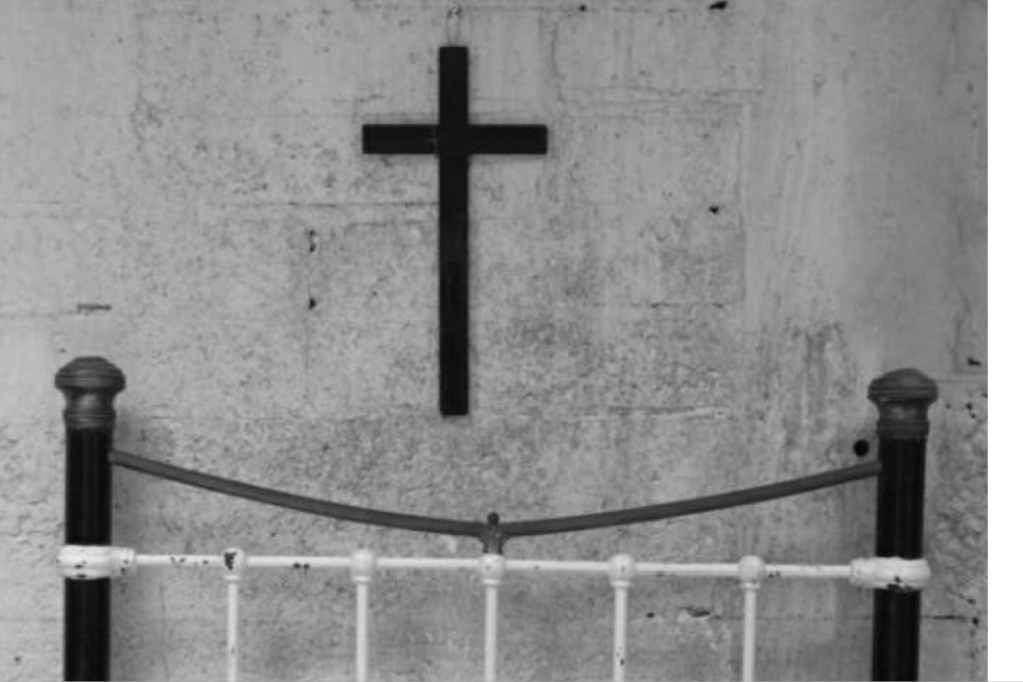
Just shy of St Patrick’s Day in March 1925, after years of campaigning and cajoling Frank Duff, lawyer and founder of the Legion of Mary (and currently being considered by the Vatican for canonisation) and, with the co-operation of the Dublin Metropolitan Police Commissioner Sir John Ross, led the raid on the last two remaining kip-houses in ‘Monto’. Just as St. Patrick had given the snakes of Ireland their marching orders, similarly the snake ladies were driven out of Dublin’s Garden of Eden that was ‘Monto’! The last nail in ‘Monto’s’ coffin was the spike Frank Duff hammered into the moral wall and hung a crucifix from it. ‘Monto’ had been claimed by the Legion of Mary. 120 people, girls and patrons were arrested. Two madams were arrested. Polly Butler who got 6 weeks in Mountjoy Prison and Mrs Mckenna who was let off on a technicality?
But where had all the flowers gone? From 1,600 to a few dozen? First, the British Army had left, and although the Irish Free State Army had done it’s best to fill the breach, they were no match for the Legion of Mary. For years Frank Duff and his cohorts had cajoled and even bribed the madams and girls 40 pounds to leave the kips and be rehabilitated back into decent society by way of the Sancta Maria Hostels.
In 1925 this was the end of ‘Monto’. But, of course, it wasn’t the end of prostitution in Dublin. Where there’s a willy there’s a way. Thanks to corrupt police, organised crime and a new generation of kips and kip-keepers it was fairly soon, funny business as usual. Sex work has always been a moveable feast in Dublin. One area would be shut down only for sex trade to pop up again like floozy topsy down the way! Irish social historian Caroline West informs us that Ireland’s well-regulated sex industry thrives in this present day. Great attention is paid to the sexual health and well-being of all concerned. Erin goBragh! I strongly recommend Caroline West’s ‘Wrong Women’.
The organised crime element? Sex trafficking, legislative bungling? Perhaps a discussion for another occasion. Little remains of old ‘Monto’ today. It was modernised and gentrified. Mabbott Street became Corporation Street till its present incarnation, in the commemorative reminder, of former patron and wayward son, in the renamed James Joyce Street!
Dan Boyle
Dan is an enthusiastic Joycean, an actor and a singer. He took part in Circe’s Carnival of Vice in a variety of ensemble roles.
 Tinteán