
An Address to Brigidfest Melbourne 2025 by Siobhan Dooley, Publican at The Drunken Poet, Peel Street, Melbourne, on 9 February 2025
A Dhaoine uaisle, cairde agus cairde nár cuireadh in aithne go fóill, ba deis scanrúil ach ónarach é seasamh ós bhur gcomhair le mo dhearcadh de chumhacht bhog Éireannach, mar atá feicthe taobh thiar den bheár agam, a roinnt libh.
Nuair a fhéach mé ar an liosta d’iarr chainteoirí ag na himeachtaí féile Bhríde a chuaigh thart, chonaic mé go raibh polaiteoirí agus acadóirí mór le rá ina measc agus d’fhiafraí mé orm féin an cúis gur iarraidh orm labhairt inniu.
Is táibhneoir mé, agus táim ag obair taobh thiar den bheár ag ‘The Drunken Poet’ le fiche bliain anuas. Ach ansin cheap mé b’fhéidir go mbaineann téama na cainte seo liom, mar is naomhphátrún d’fhilí, grúdairí agus taistleoirí í Naomh Bhríde- gnéithe uilig a bhí lárnach i rath ‘The Drunken Poet’.
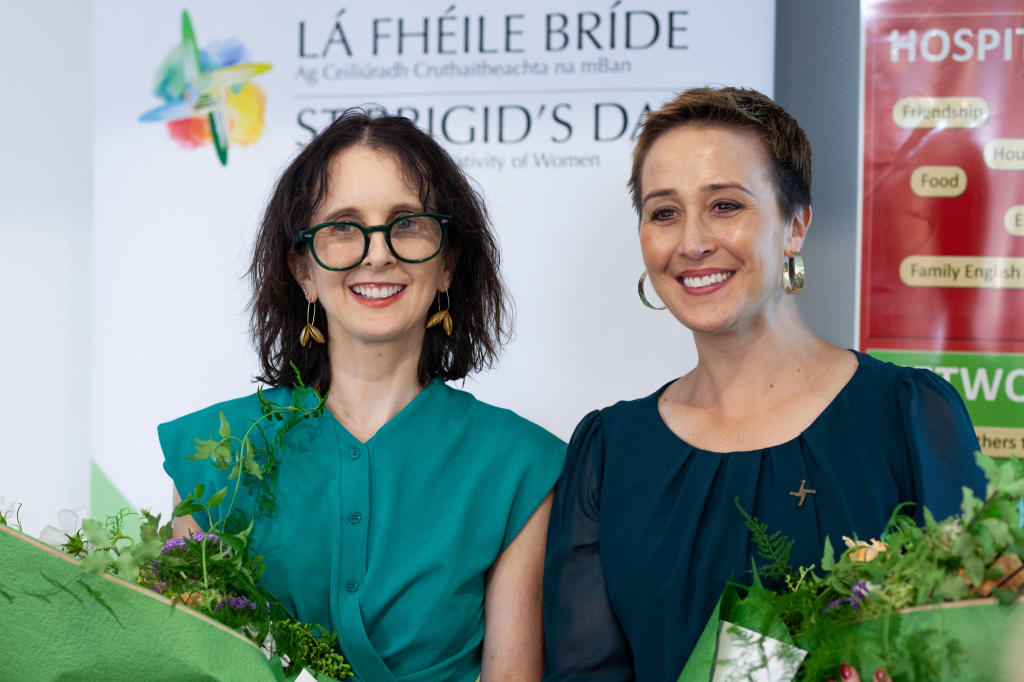
Is everyone following me so far?
Ambassador, Ladies and Gentlemen, Friends and friends I haven’t met yet, it is an absolute terrifying experience BUT an honour to stand before you all today to give you my perception of Irish soft power, as seen from behind the bar.
When I looked at the list of past speakers at the Brigidfest events, it included politicians and academics, and I wondered why I was asked to talk today?
I am a publican, and I have been working behind the bar at The Drunken Poet for almost 2 decades. But, actually the theme for this talk is perhaps my domain, given that St. Brigid is celebrated as a symbol of Irish identity, creativity, and amongst other things, she is the patron saint of poets, brewers and travellers – all of which are integral to the success of The Drunken Poet.
Brigid would actually have fit in very well at The Poet, one of the many miracles she is said to have performed is she turned water into beer – which of course would be a very welcome skill if used for my benefit! Brigid was a strong woman, and quite a colourful character, she was a thief – anything she could get her hands on, she stole from her rich Dad to give to the poor. And the story goes that the King was so impressed by Brigid’s unapologetic take on her thievery that he concluded her to be very holy and clearly answering to a higher authority, and so should become a nun. Which she did and later when a nobleman makes fun of her for choosing the veil over marriage, she explodes his eyeballs with the ferocity of her reply.
Irish women don’t really get angry, we just get better at brilliantly aggressive sarcasm!
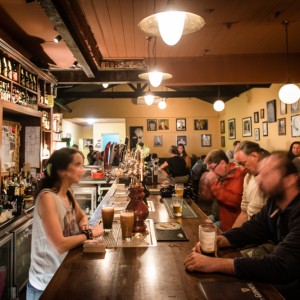
In September 2006 I opened the Drunken Poet and my goal was to be the most authentic, coolest Irish pub in Melbourne, to blend tradition with modernity. I actually considered having no music, not even background music, hoping that the rhythms of conversation would carry the ambience but I’m glad we didn’t go that route as music is very much the soul of the Poet.
Today, I will discuss the evolution of ‘Irish soft power’ , as I’ve seen over the past 20 years, it’s relevance and address some common misconceptions.
Firstly, I should explain what soft power is.
Soft power arises from the attractiveness of a country’s culture, political ideals and policies.
Ireland’s soft power is rooted in its rich cultural heritage, global diaspora and reputation as a welcoming, innovative and peace-oriented nation.
Basically, whereas hard power compels, soft power convinces.
One could say that there is an Irish ‘empire’, not built by military might or force of arms, but just by the fact that there are so many people around the world of Irish ancestry, this number varies from an official estimated diaspora of over 70 million people worldwide to half the planet on Paddy’s Day!!
Pretty impressive for a country with a population almost exactly the same as Melbourne.
In terms of soft power and international influence we really do punch above our weight!!
And now because of technology and communications, this diaspora is connecting with Ireland, more than ever before.
But is this ‘green’ soft power warranted? The idea that simply being Irish confers a certain level of cultural prestige is ingrained in the mindset of a large percentage of Irish people. Often I hear from Irish people ‘oh Irish people are better craic, wittier, we are more literate, more musical, we are better drinkers’ we are in fact the best at everything in the world! And this idea is spread all over the world by the Irish diaspora, mainly when they are sitting on a high stool in Irish pubs!
In Irish society the pub serves as a central community hub, it’s a vital part of Irish culture and social fabric. It’s more than just a place to drink, I see it firsthand every day, it’s a place where people gather to meet old friends, catch up on news from home, bitch & moan, seek advice and solve the world’s problems!
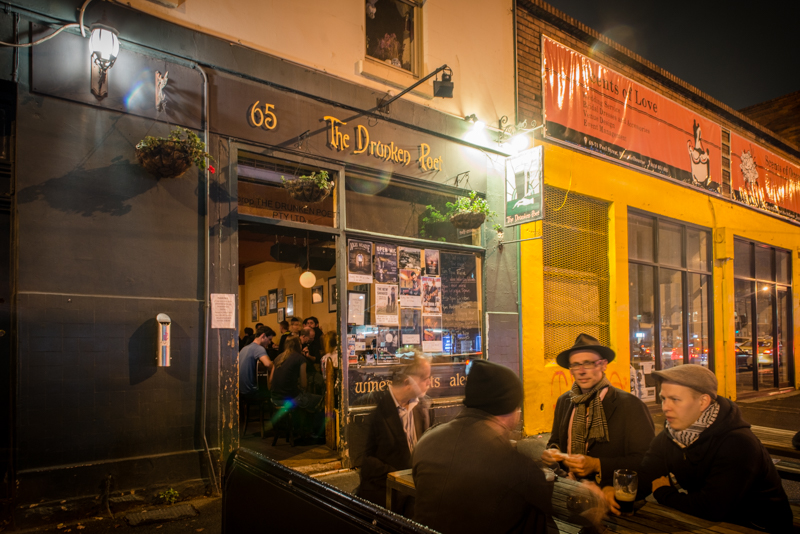
Irish pubs such as The Drunken Poet are central to any conversation about Irish soft power.
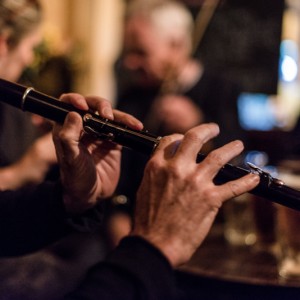
They are cultural embassies, not just for Irish migrants but to anyone drawn to the warmth, music, storytelling, craic that characterises Irish life. From my own experience with Irish pubs, their magic lies in their ability to foster connection – Irish pubs foster intimacy, it invites conversation and not just casual chatter but deep, meaningful exchanges. At my pubs I have never had TV’s, a decision made to ensure conversation and connection always happens for everyone who enters.
Irish pubs are also a place where people randomly make new friends – tables at the Poet are for sharing!
I so often have people come in and thank me for introducing them to friends and even partners they first met at The Poet, there’s one particular group, all now married with kids living in the Point Cook area, they are always trying to get me to move The Poet there!
I like to think I have created a home away from home – for the new, young travellers just arrived, some of them like a deer in headlights, and then I see them with a confident swagger 6 months later, for the newly married, often inter-racial marriage couples that want to foster and maintain a connection with Ireland, for the elderly for whom travelling home is not a reality or possibility anymore but who enjoy the company and infectious enthusiasm of the younger Irish and for those of Irish ancestry who somehow feel a connection with Ireland and want to learn more or experience more of their cultural heritage.
I’m always just amazed that what I do is considered so special – asking someone how their day is? I get as much from the banter as I give!
Beyond the culture preservation role of the Irish pub, it also plays a huge role in Irish culture propagation.
The Poet actually has a lot of Asian customers, with no Irish connection but they embrace the conviviality and hospitality of The Poet and will order a ‘black beer’ or a pint of Guinness just to feel part of a culture they know so little about. My Friday night trad session often has Japanese fiddle players and they are excellent!
Irish expats are perhaps the best ambassadors for Tourism Ireland, every Irish person is always banging on about how they are from the best part of Ireland, in particular Cork people! If there’s one thing I hope ye take away from my talk today, it’s that Kilkenny is actually the best part of Ireland!
When we talk about soft power, we’re talking about the influence Ireland has overseas, and there’s probably no area of culture where we have such global appeal as our music and storytelling.
Irish music captivates audiences worldwide with its distinctive sound, emotional depth, and rich cultural heritage.
It often explores universal themes such as love, loss, longing, and resilience, which resonate with people across cultures. Poignant melodies and heartfelt lyrics evoke a deep emotional connection, making it relatable to listeners regardless of their background. Late at night it’s not uncommon for someone to start singing in the pub and launch into a beautiful ballad that will silence the whole pub.
Storytelling is at the heart of Irish music, often recounting historical events, folklore, and personal narratives, many of them tragic. These stories allow listeners to engage with Ireland’s history and culture, fostering a sense of connection and curiosity.
The Irish diaspora, everywhere they went played a significant role in spreading Irish music globally. Immigrants brought their musical traditions, their songs and their instruments with them, blending them with local styles and creating new genres, such as Celtic punk and folk-rock.
Irish music blended with African-American and Appalachian music to form the foundations of country and bluegrass. The fiddle, a staple of Irish music, became a key instrument in these genres.
Likewise, the Irish are also not shy about adapting their music, Irish emigrants in the United States started incorporating the Banjo into their tunes, similarly the mandolin, originally from Italy and in the 60’s and 70’s musicians like Barney McKenna of The Dubliners & Andy Irvine popularised the banjo and mandolin in Irish music. In Melbourne today we are very fortunate to have Maggie Carty an excellent banjo player, who regularly plays at The Poet.
Also, keep an eye out for Austral, another band who have performed at The Poet, they are a 4-piece Australian-celtic band combining uileann pipe tunes, fiddles, didgeridoo and foot percussion. They are brilliant!
Music and poetry are also such an important part of Irish life and Irish pub life.
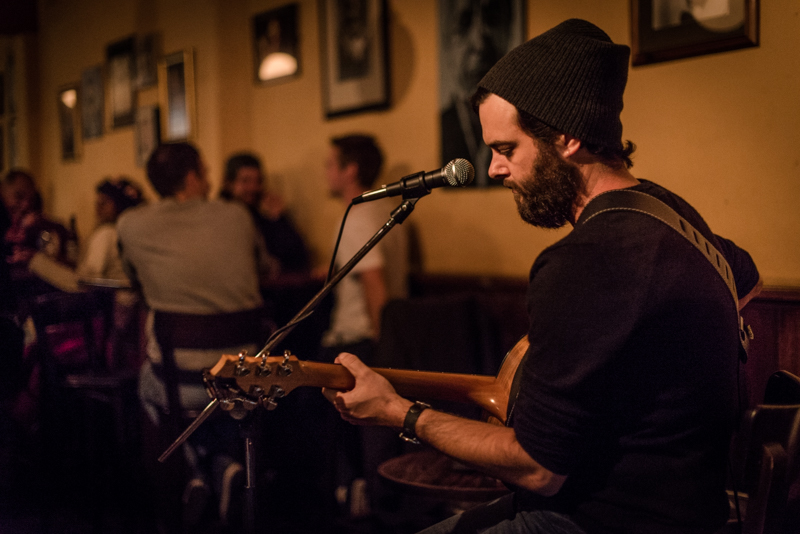
At the Poet we have free live music 6 nights a week. Music is the soul of our establishment. Our music offerings span all genres of music, with an emphasis on original singer-songwriters. Wednesdays, we have female performers, our ‘Wine, Whiskey, Women’ night, we host bluegrass, blues, country, rock acts and of course our Friday trad sessions, The communal nature of the sessuin, where musicians gather to play informally, un-mic’d ,fosters a sense of inclusivity. Likewise, our open-mic night encourages people from all walks of life to engage with the music and poetry, whether as a performer or listener.
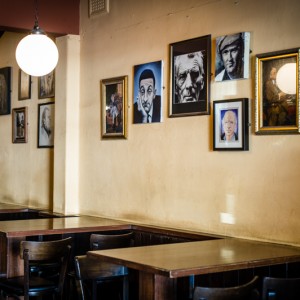
So too our walls are also adorned with portraits of poets past and present, a means of preserving a cultural legacy. Every night someone comes up to me to ask who a certain portrait is, I could put a plaque with every poet’s name but it’s more fun to watch group’s arguing over who is who. Increasingly, I get suggestions of new, emerging writers, whose portrait should be on our walls. Ireland’s literary scene has never been so prolific – Sally Rooney, Claire Keegan, Paul Lynch, Donal Ryan, to name a few, and so while the Irish have always been well educated re: our poets/writers, now we also have new writers emerging that we are also very proud of.
For many, Irish music and poetry embodies the spirit of Ireland itself—resilient, passionate, and timeless and brings to life the romanticised image of Ireland as a land of poets and scholars.
I get asked all the time about the pub name – question answered!
The classic example of a global Irish phenomenon is of course Paddy’s Day.
St. Patrick’s day in Australia is not only a celebration of Irish culture, it also highlights the contributions of Irish immigrants to Australian society and fosters a sense of community and shared heritage.
Paddy’s day at the Poet is a day of great music and atmosphere with bands playing all day long and queues out the door and the crowd are a mix of Irish and every other nationality.
Ironically, Paddy’s day is the only day of the year where I have to employ security, not because of any unruly behaviour, but because it’s the one day of the year where I can guarantee the police will stop by to check that we’re not over capacity and are complying with our liquor licensing conditions, it’s the only day of the year that the queue is at the front door and not for the toilets.
Another example of a Global Irish phenomenon is our food and drink.
There is a vast diaspora of Irish chefs working in and running some of the best kitchens around the world. When we had the Last Jar, dishes such as the Irish stew and Irish Soda Bread, were popular with both the Irish & Australians but it was a greater thrill to introduce people to crubeens, coddle or boxty.
And then there are the Irish drinks, Irish coffee, Irish whiskey and of course Guinness – Vitamin G, our greatest cultural ambassador!!
Guinness has recently seen a surge in popularity around the world. After many years of the Irish telling everyone it’s the best beer in the world, recent clever marketing and social media on ‘splitting the G’ challenge, has increased the popularity of Guinness. Once considered an ‘old man’s drink’, now everyone, especially women and gen Z are drinking it.
The UK recently had shortages of Guinness which caused some pubs to go as far as issuing ‘ration cards’ for pints over the Christmas season. Of course many Irish were quick to jump on the bandwagon, joking that there was in fact no shortage, we were just holding it back as payback for the famine.
Currently, there is an absolute love-affair with everyone Irish in Hollywood.
Our amazing Irish actors – Cillian Murphy, Paul Mescal, Andrew Scott, Saorise Ronan, refreshingly don’t sucuumb to Hollywood norms and are not afraid to speak their minds. Galway-born Nicola Coughlan (of Derry Girls and Bridgerton fame), who is continually hounded by the media’s obsession with her body, steadfastly wore an #artistsforceasefire pin and raised over $US2 million for the Palestinian Children’s Relief Fund- a great example of soft power!
Cillian Murphy’s acceptance speech for his Oppenheimer best Actor award, he cut straight to the point ‘I’m a very proud Irishman standing here tonight. We made a film about the man who created the atomic bomb and, for better or for worse, we’re all living in Oppenheimer’s world, so I’d really like to dedicate this to the peacemakers everywhere’ .
In Ireland our artists are respected and taken seriously, this in turn has led to their confidence to speak out.
These young global actors also do very well to dispel the stereotype of ‘the drunken Irish’, unlike their predecessors Richard Harris and Peter O’Toole.
I think this stereotype, while not completely unfounded, is very unfair.
The Irish like to drink and we are excited to engage with others, generally speaking it’s social for us and my experience has been that while the Irish get loud and cheeky, the Irish lads are very respectful to women in charge, better than most nationalities.
No longer is it quite so acceptable to boast about how many pints they drink and in fact many have just finished dry January. When I opened the Poet in 2006, I had one light beer, that I rarely sold, I now have three non-alcoholic beers (including Guinness zero), one light, two mid strengths, a few low-carbs, all of which sell very well!
It might surprise you to know that Nigeria drinks more Guinness than Ireland!!
Such a Fall from Grace!
At the Drunken Poet I have regulars and patrons of all ages and backgrounds from Baby Boomers to Gen Z and each generation has it’s own take on Irish soft power.
The Baby Boomers were around before I opened The Poet and they are so grateful for a ‘home’ like The Poet, it’s small, intimate, like ‘their local’ they would have left behind in Ireland, no TV’s, no cocktails, no pokies and a publican who actually works in the pub and knows their name and drink. These guys can often be quite successful over here as a result of hard work, they have strong Irish accents, don’t travel home too often, I find they are not very sentimental and surprisingly often quite tolerant of new ideas. Quietly spoken but interested in others. Many were or remain hardened drinkers, in THEIR day, the pub was the only means of staying connected.
I am part of the Gen X group that exists out here. A lot of us spent time working, mainly due to necessity in both the UK or US prior to coming out here. Many moved here through skilled migration programs – particularly in fields like engineering, nursing and education. This cohort is often interested in many musical genres, not necessarily traditional Irish music but alternative rock, punk, post punk and rave, many are married or divorced over here and I would say have a great interest in the promotion of Irish soft power.
When I opened the Poet in 2006, Ireland was booming economically -‘The Celtic Tiger’ years, and I was quite fortunate that ‘Flashpackers’ started to arrive – young Irish tourists, plenty of money, not much of a drive to find work, they partied hard and so they helped get the Poet off the ground. These were the Millennials, some were entitled, privileged, often calling home for extra cash to be sent out – a complete reversal from the days where the Irish in Australia sent money home to those left behind in Ireland. And then the global crash, the GFC, happened and lots of these kids went home. The ones who stayed had to buckle down. The second wave of millennials after the crash were so anxious to get work, get sponsored and stay in Australia if possible
And more recently, the arrival of Gen Z and they are arriving in their droves.
This new generation I have to say are ‘the best’. Generally speaking, they value diversity and inclusive culture, they are queer-friendly, many of them don’t even look typically Irish, they can be dark-skinned with thick Dublin accents or Asian-looking with a Cork lilt, they want to work and they value the work of others. Whereas the millennials might ask me why I was working so hard, the Gen Z have respect for what I do. These kids have travelled here because of the better weather ‘climate refugees’ the money is better than at home and it’s basically a rite of passage to travel and work in Australia these days. However, a lot of them are happy to come all this way and spend all their time in County St. Kilda, partying with other young Irish in Irish pubs – it’s like a cult and it’s not the best image of the Irish that they are portraying over here.
There is also a growing Cultural Nationalist sentiment amongst this group!
A number of factors have led to this , there is a West Belfast rap band called Kneecap , who rap in the Irish language, they have played at Glastonbury and (there’s a biographical film, if anyone is interested, which was described as ‘a rebellious anthem for cultural preservation. So there’s a renewed interest in the Irish language.
Music-wise bands such as Lankum, Fontaines DC, Murder Capital are touring with sold out shows worldwide and even more traditional acts with a more modern edge i.e. Lisa O’Neill, The Elephant sessions are also rising in popularity in the folky/indie scenes.
There’s a revival in cultural pride and while this nationalism does have anti-imperialistic foundations, it has evolved into a more inclusive movement. Young Irish backpackers come drinking with their English backpacker friends to the Poet all the time.
But no longer are the Irish the butt of the joke. One of my favourite Irish comedians Garron Noone who sometimes likes to poke fun at the English, recently noted that the English are great at taking a joke, whereas if an English person makes a joke about the Irish, it’s guaranteed that within 4 minutes the entire history of the famine will be recalled!
This could be as a result of 800 years of oppression OR has our soft power resulted in us becoming soft?? Having said that, the Irish are great at making self-deprecating jokes!
As stated earlier soft power is also determined by political ideals and policies.
Ireland wasn’t always the progressive international leader it’s seen as these days.
Ireland has undergone a remarkable transformation in recent decades, evolving from a traditionally conservative, Catholic-dominated society into a more inclusive and progressive nation. This shift has been driven by social, cultural, and political changes, as well as a growing emphasis on equality, diversity, and human rights.
Historically, the Catholic Church held significant power over Irish society, influencing education, healthcare, and social norms. However, scandals involving the Church, led to a loss of trust and a decline in its authority. This shift allowed for a more secular and pluralistic society to emerge, and while their Christianity is still key to many Irish peoples identity, it is less of a driver for political and social opinions. The Irish have become a more inclusive and progressive society.
Ireland decriminalised homosexuality in 1993 and introduced divorce in 1995 through referendums, reflecting a shift toward more liberal social policies.
In 2015, Ireland became the first country in the world to legalise same-sex marriage through a popular referendum, with 62% of voters in favour. This landmark decision reflected a dramatic shift in public attitudes toward LGBTQIA+ rights and signalled Ireland’s commitment to equality.
In 2018, Ireland repealed the Eighth Amendment, which had effectively banned abortion, following another historic referendum. The introduction of abortion services in 2019 marked a major victory for women’s rights and bodily autonomy.
Ireland was often thought of as a very conservative country, but there has always been a progressive movement bubbling under the surface and now Ireland has overtaken the world in some respects. Again, green soft power in action – leading by example.
But at the same time as all this Irishness is being celebrated in all its green glory overseas and online, Ireland itself has some crippling issues going on!
In the last 2 decades, Ireland’s historic tradition of emigration has reversed. Today about 1 million of the 5.1 million population were born abroad. But it is recent immigration that has had the greatest political impact. More than 100,000 Ukrainians have arrived since Russia invaded their country and the number of asylum seekers from Middle Eastern, African and other countries relying on the state to house them has more than quadrupled in 3 years!
Many argue ‘Ireland is full’, asylum seekers get housed in hotels, but no services are provided for them. We have a housing and homelessness crisis, all this despite an 8.6 billion euro budget surplus last year. It’s this housing crisis that will continue to push young Irish people to emigrate.
In Nov. 2023, we saw horrific scenes in Dublin, the worst riot in modern Irish history. It was alleged that a foreign-born Irish citizen had stabbed three young children and a care worker and a group of young Irish men attacked a police officer protecting the crime scene. Police cars, trams and buses were set on fire, shops were looted – it was embarrassing chaos. But while this far-right group has altered the political landscape in Ireland, its candidates failed to gain a single seat in the last general election.
A survey conducted last July suggests a significant majority of people in Ireland, have generally favourable attitudes to immigrants arriving to make a better life for themselves or their families. Every family in Ireland has someone who emigrated at some stage, so in general there is an understanding . But this view is from behind the bar in Melbourne, it might be very different if I was behind a bar in rural Ireland!
So what’s the future for Irish soft power ?
Well, from my perch behind the bar of the Drunken Poet, the future of Irish soft power looks bright.
The Irish Diaspora continues to expand and is now more progressive and culturally diverse than ever. I see them all the time in the pub and they make me proud to be Irish. I defy anyone to sit at the bar there and not end up in a conversation with a new Irish friend, thus expanding our “green soft power”, one conversation at a time.
Our reputation as a progressive, inclusive society will only enhance its soft power while other countries are falling for the easy lure of populism.
Looking back over the last 20 years, I’m proud of what my little pub has become and also the emergence of new Irish, forward-thinking venues. We now have numerous Irish community groups online and otherwise, very active Irish associations and clubs, all celebrating and sharing Irish culture and values.
Our greatest strength lies in remaining true to who we are.
So, let’s raise our glasses to Ireland—past, present, and future. May she continue to shine as a beacon of culture, progress, and hope for the world. May her soft power grow ever stronger.
And here’s to St. Brigid, May she now turn my glass of water into a Gin & Tonic!
Sláinte!
Siobhan Dooley
Siobhan is the much-loved Publican at the Drunken Poet, an Irish bar adjoining the Victoria Market on Peel Street. She has built a community here which fosters easy discussion, and honours the poetry and music of Ireland.
 Tinteán