IDENTITY AND CAREER
By Jules Mccue.

After graduating from the Massachusetts Institute of Technology in 1894, the second woman to do so, (Sarah Allaback, The First American Woman Architect, p. 87). Marion started working for her cousin Dwight Perkins in Chicago. As the fortunes of architect’s offices wax and wane, he had to release her. She was then taken into the office of Frank Lloyd Wright, where she was office supervisor from 1895 till 1909. Both Perkins and Wright were very progressive for their time, as then it was very difficult for a woman to be employed as an architect for all the obvious reasons (biology, notions of the weaker sex and their intellectual capacity, etc.). The course, the daily grind of submitting for competitions, pleasing clients, funding the office, makes it a profession of endurance for anyone. During these early years, Marion sat for and obtained her architectural license, believed to be the first woman in Illinois, perhaps the United States and even the world, to do so. Marion’s senior thesis, completed at the end of her course titled ‘The House and Studio of a Painter’, is an innovative design that connects living and work space in a modern urban context.
Marion became Wright’s assistant or that is how he presented her. Nonetheless, they worked well together as collaborators, sharing ideas. She completed several of her own commissions at the time, one being, Henry Ford’s Dearborn mansion, ‘Fair Lane’. Reynar Banham, renowned twentieth-century architectural critic, called her the ‘greatest architectural delineator of her generation’ (Wikipedia entry: Lynn Becker 2005, Frank Lloyd Wright’s Right-Hand Woman). Wright was married to Catherine Tobin and had many children. Marion and the couple became very close. Wright called the expanding office a little university, but it imploded; Wright ran away to Europe with one of his clients. He wished that Marion would take over but on declining, Hermann von Holst took up the tangled mess. Marion was furious (see Janice Pregliasco (1995) ‘The Life and Work of Marion Mahony Griffin’ Art Institute of Chicago Museum Studies), not just because friendships and professional relationships were destroyed leaving a hurtful void, but because Wright failed to acknowledge her contribution to the designs and, most importantly, the huge body of exquisite drawings Marion had executed working in his office. He had a large folio of what was purportedly his work, called the ‘Wasmuth Portfolio’ published in Germany, in which half of the drawings were hers. Furthermore, with all of her work, he urged his staff not to ascribe them to ‘Miss Mahony’. According to David M. Amberg, this portfolio is believed to be ‘one of the most influential architectural treatises of the twentieth century.’
When upholding Burley Griffin’s talent, she lauded him: ‘his fertility in design in architecture as in town planning has not been matched by anything since the days of Louis Sullivan, who broke the ice for creative work in modern times’ (The Magic of America, p. 85) Two children of Irish fathers from Cork, Marion and Louis, made a huge mark on the international style of modern architecture. The Normans are given praise for the gift of substantial building in Ireland, but the megalith, a sepulchral mound at New Grange, Meath [below left] and the Stone Oratory at Gallarus, Kerry [below right] give testament to an ancient knowledge and skill that encapsulates the perfect design, found all over Ireland.

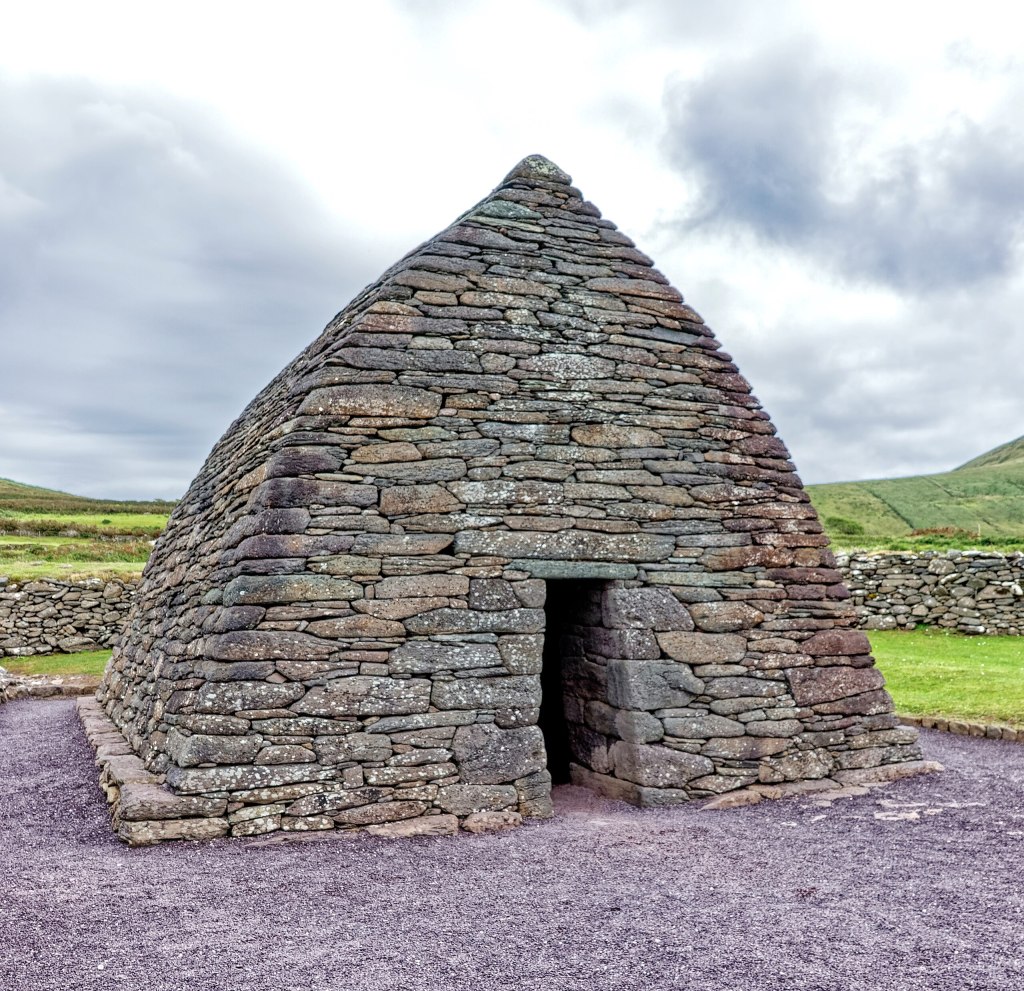
L to R: Newgrange, Photo by author, Jules McCue; Gallarus Oratory, Co Kerry. Wikimedia Commons
ARCHITECTURAL WORK, ART, AND PLANNING PROJECTS
Marion’s exquisite water-colour renderings prepared for Walter Burley Griffin’s Canberra designs undoubtedly anchored first prize in the competition for the Australian capital. The couple moved to Australia in 1914 to oversee the project. In 1930 she described the last seven years as being a ‘battle’ over Canberra. In fact, the chapters of The Magic of America are all titled as various ‘battles’. She and Walter faced considerable conflict with politicians, ‘bureau-crazies’ (her term) and builders in Canberra. Their original plans underwent much intervention, leaving a capital city that is not pure Griffin design. There were delays of court hearings and funding issues, as became the case for Jørn Utzon’s Sydney Opera House years later.


A few of her Australian works survive including the magical Capitol Theatre ceiling, the Australia Café in Melbourne and the houses at Castlecrag created by input from both architects. The Australian Institute of Architects, the NSW Chapter, commemorated her work with the ‘Marion Mahony Griffin Prize’ for an exemplary body of work by a female architect for ‘architectural education, journalism, research, theory, a professional practice or built architectural work’. (Ben Woodward: ‘Aussie Beach’, May 2015. See a list of exhibitions about her work and a list of buildings at https://en.wikipedia.org/wiki/Marion_Mahony_Griffin.

The Capitol Theatre ceiling (1924) by Marion Mahony Griffin. Photo courtesy of the Capitol Theatre Trust, RMIT.
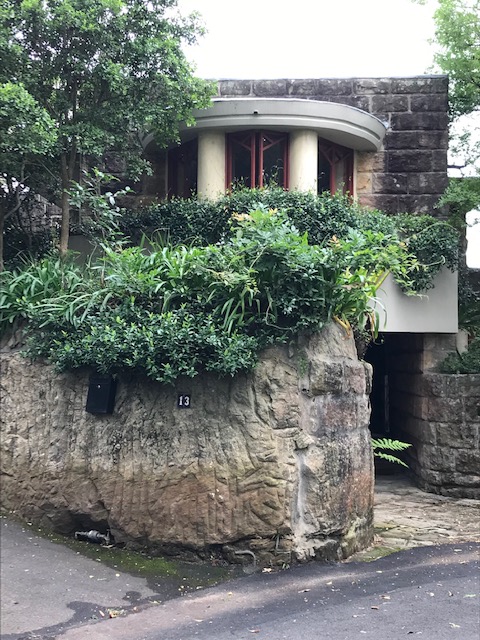
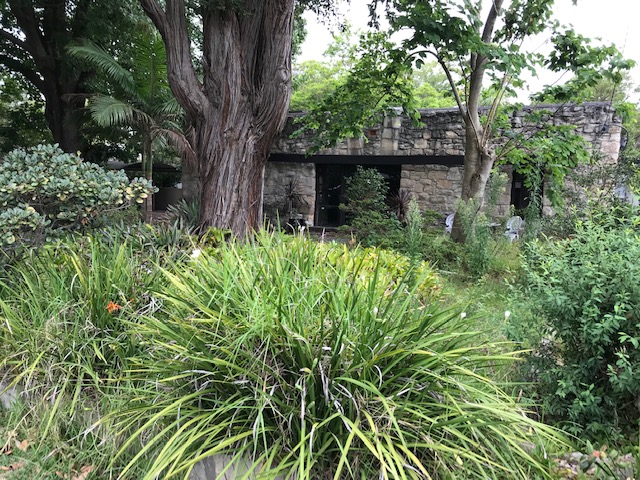
Fyshwick House, Castlecrag. Photography: Jules Mccue
THE PERSON, THE PROFESSIONAL and COLLABORATION
As a child she was an ardent tree climber – physical toughness in a man’s world – and was quite rebellious of authority in and outside the home. In the office, she was no shrinking violet. Barry Byrne, a member of Frank Lloyd Wright’s office, suggested that Mahony ‘was the most talented member of Wright’s staff’ adding, ‘and I doubt that the studio, there or later, produced anyone more superior’ (see Reyner Banham writing in the Architectural Review, 1973). Byrne reflects that Mahony won most of the office competitions, for employees to design artisanal features such as stained glass, murals, mosaics, soft and hard furnishings but Wright (according to his son) insisted she not be recognised in the commissions. Byrne also describes how her bright disposition lit up the room with humour and provocative discussion, but this doesn’t mean that there weren’t times of self-doubt and struggle.
Though Marion Mahony Griffin admitted being shy and says that others often initiated friendships and that ‘shyness in self-expression never broke down except for once. With that man of mine it seems that I was possessed. It was as if a demon took hold and shaped me to its whim’. She was swept off her feet by Walter, initially because of his professional achievements and integrity, mutual interests along with a love for nature and intellectual pursuit: ‘It was by no means a case of love at first sight but it was a madness when it struck.’ She discusses the dynamics of the marriage and why it worked, essentially because they were able to resolve the battles of their egos. She believed you must be opponents and there must be fire. She tells of their last words at his death – ‘Well now you are a free man’. His to me – ‘I’m a perfect damn fool. (The Magic of America, pp.157-60).
ENVIRONMENTALIST DESIGNS AND PRINCIPLES
Marion Mahony Griffin’s environmentalist principles underpinned her designs for buildings, communities, and town planning. Marion believed that nature ought to be preserved for all to enjoy and that it ought to be part of a child’s education. She speaks of a possible ‘park system’ to retain beautiful nature. She elaborates: ‘There can be such open beautiful spaces even in the most intensely occupied suburban districts as was proved by Mr Griffin in the competition . . . shortly before his departure for Australia’ (p.149):
. . . many years later [I]realised that this concept of freeing natural resources from absolute ownership of individuals . . . It is for the State to see to it that equity is maintained in the use of land. Its function is also to safeguard the land – nature – for the future not only for men but for all God’s creatures. We must not continue our killing of the earth’. (The Magic of America, p.163)

Designs for Dwellings 1 and 2 Castlecrag. Walter Burley Griffin and Marion Mahony Griffin for the Greater Sydney Development Association. Lithographic print on silk satin, 1922. Caroline Simpson Library and Research Collection, kindly produced with permission from the Museum of History, NSW.
In America, she was asked to submit a design for one of several Unitarian churches. She holistically meshed aesthetics and functionality with the commissioning minister Mr. Blake, who she says,
. . . had had experience with my capacity as an artist, and beauty was one of the requirements of his religion; and he knew my qualifications. The board as usual, especially as it contained an architect, took pride and satisfaction in continual obstruction. Indeed how else can a board feel that it is fulfilling its function.
I had yielded on various points one requiring a complete new design. They had turned down my first which Mr. Blake realised later was a pity. The design was an octagonal motif and an unprejudiced solution of the problem. The second design was more conventional… if I yielded on the points they were making it would mean a total destruction of beauty in the building. (Dreams of America, p. 149)


Middle: Amberg House, 1910, Grand Rapids, USA, designed by Marion Mahony Griffin and Herman van Holst. From Frank Lloyd Wright Sites Wikimedia.
Marion Mahony and Herman von Holst successfully designed “Amberg Residence”, Grand Rapids, Michigan. Basing the design on the natural topography, the garage and other spaces were placed under a slightly raised floor above so that it appears as a single-story building (The Magic of America, p.126). Her articulation of the design elements for this house are noteworthy regarding the designing of sympathetic domestic spaces.
CANBERRA, MELBOURNE, CASTLECRAG – INDIA
Meanwhile the Burley Griffins had come upon the Castlecrag project. When they saw the wide-spread destruction of the Sydney bush, they decided to purchase the rocky harbour-side cliff. In order to fund the purchase of the land and house constructions, Walter went to India in 1935 to supervise the building of his design for the library of Lucknow University. Marion followed in 1936, where she managed the office as she did in Sydney. Walter Burley Griffin died in India from peritonitis after a cholecystectomy in 1937. Bereft Marion tidied up their business in Australia and returned to Chicago in 1939, living near the beach, teaching, and writing her voluminous chronicles. She had also studied French, music, poetry, philosophy and acting; disciplines adding to the educational building blocks that make the Renaissance woman a major contributor to any architectural, town planning or other development project with which she was concerned; most especially, the Castle Crag estate and community nestled in the cliff tops of magnificent Sydney Harbour, NSW, Australia during the 1920s. The estate contained an amphitheatre and other communal spaces used for performances. There is an enchanting film of this project: http://mhnsw.au/stories/general/paradise-on-earth-documentary/
Her preoccupation with the voracious gobbling up of landscapes by suburban sprawl as observed in American Winnetka and Antipodean Sydney, firmed up her belief that ‘true democracies would protect nature for all the citizenry to enjoy’, adding – ‘more than they have under this system of despoliation.’ (Wikipedia entry – “Marion Mahony”. Prairiestyles.com).
Whilst in Australia, the Mahonys completed the design of Newman College and she the magical garden at Melbourne University, 1915-1918. Today it is still a beautiful building and very amenable to its residents.

Above: Photo of Newman College, courtesy of Newman College, 12-7-2024 Designed by Walter Burley Griffin and the garden by Marion Mahony Griffin.
In response to the new environments that Australia offered, she completed beautiful visual documentation of the flora and bush in Australia. Her renderings ‘captured the rich variety of golds, browns and reds characteristic of the Australian landscape’ (Wikipedia entry of MMG). Her astute visual observation of colour, texture, shape, and light in this alien environment kindled new insights into design, the fracture of light and colour being exquisitely employed for her innovative ceiling surface in the Capitol Theatre, Melbourne, and the Castlecrag house, and similarly her representation of flora, in particular, in her painting of Eucalyptus Urnigera Tasmania, at sunset.
PIC TO COME OF drawing of Castlecrag with Angophora lanceolata.
Basic geometric forms and prisms are experimented with in window shapes. Practical applications of these innovations are present in the Castlecrag houses where fenestration, entries, light, and colour were exploited to create beautiful, warm, inviting interiors. Magical and mystical could describe the unique spaces created by the pair. According to her testimony in Paradise on Earth, she relates the materiality and physics of these qualities to the theosophical principles of Rudolf Steiner and the phenomena of the cosmos, particularly, his series on light.
She believed that form should ‘present itself to the eye as harmony,’ as would music to the ear. She uses the analogy of a perfect crystal. There have been several books written about her marrying of Steiner’s Theosophy, magic and symbolism, to the principles of architecture (The Magic of America, pp. 107-111). She was able to see more detail than most and was a visionary of ideas: ‘In later years I learned through my own experiences, which are the only basis of knowledge, that this non-material realm is a real world as varied and rich as the material world’ (The Magic of America, p. 120]
Sad to say, Marion Mahony Griffin died in relative poverty with dementia after a long life of hard work and a profusion of creation and innovation, always maintaining her spiritual and professional integrity. Though only a few of her buildings have been preserved, Marion had trans-nationalised the Prairie style and her innovative rendering across three continents as a true female pioneer in architecture.
Sources Consulted
Elizabeth Birmingham, Pioneering Women of American Architecture: Marion Mahony Griffin February 14, 1871 – August 10, 1961.
Griffin, Marion Mahony, The Magic of America: Electronic Edition, Art Institute of Chicago, published online only, August 2007, http://www.artic.edu/magicofamerica/
Alice Friedman, “Girl Talk: Marion Mahony Griffin, Frank Lloyd Wright and the Oak Park Studio. The extraordinary career of a pioneering woman architect”, Places Journal, June 2011
Meet Marion Mahony Griffin, Frank Lloyd Wright’s best frenemy : The two architects are forever intertwined by Claire Zulkey, June 8, 2017. LONGFORM
en.wikipedia.org – Reference: [2] Allaback, Sarah [2008]. The First American Women Architect. Illinois, USA: p.87. ISBN 978-0-252-03321-6.
en. Wikipedia. Org/wiki/Marion_Mahony_Griffin] , Reference [6] Paull, John [2012] Walter Burley Griffin and Marion Mahony Griffin, Architects of Anthroposophy, Journal of Biodynamics Tasmania, 106 [Winter], pp. 20-30.
Wikipedia, Reference: [15] Frank Lloyd Wright’s Right-Hand Woman, by Lynn Becker, 2005.
Wikipedia, Reference [13] Pregliasco, Janice [1995]. “The Life and Work of Marion Mahony Griffin”. Art Institute of Chicago Museum Studies
Wikipedia, Reference [28] Woodward, Ben [May 22, 2015]. “Aussie Beach”. Edgewater News. A2. DNAinfo.com
Wikipedia, Reference [14] Reyner Banham, “Death and Life of the Prairie School,” Architectural Review 154 [August 1973].
Wikipedia, Reference [16] “My Father Frank Lloyd Wright”, by John Lloyd Wright
Wikipedia Reference [20] “Marion Mahony”. Prairiestyles.com. Retrieved October 16, 2016
Paradise on Earth – UTUBE. NSW History Museum of Sydney. The forgotten landscape legacy of Marion Mahony Griffin:
Jules McCue
Jules McCue is an artist, musician, writer and independent researcher. Some past essays include Extraordinary Exhibition: Holy Threads: textile art of Sanvandhary Vongpoothong [1998], ; Black Man in a Whiteman’s World: Indigenous Art in NSW Jails [1998] ; From Cork to Coalcliffe: Finding Richard Coady [2017 ; Review of a monograph St Manchan’s Shrine, [2023] and The Poetry of Trans-Atlantic Eamonn Wall: part of the ‘river of years’ of Irish poetry [2023]. Master of Creative Arts dissertation: 1. Wildflowers and White Porcelain and 2. Circles and Seeds: the history of women artists through Still Life Painting [1993-4].
Conference Papers: Not Surrealism, Magical Realism [1995] ; Katheen and Kitty: Two Women; a painter and a composer and pianist, both brilliant, both of Irish heritage [2019] ; Historical Ireland: control and catastrophe through stories of circumjacent mythology, weird and wonderful, ambiguous shapings of the vigorous mind [2021]; Dissident Donegal: They keep leaving, [2024]. www.julesmccue.com
 Tinteán

,_1907.jpg)