le/with Julie Breathnach-Banwait
Colin Ryan
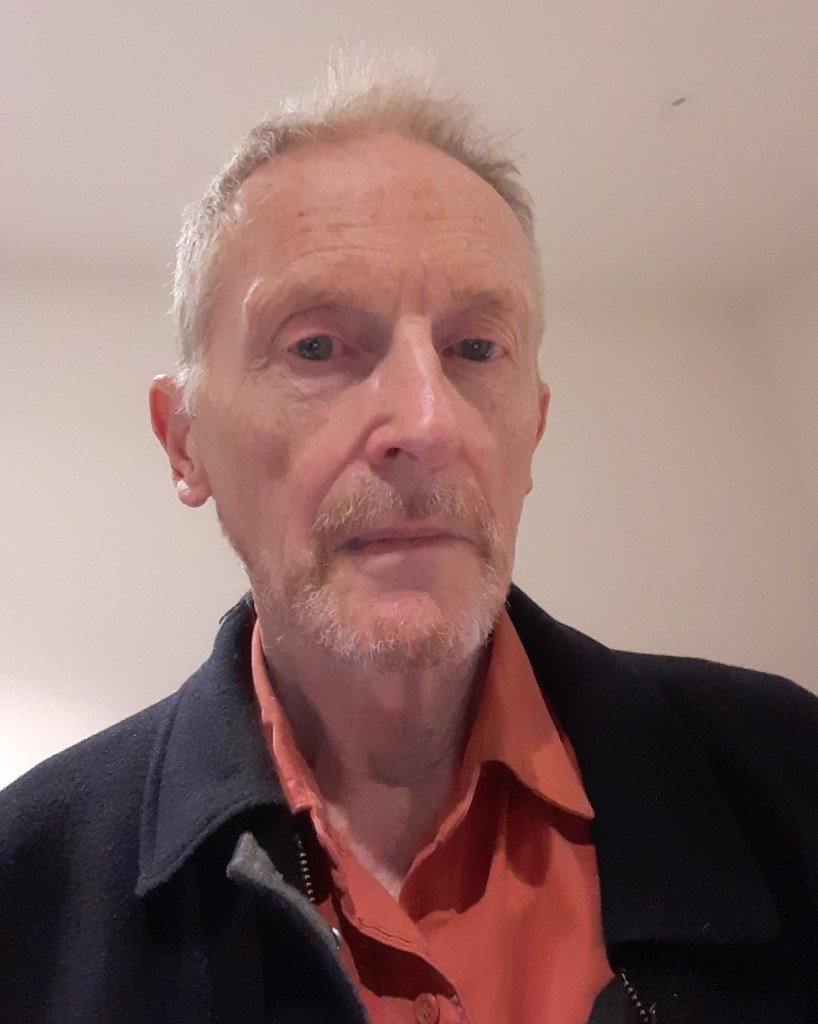
Samhlaigh tú féin in áit mistéireach, dorcha b’fhéidir, ceo i do thimpeall, ciúnas thart fá do chorp, amú, an comhshaol ait agus iasachta, iargúlta, éanacha dathannacha is fásaigh dearga romhat, solas agus dorchadas, scáileanna, leath bealaigh idir bás agus beatha, cos amháin i ndearg ifrinn, cos eile ar neamh, aingil agus diabhail i do chomhluadar. Sin mar atá filíocht le Colin Ryan, ag pléascadh le íomhanna atá níos leithne ná méid na cruinne, a scuabann duine amach go dtí na réaltra i bhfad ó bhaile agus a leagann ar ais ar talamh tú go réidh.
Imagine yourself in a mysterious place, dark perhaps, fog all around, a silence surrounding your body, lost, the environment strange and desolate, remote, colourful birds and red deserts stretched ahead, light and darkness, shadows, halfway between death and life, one foot in the red of Hell and another in Heaven, Angels and Devils in your midst. This is what Colin’s poetry is like, bursting with images that are wider than worlds, that can sweep one out to galaxies far away and place you, safe and sound, back to land.
Scal
Tráthnóna tharla scal solais
a shoiléirigh sráideanna
díonta is gairdíní
anamacha féin
ag foilsiú náire is sotail
ag foilsiú dúile i nithe dofhaighte
gur tháinig an saol faoi scáth na n-eití
is na héin ag cruinniú i dtús oíche
ag líonadh an chroí le dearmad
Flash
At evening there happened a burst of light
illuminating streets
roofs and gardens
even souls
revealing shame and arrogance
revealing desire for the unattainable
until the world came under the shade of wings
with the birds gathering at the start of night
filling the heart with oblivion
It gives me great pleasure to write about this writer in this edition of Agallaimh le Scríbhneoirí na Gaeilge/Interviews with Irish Language Writers, as his poetry, in my opinion, is as stunning as it is unique. Liam Carson of Imram Féile Litríocht Gaeilge/Irish Language Literature Festival (https://imram.ie/feile/ ) writes of Colin in the Irish Times: ‘Colin Ryan is a unique writer based in Melbourne, who has chosen Irish as his literary language and gives it a unique Australian twist. His strange and surreal short stories touch on travellers, criminals, soldiers, the dead, people who have gone missing, people who are searching for others, and those who are being searched for. His poems in Corraí na Nathrach are haunting explorations of colonialism, history and landscape.’ Every month Colin publishes An Lúibín,’ (https://www.gaeilge.org.au/en/read/an-luibin) a publication he describes as dealing with ‘matters cultural and linguistic, with occasional articles on the environment and current affairs.’ He has published four books to date with many more to come.
His short story collections are:
Teachtaireacht: Message (2015)
Ceo Bruithne: Heat Haze (2019)
and his poetry collections to date are:
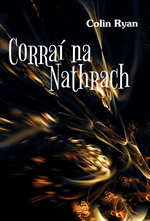
Corraí na Nathrach: Stir of the Snake (2016)
Rogha: Choice (2022)
Tógadh mé amuigh faoin tír i Victoria, achar gearr ó Ballarat, is ansin a chuaigh mé ar scoil agus ina dhiaidh sin go dtí an Ollscoil i Melbourne, áit a ndearna mé staidéar ar theanga na Rúise. Bhí suim mór agam i ngaeilge go luath, ba chosúil gur cosán isteach í i saol rómansúil is mistéireach. Inniu, ní mar a chéile a fheicim sin, mar go bhfuil íomhá níos praiticiúila agam uirthi anois, cé go gceapaim fós gur glór í do chultúr ar leith. Chaith mé blianta mar fhostaí sa tseirbhís phoiblí, ag scríobh i gcónaí. Scríobh mé drámaí agus scéalta i mbéarla ach gur thug mé m’aghaidh ansin níos mó ar an ngaeilge, is mo chéad scéalta foilsíthe in san Iris liteartha Comhar. Nuair a chuaigh mé ar scor, cheap mé go mb’fhearr dom leabhra a fhoilsiú i ngaeilge – na scéalta le Cló Iar Chonnacht agus mar a tharla, Coiscéim le haghaidh na filíochta. Tá mo chuid leabhair le fáil ag litríocht.com, seirbhís ar líne a thugann aird speisialta ar ábhar na gaeilge.
I grew up in country Victoria, not far from Ballarat, where I went to school, and later went to the University of Melbourne, where I studied Russian. I had an early interest in Irish, which seemed the window to a romantic and mysterious world. My attitude to the language is now much more practical, though I still think of it as the voice of a unique culture. I spent years as a public servant, always writing. I wrote plays and stories in English, and then turned more and more to Irish, with my first stories being published in the literary journal Comhar. When I retired, I thought it time to try to have books published in Irish – Cló Iar-Chonnacht for stories, as it turned out, and Coiscéim for poetry. My books, the last time I looked, could be found at https://www.litriocht.com an online service which specialises in Irish-language material.
On what inspires him and his style of writing:
Language has always been of interest to me as a way of shaping and expressing the world, and I began writing quite early. I am often inspired by a single image, which then develops organically into a poem or a story. I only began studying Irish seriously after I left university, with the intention of mastering it to the point where I could use it for creative purposes. Stylistically I aim for economy of expression, which in Irish can be particularly effective, given the structure of the language. I would describe the way I write as ‘poetic realism,’ often incorporating elements of hallucination or dream. In Ireland, it seems to me, the Irish language tends to be a vehicle of cultural ideology, linked to a certain idea of identity. Here in Australia it is simply one language among many, a vehicle for an Australian imagination, the way to a wider world.
Who has impacted his writing:
I think it is true that everything you read leaves its trace on you, but I have a particular interest in South American writers. I am drawn as well to twentieth century poets from Italy, Russia and Greece. I have long been interested in Scottish Gaelic poets like the great Somhairle MacGill’Eain (Sorley McLean), who are, I feel, not as known as they should be to readers of Irish. These writers and others represent a valuable encounter with other approaches and sensibilities, with possibilities beyond the literary worlds of Irish and English. You don’t need to imitate the writers who impress you, but they can still reveal to you strikingly different worlds, with an accompanying expansion of imagination.
A poem he wrote that he feels strongly about:
I’m not sure that any individual piece I have written really stands out to me, but it may be useful to give thematic examples. Easiest to do with poetry, of course, and fortunately all my poems tend to brevity. In prose or verse, I tend to be preoccupied by mortality and memory. An illustration of that would be the poem ‘Gan dúiseacht’ (‘Unwaking’).
Gan dúiseacht
Níor bhrionglóid í seo a mhaígh sé i lár brionglóide ag siúl dó sa ghairdín fada faoi sholas fuar ó rós go rós nó gur bhain sé geata na dúiseachta amach nach n-osclódh roimhe arís go deo
Unwaking
This was no dream he said in the midst of dream walking in the long garden in cold light from rose to rose until he reached the gate of waking that would never open again for him
Another poem is ‘Cathair’ (‘City’). The city, one could say, is emblematic of a human structure which of its very nature is transient.
Cathair
An chathair ag cúlú uaithi féin na héin ina scáthanna ar na cosáin an ghaoth ag cuardach cultacha i dtithe folamha gan a tomhas le fáil i ngúna i gcóta
City
The city retreating from itself the birds as shadows on the footpaths the wind searching for clothes in empty houses not finding its measure in dress or coat
On advice for other writers:
None – except to find your own voice and not be discouraged. And, of course, to put whatever you have written into the metaphorical drawer for a time until you can see it afresh.
Particular themes he likes to visit and why:
Again, mortality and memory, as mentioned above. All told, the theme of time, which bears all things away but leaves behind its ghosts. This have always interested me, more so as I get older. I suspect that the death of certain relatives when I was young strengthened a natural interest in the liminal nature of death, the boundary of creative life. And, of course, the traditional Catholic emphasis on what is and what will be. My characters tend to be solitary, reflecting, perhaps, one aspect of myself. I am interested in the situation of certain individuals in the world, not repelled by society but not fully engaged, or engaged in a way that reflects their personal fate or preoccupations.
Upcoming projects:
I am putting a collection of stories together – my third, if I manage to get it published. That leaves poetry, which constitutes, I suppose, an ongoing project.
Colin’s books are available to buy at various bookshops and publishers in Ireland and online.



Julie Breathnach-Banwait
Julie has been a regular contributor to Tinteán for many years and has recently joined the Editorial Collective. She is an Australian based Irish language poet and writer. To date she has published four collections of poetry. Dánta Póca and Ar thóir gach ní are Irish language poetry books published through Coiscéim (Dublin). Bobtail Books (Australia) have recently released two bilingual books of hers: Cnámha Scoilte/Split Bones – a bilingual book of prose poetry and Ó Chréanna Eile/From Other Earths – a bilingual book of poetry, co-authored with the Australian Irish language poet and writer Colin Ryan. Both are available at http://www.bobtailbooks.com.au. Her next collection – hypnagogia/hiopnagóige is imminent with Pierian Springs Press.
 Tinteán