Le/with Julie Breathnach-Banwait
Andreas Vogel
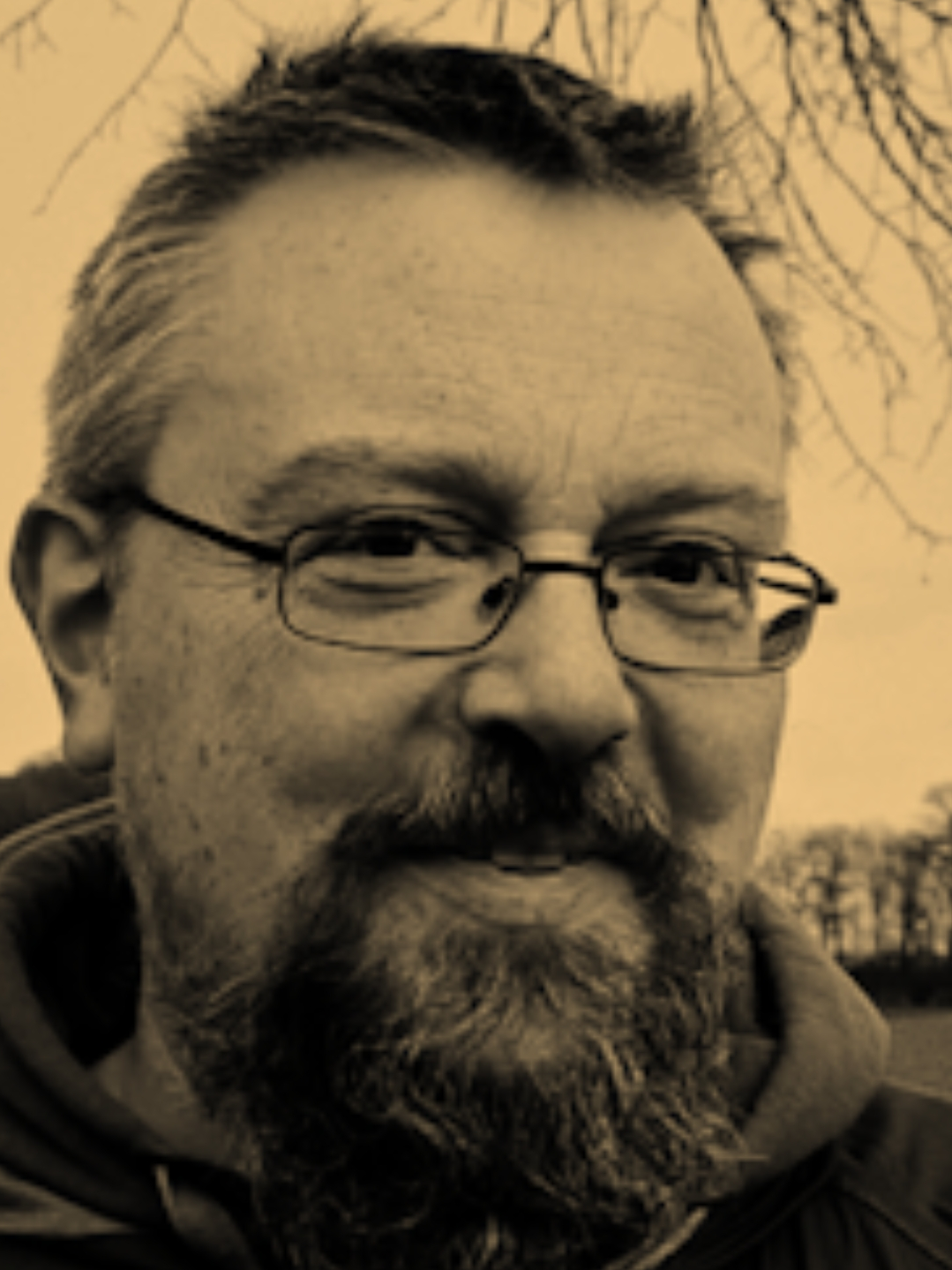
Following on from our recent interview with the Irish language poet and writer Áine Ní Ghlinn in our filí agus scribhneoirí na Gaeilge (Irish language writers and poets) series, our focus in this edition is on Andreas Vogel. Vogel is known for his contributions to contemporary Irish literature. His work often explores themes of identity, culture and the human experience, blending traditional Irish language poetic forms with modern sensibilities.
Andreas was born in the city of Bochum, in the Ruhr District of Germany, in 1970. He started to write in his teens, in German. Still in his teens, he started to learn Irish autodidactically.
Later he studied at the University of Bonn (Germany), where he attended formal Irish classes, while also studying philosophy and various other languages. He came to live and work in the Conamara Gaeltacht in 1996, where he is based since, now living in a multilingual household where Irish, German and Galician are the ‘co-official languages’. Coiscéim has published four poetry collections of his:
– chomh gar ‘gus is féidir/nicht näher/as close as possible – not any closer in 2009
– misneach/bacach/courage/lame in 2018
– thángamar chonaiceamar cosamar/we came we saw leftovers in 2020
– cuntas/account in 2023.
I had the pleasure of putting some questions to Andreas about his writing and thinking.
Inspiration and style of writing:
Where inspiration comes from is something that seems very elusive, even for myself. It could literally be anything, but whether that initial spark can bear the load of a poem is something that needs to be tried and tested with each new attempt. I don’t think of myself as having a particular style of writing, and I don’t aim for a particular trademark style, although I have certain techniques that I keep coming back to. I am fond of references to the canon of Irish language literature and the corpus of sean-nós songs, as a way of anchoring a poem in a wider web of meaning, and to insist in front of both myself and the reader that we are part of a long tradition which to ignore or forget would harm our chances of being whole in this world. I believe poetry is an act of listening before it ever morphs into an utterance. I also fall back on humour and irony a lot, which is a lense through which I look at most things, not only poetry. To my mind, even the most serious subject matters are not well served by denying oneself recourse to a sense humour, and that there can be tremendous poignancy in letting both coincide. In any event, I wouldn’t think of a style as something that characterises my entire oeuvre, but rather as one tool in the poets toolkit. Some poems or subject matters resonate better with a particular style than others, and I might attempt to employ such a style. Alternatively I might try, for emotional and/or comic effect, to create a tension between style and content. It is something I aim to reinvent with the writing of each new poem.
On Influence:
Being an avid reader, I am sure that many poets have had an impact on me, sometimes even without me being aware of it. I often incorporate allusions, references or quotes, especially from older layers of the Irish literary corpus, in my writing. I think the biggest impact, however, that other poets have had on me was through helping me to appreciate the power of poetry through their own powerful work. The question invites name dropping, so I’ll indulge in it: I would need to mention in particular César Vallejo, Inger Christensen, Cyprian Norwid, Somhairle MacGill-Eain, Eochaidh Ó hEoghusa, Friedrich Hölderlin, Brian Merriman, Féilim Mac Cumhaill, Caitlín Maude and Josie Guairim, but some of the most impactful are anonymous to me, like the author of Buile Shuibhne or the poets of Amhrán Rinn Mhaoile, Tomás Bán Mac Aogáin, Caisleán Uí Néill and so many others.
On his own writing:
Some years ago I wrote a book of poetry entitled ‘misneach/bacach‘. It consists of a shorter first part of 10 component poems (‘bacach‘), and a much longer second part of 150 component poems (‘misneach‘). The first part was written first. It is an emotionally very dense piece, quite intensely sad. When I read it publicly for the first time, a listener came up to me afterwards and told me: ‘Bhain sé sin asam‘, literally: That took something out of me. I was taken aback. I realized then that this piece had an effect on readers/listeners. That was a very conflicted feeling under the circumstances. Of course, a poet wants for his poems to have an effect on potential readers. On one level I was thrilled to have such an immediate feedback, such an outright vindication of the often invoked, and equally often dispelled, power of poetry, but it also provoked a curious feeling of responsibility. I came to the conclusion that I owed myself and any potential reader a counterbalance, both emotionally and artistically. While I felt I had achieved what I had set out to do with that initial piece, it represented only part of what I wanted to tell, but by no means the whole. That gave me the impulse for the second part. That took me years to complete and is by far the most ambitious effort I ever undertook working on a single body of text while trying to sustain one emotional and poetic arc.
Suggestions for other writers:
I am quite reluctant to give advice to other writers. One reason is that I don’t feel that I can speak with any authority. But also, more importantly, those poets that I admire most myself did things that nobody could have taught them or advised them to do, because their manner of making poetry did not exist until they came along. I admire that kind of radical creativity, but I can’t offer advice in this regard. Put on the spot, the one piece of advice I would feel comfortable to impart on other writers would be to look upon the act of writing not merely as self-expression, but rather as communication. The intensity of a personal feeling is no guarantee that writing inspired by that feeling will have any emotional impact on a reader or listener. To transport an emotion in a piece of writing, I believe one needs to divert from one’s own personal predicament and find common ground with humanity through the shared language.
On what he writes about:
I think my poetry is characterized by a self-conscious mirroring of language towards itself. I am fascinated by language in all its emanations. To me, the words themselves are more substantial than the meaning attached to them. And of course, I particularly love the wonderful idiosyncrasies of the Irish language that remain for me something to marvel at and delight in. Language speaks for itself. On the other hand, I don’t, of course, live in language alone and therefore I keep returning to the paradoxes of the human condition, the clumsiness of our love for each other, and the viciousness of the injustices we inflict on each other.
Upcoming projects:
I have of late been contemplating a question that has vexed many poets in Irish, as well as those writing in other minority languages, namely the question of whether to aim to provide translations into a majority language alongside my poetry. Crísdean MacIlleBháin/Christopher Whyte (as a Scottish-Gaelic poet writing and publishing in a context where it can be felt necessary to accompany even one’s proper name with a translation into English) has published an influential article on the problems arising from a situation where poetry collections are often published bilingually from the start. He questions not only whether such a practises does not distract from the original and contribute to marginalising and exoticizing the minority language even further, but also, focussing on the not uncommon practice of poets translating their own work into English, whether it is even possible under such circumstances to speak of an original and a translation anymore, or whether the author’s self-translation is not rather doomed to ursurp the position of the original altogether. Of course, poets engage in practices such as these in the hope of gaining a wider audience in general (although most poets will realise that their chosen literary genre limits their audience size at least as much as their choice of literary language), but also sometimes on a personal level (as Laoighseach Ní Choistealbha pointed out in a recent article) with specific persons in mind, maybe including friends and family, who might otherwise be unable to read their work. In light of such weighty and controversial questions, I felt inspired to take this matter and to transpose it, as an artistic challenge, into my own, less anglo-dominant and more multilingual, context. From my own vantage point, the question of providing English translations seemed less pressing, while integrating other languages that have a real-life importance for me with my poetry promised to be really meaningful. So, this is my current project: a poetry collection in which each poem is juxtaposed with my own translation, or reconstruction, or deconstruction, or contradiction, or revindication, in another language (like German, Polish, Galician, Spanish, Dutch, and even English, for example). Of course, poetry being, according to Robert Frost, what gets lost in translation, the whole idea of remaking my own poems in diverse languages is full of wonderful paradoxes and allows me to be playful, and maybe profound as well.
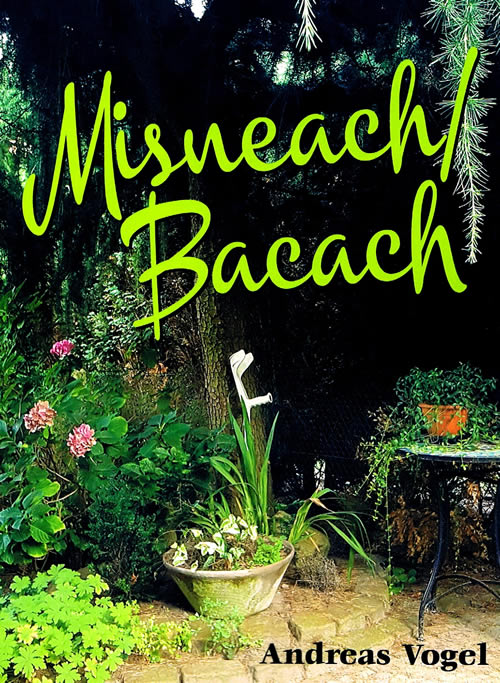


All of Andreas’ books are available from Coiscéim (www.coiscéim.ie) or online from http://www.siopaleabhar.com, http://www.siopagaeilge.ie, http://www.cic.ie, http://www.siopaancarn.com and www.anceathrupoili.com.
Julie Breathnach-Banwait
Julie has been a regular contributor to Tinteán for many years and has recently joined the Editorial Collective. She is an Australian based Irish language poet and writer. To date she has published four collections of poetry. Dánta Póca and Ar thóir gach ní are Irish language poetry books published through Coiscéim (Dublin). Bobtail Books (Australia) have recently released two bilingual books of hers: Cnámha Scoilte/Split Bones – a bilingual book of prose poetry and Ó Chréanna Eile/From Other Earths – a bilingual book of poetry, co-authored with the Australian Irish language poet and writer Colin Ryan. Both are available at http://www.bobtailbooks.com.au
 Tinteán