A book review by Frances Devlin-Glass
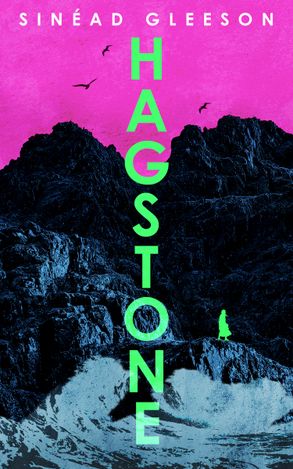
Sinéad Gleeson, Hagstone, 4th Estate (Harper Collins), London, 2024.
ISBN: 9780008626655
RRP: $35 (also available as ebook)
Hagstone has as its central focus a feisty, spikey feminist artist, Nell, commissioned by a secular variety of convent/refuge for women to write a history of their foundation. She’s sexually active and ardent, but deeply committed to her art, and abrasive in her dealings with men.
Set on the west coast of an unnamed island in Ireland, Sinéad Gleeson creates a remote, gloomy, rocky forbidding place with not a few gothic resonances, and too few residents who know one another’s business intimately. The very landscape of the island is anthropomorphised in troubling ways: on the site of an old convent (repurposed in the novel), ‘window frames gape like missing teeth’, ‘tree roots [are] swollen like limbs uncovered in the earth’. In clear weather, ‘[t]he land readies itself’ (and violence is implied). The quiet roads are ‘full of blame’ and we learn that women from around the world make their way to this place for protection and solace, ‘to hide and cede from the world’.
Dominating the narrative is Nell, a sexually active woman who engages in sex and sexting in playful and sometimes baleful ways. This is a very modern Irish woman who knows what she wants and needs, even if her sexuality is sometimes of the voyeuristic kind and her personal relations with men very much on her own terms. Her singular focus is her work as an installation sculptor (and some explanatory notes at the end of the novel give full play to Sinéad Gleeson’s research into women sculptors she admires), and what does not serve that is quickly put to the side. Nonetheless, for all her brutality, I must say I warmed to Nell, admiring her driven quality and her quirky playfulness, and her openness to her environment and to the new.
Also on the island is a colony of ‘nun’-like women, Rathglas, home for refugees from violence, sexual abuse, drugs, loss of whole villages of men in war and the grief attendant on that, or burnout in high-powered jobs. They all have jobs that fit their skills, and the foundation supposedly runs on strict rules of minimising harms and guaranteeing as much privacy as individuals need. Straight-talking Nell, who is thought of as a witch by the male islanders and is emphatically not ‘wife material’, is an unlikely entrant to this foundation, driven by poverty to accept the commission to document 30 years of Rathglas. Her ability to come and go as official historian makes her different from the Iníons (Daughters) who populate the place under the guidance and protection of Maman (a mother-superior of sorts). The foundation initially is run on benignly egalitarian, democratic lines and is emphatically secular. However, it’s curious and interesting that tropes of traditional nuns keep breaking through this modernisation of the phenomenon. Sinéad Gleeson limns an idealised community of women, but the fissures emerge and the exercise of power is quite as repressive as nunneries of old. Maman demands obedience and when it’s not forthcoming will resort to manipulation. Poverty, famine, the pursuit of power and the abandonment of true democracy, and schisms, all occur in the narrative arc of this novel. It’s a compelling read so I shall not introduce spoilers.
The island features a pulsing, high-pitched sound perceptible to only some of the islanders and capable of driving those who hear it, especially men, to become insane. There are some attempts to understand this unnerving sound as a product of climate and weather and a manmade bridge, or perhaps of paranormal or supernatural origin. On balance, the mythical and paranormal seems to be favoured, the operation of Danu (an ancient Irish fertility goddess), or the callings of the ghosts from a shipwreck (suggestively named Granuaile). The uncanniness of the sound is underlined and part of the gothic furniture of this novel. A persistent symbolism that represents the rocky height of the island subject to the waters around it as gendered, male (the rock) and female (the ocean) respectively, is suggestive of the feminist ideology and substrate of this novel. The island is ‘wave fucked’, suggesting female agency. The epigraph of the novel is telling: ‘I hear those voices that will not be drowned’ (a quote from Benjamin Britten’s Peter Grimes, as inscribed on Maggi Hambling’s sculpture, Scallop (2003) which is installed on the Suffolk Coast near Aldeborough. The Iníons are variously troubled (one is forbidden to return to Italy for the death of her mother) and there are stronger women, more whole, who give back by being compassionate. It is to one of these that the gritty Nell is drawn.
Nell’s vocation is to make sculptural installations on the beachscape of Banshla Beach (the site of the disturbing denouement), and the novel is suffused with her obsession with her art. I found it easier to relate to Nell as a sculptor than as a historian, though she does have form as the writer of a feminist reworking of the New Testament, Et Super Matres Dolorem: et Feminam Vulgate, ‘The Mothers of Sorrow: A Female Bible. This earlier work is presumably the basis for her selection as a historian for Rathglas. And we’re told it was fuelled by whiskey and sleeping pills. Whereas Sinéad Gleeson deftly interweaves into her novel the angst involved in creating sculptural installations —the starts and stops, the failures, the blockages and the disappointments when councils find them too confronting —there is no corresponding investment on the author’s part in the difficulties of writing and little is made of the narrative she hands over. The main writing issues seem to be strictly practical rather than artistic and revolve around the protection of privacy, which Nell unwittingly relinquishes to an unworthy male filmmaker.
There’s much sly humour and satire in the novel, directed mainly at the world of commerce that the women of Rathglas and Nell have renounced in favour of single lives of devotion to their arts and crafts. Nell makes a meagre living as a tourist guide in the season and discourages people from throwing coins into a holy well, commenting that it’s ‘bad luck to mix paganism and capitalism’ and noting that two women who seemed uninterested in the well rituals were busily discussing the price of their homes and the holidays they might fit in before Christmas. Philanthropic greenwashing also comes in for some stick.
But the zestiest satire is reserved for the men in the novel. Cleary, Nell’s current lover, comes with baggage about what the island’s uncanny sound did to his father (it led to his death), and he slowly suffers an eclipse as a major character after a steamy introduction. The absurdly consumerist demands of tourists (for a particular brand of cigarette papers) elicits a request from a storekeeper to her assistant to look for artichokes and Geiger counters while he’s at it. Nick the movie star/director is an easy target for satire, with his narcissism and his surface charm, his penchant for sensationalist American journalism about the Iníons, and his white spats. His treachery towards Nell is key to the novel’s violent denouement, and I should keep that too under wraps.
The novel will appeal strongly to a certain class of feminist reader, who is not averse to the invocation of pre-Christian female deities, separatism, and a measure of revenge on men who damage women. At the level of realism, it makes a good case for such communities as Rathglas which exist to protect women from the violence that exists in the world, and for the uses of contemplation, ecstatic rituals, and community to heal deep existential scars. And it offers a strong critique of the abuse of power of all sorts.
Frances Devlin-Glass
Frances taught Women’s Studies at Deakin University and has an interest in how myth is deployed to represent and misrepresent women. She is a member of the Tinteán editorial collective.
 Tinteán