Book Reviews by Frank O’Shea
STRANGE SALLY DIAMOND. By Liz Nugent. Penguin. 364 pp. €12.56, $AU32.99
Where to start. Sometimes, you meet a book that is so special that you forget you are reading it with the intention of writing a review: you have to be called to meals, lights stay on late at night, you give an excuse for missing your golf game. Liz Nugent’s Strange Sally Diamond is such a book. It was the winner of The Irish Independent Crime Fiction Book of the Year in the 2023 An Post awards and must have been considered for the top gong. It is only when you are finished that you realise it is actually a crime fiction story.

The central characters are a brother and sister, Peter and Sally, each the result of the rape of a woman who is still a teenager. If I say that the two children are seven years apart in age, simple arithmetic will help you work out what the central crime is. As the story gets underway, alternate chapters are in the first-person voice of one or other of the two, first when they are children and then something like 40 years later.
Most of the action takes place in a fictional village in Co Roscommon in the west of Ireland, with occasional visits to upmarket Killiney in south Dublin. The last third or so is set in New Zealand, where the offender has fled. It is tempting to give a brief summary of the story, but that would be to spoil it for a reader because the main offender drops off the narrative after some time in New Zealand and you realise that the focus of the entire story is not the crime, but the reactions of Sally and Peter to events.
It would be possible to question the various pieces of advice given to characters about their behaviour and their inner troubles, but that would be for the experts. The ordinary reader can only marvel at the way the author deals with the situations that arise. In the end, you may even be unhappy with the conclusion, but it is entirely believable, very sad and quite unusual, particularly for what is described as a crime novel.
A warning. There are lots of characters in the story, particularly female ones: Christine, Nadine, Angela, Tina, Sue, Lorraine, Anubha, Martha, Georgia, Denise, Stella, and that’s not all of them. The only way to deal with that situation is to make sure you do not leave days between your reading sessions, something that in fact you are unlikely to do. Set in different parts of Ireland, on different sides of the world, and spread over half a century, you will have delight and admiration for the way the author carries you along. Violence or gross acts are almost skipped over, with the reactions of victims or witnesses more important.
Crime thriller? I suppose so, though the crimes are often suggested rather than described. A psychological thriller? Perhaps, but that may suggest to someone whose life is the real world, that this is cashing in on the modern scam we call mental health. Instead, pick it up and read it for the wonderful literature it is.
My copy has more than five pages of commendations from established writers and journalists, people like Val McDermid, Adrian McKinty, Ian Rankin, Marian Keyes, Sinead Moriarty. For once, they are telling the truth.
In the course of speaking with some members of my family, I gave this book flamboyant praise and told them to go out and buy the book. All of those to whom I recommended it did not agree with my praise for the book, but I stand by what is written above.
BODY OF TRUTH. By Marie Cassidy. Hachette. 440 pp. $32.99
Marie Cassidy was Ireland’s State Pathologist for more than 15 years. This is her first novel and makes expected use of the procedures that follow an unexplained death. The central character is Dr Terry O’Brien, a recent recruit from Glasgow; the story is set completely in Dublin city and suburbs.

When Rachel Reiss is found dead near Farmleigh House, former home of the Guinness family and now the official State residence in the Phoenix Park, it is Dr O’Brien’s job to do the post-mortem. By the time this is done, the reader has met some of the principal characters in the story. There is her immediate boss Professor Boyd, who is upset because of the way that the media have highlighted the new State Pathologist; we also meet various pathology assistants and workers in Forensic Science Ireland.
Among the Gardai, there is Detective Chief Superintendent Sinnott, Detective Chief Inspector John Fraser, Detective Inspector Alan Ahern, photographer Vinnie Green, various sergeants and patrol officers. Unfortunately, it requires close attention to know what the role of each Garda or scientist is in the work of investigating crime.
As the story progresses, we learn that DCS Sinnott has a definite suspect for the murder, but Dr O’Brien does not accept his reasoning. She checks on a murder some 15 years earlier and finds some similarity between that event and the murder of Reiss. When another young woman is found dead in the Phoenix Park, this gives the pathologist more reason to investigate the main murder more closely.
She is told by her boss and by the police that she should leave the investigating work to them, but she finds a hint in a mysterious Australian mushroom that has started growing in the place where the Reiss body was found. This leads her back to more murders in the past and the reader is constantly hoping that she would stick to the one in the present.
As the story goes along, we learn of other murders, notably that of Dr O’Brien’s sister some years earlier. At the end, there is a hint that this will be dealt with in a future book. By that stage, the truth is that most readers will be thankful that they can give it a miss. The story is longwinded and confusing, there are too many characters and too much detail. It is saved a little by the fact that it is all set in Dublin. The fact that the author is a well-known person in criminal investigation may make it attractive to Irish readers.
THE MURDERS AT FLEAT HOUSE. By Lucinda Reilly. Pan Books 2022. 470 pp. $32.99
We met West Cork writer Lucinda Reilly some months ago when we reviewed her 767-page book Atlas: The Story of Pa Salt. This book is from 2022, though her son says she wrote it more than a decade earlier and did not have a chance to re-edit it. The son says that he decided not to do so after she died of breast cancer in 2021 because he felt that ‘preserving Mum’s voice should take precedence.’ The result is that there are places where the book does need changing, but that does not take from the reader’s delight.
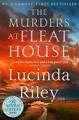
The story is set in a private boarding school in Norfolk, north-east of London. The central character, who we are led to believe appears in the author’s other books, is Jazmine or Jazz, a Scotland Yard Inspector who has temporarily retired to get away from her dominant husband, also working at the Yard. She is persuaded by her boss to withdraw her resignation to take on a case at the Norfolk school.
The story makes its way from one killing to the suicide of a staff member to another murder, all of which will have a damaging effect on the school when the media hear about it. The narrative is more than a little drawn out, certainly not as focused as her Pa Salt book. The background for the deaths lies in events from some forty years earlier. The reader needs to keep a focus to get to know all the characters and their relationships with each other and though there is plenty of action and a great deal of good police work, the ending seems a bit too hurried.
If what you want is a good detective yarn, complete with all the tricks and gadgets of modern police work, this will not disappoint.
 Tinteán