By Frank O’Shea
Any year that provides new books by Sebastian Barry, John Boyne, Joseph O’Connor and Colm Tóibín has to have been a good one for readers. In the year just finished, we have met all of those with the exception of Tóibín whose book will be reviewed in these pages in the next few editions. O’Connor’s book is a re-telling in the form of fiction of the story of Monsignor Hugh O’Flaherty, the priest who helped a number of people to escape the Nazis in Italy during the war. Boyne’s story is a continuation of the incidents in one of his early books The Boy In The Striped Pyjamas, while Barry told the story of a retired policeman who recalls an earlier part of his career.
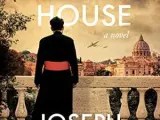
Those four gentlemen are the leaders among modern Irish novelists, perhaps a subtle reminder that male writers have our attention more than their much more numerous female counterparts. Among the leaders of the latter were Emma Donoghue, Anne Enright and Maggie O’Farrell, usually bestsellers, but not at their best in the 2023 examples of their work. Among the better newcomers was Louise Kennedy, winner of the top Irish book of 2022 and Siobhan McGowan, sister of the late singer Shane McGowan whose Trial of Lotta Rae was her first novel, but the kind of book that would have the reader hoping for more. Also worth a mention was Una Mannion who was described by your reviewer as ‘a talent to be watched.’
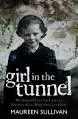
To stay with the women writers, however, it can be safely said that they produced two of the most outstanding books of 2023. The Girl in the Tunnel was written by a complete newcomer Maureen Sullivan. It was joined shortly afterwards by Poor, written by Katriona O’Sullivan. Both books deal with the abuse of children by adults and specifically by the father of a family. These were not novels, but careful accounts of the experiences of the two writers, one in Ireland and one in England. We praised each with as much enthusiasm as our offended sensitivity could manage. By coincidence, the novel that won the Irish Independent Book of the Year in the An Post awards covered similar areas. This was Liz Nugent’s Strange Sally Diamond, which will be enthusiastically reviewed in one of our upcoming issues. Oh, there was also Amanda Geard’s beautiful The Midnight House. Perhaps I should withdraw my implied negativity about women writers.
Talking about awards, we also reviewed The Bee Sting by Paul Murray and Prophet Song by Paul Lynch. The first of those was the overall Booker winner for which the other was a finalist, though our recommendations probably were a little mild in each case. Among the non-fiction works, the one that particularly comes to mind was Harry McGee’s The Murderer and the Taoiseach, the story of Malcolm McArthur who was a huge news story in the early 1980s.
A number of the books reviewed from the year were connected with Australia. Garryown Unmasked was the story of the early days of Melbourne. Heroes, Rebels and Radicals of Convict Australia covered the people it promised in its title. More unusual was In Between Worlds, a fictionalised account of the travails and travels of young girls taken from the workhouses in Famine times. Finally, there was the book Tell No One, the account by Melbourne writer Brendan Watkins of his attempts to find who his father was. The final book in this category and the one which we recommended most highly was A Man of Honour by Simon Smith, the unlikely title of the story of the man who shot Prince Alfred, the first member of the British royals to visit Australia.
One other group of books that deserves to be mentioned is those associated with Northern Ireland and its troubles. There was a fictional story called Close to Home by Eugene Magee, which gave an honest but scary account of what living in Belfast involved for ordinary citizens. That message came across also in Martin Doyle’s Dirty Linen. Towards the end of the year there were two books that concentrated on Sinn Féin and its current rise in popularity as a political party. Gearóid O Faoláin’s book titled A Broad Church seemed to be more reasoned than the book on the similar topic by Máiría Cahill. Titled Rough Beast, it is most unkind to SF, though with good reason. Its review will appear in these pages in an upcoming edition.
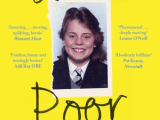
So that’s the year just gone. It is now the role of the reviewer to pick a favourite and I am happy to do so under two headings, fiction and non-fiction. I leave the fiction as a toss-up between John Boyne’s All the Broken Places and Joseph O’Connor’s My Father’s House. In the non-fiction category, there are again two which are difficult to separate, though each covers roughly the same area. Maureen Sullivan’s The Girl in the Tunnel and Katriona O’Sulllivan’s Poor are unforgettable, the kinds of book that remind the reader that one does not have to be Hemingway or Tolstoy to write a masterpiece.
 Tinteán