Book Reviews by Frank O’Shea
A BROAD CHURCH. Vol 2 1980-1989. By Gearóid Ó Faoleán. Merrion Press 2023. 312 pp. €19.99
Those who lived in Ireland in the ‘70s and early ‘80s of the last century have probably forgotten the items that headlined almost every news bulletin and the front page of every newspaper in those years. I refer, of course, to the IRA campaign in Northern Ireland and its immediate effect on the remainder of the island. Reading the Introductory chapter in this book will remind of what the ‘70s were like and probably have the reader regret missing that first volume.

Even if, like this reviewer, you are no longer in the country, what these two volumes give are reminders of things that happened all around you back then. You took them for granted; you lived your life around them. Now they are part of history books.
There is one other thing about a book like this. The great majority of residents of the Irish Republic denounced what the IRA and INLA were doing in Dublin and Cork and throughout Ireland. Vaguely, we may have realised that they were acting in support of a persecuted minority in the North, but we denounced the murders and robberies that were taking place all around us. Mind you, we probably kept our opinions to ourselves and might even have rattled a coin into the box going around our pub on a Saturday night, social cohesion being more important than politics or personal opinion.
This book now moves the story of the IRA in the Republic into the ‘80s. The attitude of citizens to their activities was not improved when members of the Gardaí were shot dead in their work and when the local bank or post office was robbed at gunpoint. The first two years of the decade were dominated by the H-Block dirty protest and hunger strikes in the North, the first one called off because the IRA believed what the British promised them.
The second hunger strike was better organised, if that is the correct word to use for such an appalling action, and was led by Bobby Sands. By the time that strike was over, ten men had died. Remembered in song as ‘O’Hara, Hughes, McCreesh and Sands, Doherty and Lynch, McDonnell, Hurson, McIlwee, Devine’, they are little more than names today. That’s history.
Sands won a seat at Westminster but got little sympathy from Maggie Thatcher. In the Republic, the strike had a notable effect in forcing Sinn Féin to try the ballot box rather than the rifle. Two H-Block supporters, including Sean Doherty who died on the strike, won seats in Dáil Eireann. In the end, the British conceded all the demands of the strikers. As far as the effect on the South, it was the first time that Sinn Féin had put their toes into politics; today, they have 37 TDs, one less than the largest party Fianna Fáil. For someone who lived in Ireland in the 70s and 80s, that seems quite an extraordinary turnaround.
Ó Faoleán deals in some detail with the Hunger Strike and the events that surrounded it, including the riots in Dublin and elsewhere. Reading it now, it is difficult to credit that Great Britain, the ultimate paragon of civilised living, allowed the H-Blocks to happen.
As well as dealing in some detail with the abuse of IRA suspects by gardaí, the chapter on 1983 covers a number of attempts by the IRA to increase their funds by kidnapping. Thomas Niedermayer, Tiede Herrema and Ben Dunne were early captives, but the most serious one was the 30 days that supermarket executive Don Tidey was kept bound to a tree in Leitrim. That was 40 years ago, but reading about it today would surely put many right-thinking people off Sinn Féin.
At their Ard Fheis in 1986, the leadership of Bobby Sands and Danny Morrison managed to change the policy on abstentionism to Dáil Eireann, ‘a testament, perhaps, to the Machiavellian skill of the [northern] leadership of the period,’ according to the author. The result was a minor split which had little effect on the movement as a whole.
The chapters on the last years of the decade deal in some detail with the attempts to import arms and explosives, particularly from Libya. One chapter is headed ‘The IRA could start a Civil War with That Lot’, referring to the Panamanian registered ship the Eksund, blocked by the French. Through it all, there are tragedies like Enniskillen, attempts to find places to hide explosives and weapons, the various informers and possibly careless gardaí.
For someone not living in Ireland, this book is an eye-opener. It seems to be written with scholarly objectivity. We rarely get to see the author’s personal reaction to the things he describes. It is a reminder that the Republic of Ireland may need some more time to forget the things that were done in its name before it allows the people responsible to run the country in the name of democracy.
KILLING THATCHER. The IRA, the Manhunt and the Long War on the Crown. By Rory Carroll. Mudlark 2023. 397 pp. €20.17
In October 1984, an IRA bomb brought down the central region of the Grand Hotel in Brighton, on the south coast of England. The intended victims were Maggie Thatcher and members of her Conservative Party at the end of their annual conference. Five people lost their lives in the chaos. This book covers the details of that event and the long attempts to find those responsible, resulting in thirty-year sentences passed on the perpetrators two years later. It seems to be a comprehensive and detailed account, the work of The Guardian’s Irish representative, Dublin man Rory Carroll.
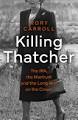
The main bomber was a Belfast man named Patrick Magee, who would be released from prison as part of the 1999 Good Friday Agreement, having served less than half of his sentence. When he was released, he had earned a degree from the Open University and completed his PhD, but had to work as a labourer on building sites because no third level institution would have anything to do with him.
This book puts the Brighton bombing in the context of the early 1980s, the same period covered in the other book here. The early chapter deals with the killing of Lord Mountbatten off Co. Sligo and goes on in some detail to the H Block hunger strikes. Maggie Thatcher had become Prime Minister in 1979 and ushered in an era where there was little sympathy for the Irish. After the Brighton bombing some half a dozen years later, the Sunday Express may well have been speaking on behalf of many British people, ‘Wouldn’t you rather admit to being a pig than to being Irish?’ it wrote.
The Brighton bombs were only one of a large number of atrocities carried out by the IRA in Britain. They had a special section they called the England Department, devoted to carrying the fight across the water with the intention of forcing the British out of Ireland altogether. Whether they ever had any hope of success, it was quickly extinguished once Thatcher became Prime Minister. ‘She once wondered aloud if Irish nationalists were traitors,’ the author writes. ‘“No, no, I shouldn’t say that. That is not the right word.” She never did find the right one.’
At the end, the author tells us that he spoke with many of those involved on one side or the other of the conflict, but admits that he could never get an interview with Gerry Adams. In a way, that is a pity because the book covers in some detail the efforts that Adams had to make to get away from murder and into politics. If the book has a hero, it is Gerry Adams.
I liked one little example which Carroll gives of how Belfast was dealing with the Prime Minister. ‘Thatcher’s free-market spirit would have been less impressed with the practice of people lying down on the street after explosions in order to be ferried to a hospital where, lacking visible injury, they would have been recorded as suffering shock and be eligible for £300 government compensation.’
Not easy reading in places, particularly because it deals with a large number of people trying to work out who the Brighton bomber was and how to get him. But, like the other book here, it may be a reminder that, while the events are from 40 years ago, the thinking behind the murders and mayhem may still be hiding among certain sections of the Irish population.
Frank is a member of the Tintean editorial collective.
 Tinteán
Sinn Féin advances in latest opinion poll — up three points to 34%
August survey of voters: Fine Gael remains on 19%, Fianna Fáil down one to register 18% with Green Party on 5%. It is suggested that Sinn Féin supporters are a younger generation, that have no memory of the Troubles. It is further suggested that the other two main parties are a party full of landlords.