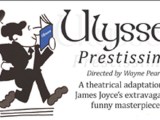
Contesting the notion that Joyce’s Ulysses is too hard for ordinary mortals to read…. Continue reading
Posted by Tintean Editorial Team/fdg …
Advanced Joyce course 23 March 2014
This course is designed to meet headlong the fears of those who’ve been persuaded that Joyce’s is just for brainiacs and nerds Continue reading
A heartening message for the diaspora
Message for the diaspora: come home, things are improving…. Continue reading
Melbourne Irish Studies Seminars
Free seminars on Irish or diasporic topics held at Newman several times a semester Continue reading
Irish Famine Women – a challenge or three
Was there a ‘gendered’ difference in the colonial experience of the first generation of Famine migrants? Did the women adapt more readily? Were women more willingly acculturated? Were they more independent in their choice of marriage partners? Was the regrouping of their family more likely to be ‘transitional’ than that of Irish men? These are questions about women’s role in their family emigration strategy that can, and still need to be addressed.
Continue reading
Celebrating sacred places
Tanka, conventionally used to celebrate nature and the seasons, is also perfect for registering the evanescent responses of the cultural outsider to new landscapes. Continue reading
Poetry, Places, Stories
From early May to early June of 2013 Diane Faheytook part, with Ali Cobby Eckermann, in the Australian Poetry Tour of Ireland. This tour was funded by the Literature Board of the Australia Council, and organised by Nell White, National Director of Australian Poetry Inc.
Continue reading
Changing of the Guard at St. Brigid’s, Crossley; or, Transforming Divine Investment
A priest who, in a conflict, declares: ‘The Church is not a democracy. I am the power here’ is simply putting himself at odds with such people. Continue reading
On Hearing of the Death of Seamus Heaney
Do you agree that when poetry and music meet and match, the magic of the senses release the greatest of satisfactions? Continue reading
A Citizen of the Republic of Conscience: Seamus Heaney and Northern Ireland
For hard-line Republicans, Heaney has always been far too reluctant to take sides; for moderate nationalists, his efforts to locate the violence in the North within historically-based atrocities was seen as a compromise of his creative principles; whilst for many hard-line unionists, Heaney is, without qualification, a Catholic/nationalist and, thus, political writer, whose loyalties are already fixed to one side of the conflict. Continue reading