Tales from a Suitcase SBS On-Demand https://www.sbs.com.au/ondemand/
This is a 3 season documentary covering immigration to Australia between 1946 and 1952 and the 10 pound scheme that attracted migrants from around the world. The documentary is a series of interviews with people from Estonia, Germany, Russia, Malya, Ceylon-Sri Lanka, China, Italy, and Greece, among others.
Season 1, episode 24 is the story of Anne Duffy-Lindsay from ‘a radical IRA family in Southern Ireland’ who when working in England as a nurse met up with a Norwegian nurse. As both of them were eager to explore the world, they approached Australia House in the first instance wanting simply to pay their own fare to enter Australia. This was refused, but the 10 pound scheme was offered instead where in return for their fare and initial accommodation migrants would undertake to repay this by working for a number of years.
Anne Duffy-Lindsay was attracted by Australia’s ‘forward thinking’ and the ‘space’ she would find. She was familiar with the writers Banjo Patterson and Henry Lawson, and the shearers’ strike. Shortly after arriving in Sydney, she made her way to the Domain to the famous Speakers’ Corner where she began a long history as a speaker for the Communist Party. She became part of the ‘movers and shakers’ involved in the fight for a working wage, the peace movement, and the protests against the Vietnam War. On one occasion her group helped a draft dodger by carrying him passed authorities on a stretcher under a sheet.
[Anne Duffy-Lindsay died in 2012. There are a number of tributes to her online, including https://muanational.nationbuilder.com/vale_comrade_anne_duffy_lindsay]
Dymphna Lonergan
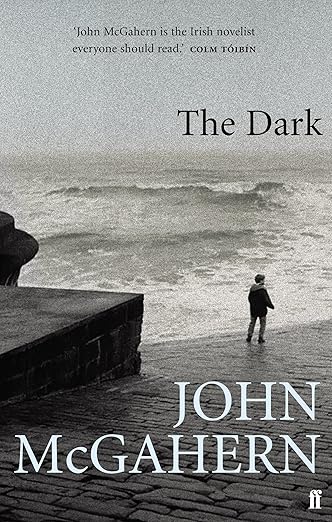
The Dark, John McGahern’s second novel, was recently re-issued as a Faber and by Nile Books in a handsome critical edition. It is the former that I’ve read recently. First published in 1965, it was subsequently banned by Customs and Excise men in Ireland, and Archbishop McQuaid ensured that it also cost the author his job as a fine teacher. Censorship in Ireland was not unlike what was happening in Australia until Don Chipp liberalised censorship in the late ‘sixties. It is astonishing that this book attracted such opprobrium, since its main project seems to have been to reveal the oppressive sexual regime that existed in Ireland at the hands of Churchmen, who ironically were using their power against minors. McGahern has his protagonist experience mild sexual fantasies, and confess them, in detail and in ways I found quite excruciating. Catholic life in Ireland and Australia has changed remarkably since the publication of this novel, and revisiting the closed and hierarchical world of clerical forms of abuse, both moral and physical, is disturbing. It is to be reminded of how life as a cleric was often sold to quite young teenagers as a superior calling and designed to appeal to the child’s vanity.
Another focus of the author’s scrutiny is how patriarchal men, more particularly in rural Ireland, brutalised their children: there are hyper-realist scenes in which the father of a large brood terrorises his son in the full gaze of younger siblings, and later swings a girl-child by her hair. The courts would have something to say about such behaviour these days.
The narrative arc is a disappointing one, and the author is properly critical of the young man’s reasons for giving up on the University path he had won for himself by dint of dedicated effort: ‘security, security, security’. At the end of the novel, he is bound to a desk job in Dublin, rather than to the life of the mind that had seemed to be a defining commitment earlier in the novel. A powerful and bleak read, and a bold attempt to interrogate the Utopian lineaments of the world the Free State and later the Republic engineered, in contradistinction to the deValera vision.
One has to admire the austere hyper-realism and honesty of this early novel, and especially its commitment to unflinching honesty about issues like masturbation and sexual fantasies and in particular clergy grooming young and vulnerable persons, and as well, the touching awkwardness of a young man’s relations with a feared father who can occasionally redeem himself by the pride and pleasure he takes in his son.
Frances Devlin-Glass
 Tinteán