Belfast Twilight, haiku, senryu and micro-poems
by Liam Carson
Salmon Poetry 2025

I have carried Belfast Twilight around in my bag for weeks, sandwiched between a diary and a memory stick. I have pulled it out in cafés, admired its cover, read a poem or two, flicked back and forth. Read more. Saved some for later and dipped in and out as time with cups of tea permitted. Images have sat with me whilst I drove home, popped in whilst washing the dishes, walked the dog, and images knocked as I loaded the washing machine. One might say that this is the purpose of good art. Haiku, in particular has a short, sharp sting. This book is no exception. Haiku and senryu, in general, are concentrated poems that capture single, fleeting or passing moments, with many seasonal references, with the core focus being on images from the natural world and urban life. While Liam’s book contains images of many places, it is the images of Ireland, for me, that tend to scream the loudest. It evokes such a strong sense of familiarity that I can almost feel that landscape and perceive its presence. Following on from Liam poignant memoir ‘Call Mother a lonely Field, this striking new collection of haiku, senryu and micro-poems titled ‘Belfast Twilight‘ is a kaleidoscope of imagery. Gabriel Rosenstock writes in the preview:
‘Belfast Twilight,’ is a significant contribution to Irish Haiku (in both languages – he includes a handful of Haiku in the senior language, Irish) and will take its place in world Haiku, as well. How could it not? It has mapped out a territory which Haiku hasn’t entered before, the Northern Ireland Troubles. And It has done so vividly. We are here, in the midst of tumult, in the heart of darkness. After which he brings us South, to where many Northern poets were domiciled’
Liam Carson is a bilingual writer and a director and founder of IMRAM Féile Litríochta Gaeilge (Irish Language Literature Festival), which aims to support the writing of Irish language authors through multi media presentations and readings/reviews. This latest book, Belfast Twilight is presented in sequences, the poems create vivid mini-tapestries—the docklands of Belfast at twilight, London during the eighties, to Dublin his home. The Book begins with ‘The Road to the North’ and ends with ‘The Road to the South’ dotted in between with time spent in London during the eighties. This also resonates as I have spent periods of time in London in the eighties.
Choosing samples from the book to include here is almost an anxiety inducing exercise, with analysis paralysis beginning to creep in, but choose I must, thus I begin with Cork Haiku, which contained one of those striking images that I mentioned above:
Sacred Heart ablaze
in a dark shop window
Cork in the rain
And again in Holy Wall, Dalkey:
man at the well
filling wine bottles
with holy water
and the images of destruction during the troubles in the Northern Ireland capturing its impact on daily living and life in Belfast:
after the bomb
a cloud of bank slips
blows down the road
The author is clearly an astute observer and very much in tune with his surroundings. Belfast Twilight is a beautifully crafted collection, dense with emotion and heart. The writing is saturated with vivid tapestries, giving the impression that the book is almost as visual as it is verbal, unfolding before the reader like the poems were paintings in a gallery, engaging the reader’s mind-eye with a feast of colour and emotion. It is a perfect book to carry around and to dip into when one wishes to be taken home and to ground oneself in its familiarity.
Liam’s Irish language Haiku ‘Seideann an Ghaoth’ (The Wind Blows) was published recently byTinteán and can be found here. The Book ia available at various outlets online and from Salmon Poetry.
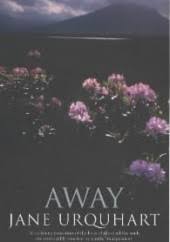
The novel Away by Canadian writer Jane Urquhart was first published in 1994. It is surprising that I have only read it recently, passed on to me by an Australian friend who had bought it secondhand at a book sale and who thought I might be interested in reading it because of its Irish theme. Had she given me notice that it is a romance with a touch of magic realism and set in Famine times, I might have said ‘not for me’, but I trust her judgment and decided to give it a go. ‘Amazed’, ‘enchanted’ and ‘blown away’ are some terms that come to mind from my experience of reading Away. Sensual, evocative, and rich in expression and history, including the opening set during the Great Famine and then moving on to 19th century Canada, Away was a lovely read. I could not wait to get back to it at the end of each day. The image above is of my copy, but there are many more, indicating its continued popularity over the years. It is still available for purchase online.


I was surprised to see that I have read all of Dervla McTiernan’s Irish detective novels, having been attracted to the Rúin title one day in my local library and deciding to give this new-to-me writer a try, despite not being a fan of the detective novel genre. McTiernan’s novels are generally known as the Cormac Reilly series. What is different about these novels for me is the setting, Ireland, chiefly Galway and Dublin. There is something satisfying in thinking ‘I know that place; I’ve been there.’ McTieran also draws on contemporary Irish topics for these novels which adds to their appeal, as well as providing for the crime fiction fan a stock tale of the clever but unsettled detective, his sidekick, and the crime to be solved.
The Unquiet Grave has a corpse with a difference, found in bogland and evocative of those ancient bogland finds of recent Irish archaeology. That romanticism is sharply brought back to earth on a closer look and the body becomes a present day crime to be solved. But wait there’s more crime and more mystery to be solved as we enter the busy lives of these Irish detectives.
I enjoyed it as a bedtime read, but I struggled with the number of character names: my problem not the book’s. I’m sure that more practised detective series readers would do better in sorting out the minor from the major characters. What emerges ultimately, though, are people we can relate to because they have everyday human concerns that pique our interest as much as their work in solving crimes. Will Cormac Reilly take up the offer of a new job? How will he manage the cri de coeur from an old flame? Will his deputy Peter Fisher follow his girlfriend’s idea of moving to Australia? How will he break the news to Cormac? Oh, and by the way, who is the body in the bog and ‘who done it’!
Published also in 2025 is Whatever Happened to Nina. Here McTiernan takes us to a new setting, Vermont in the US. This is not a Cormac Reilly novel, and the focus is less on the crime and the detectives and more on the parents of the victim and the perpetrator. In this it brings to mind the 2021 Brian Lawry/Gabby Pettito tragedy that played out internationally with the leaked police footage and the subsequent Netflix documentary. Also new in this novel is individual chapters ascribed to individual characters – a great boon for name-forgetting me.
It was a brave move of Australian-based McTiernan in going outside of her usual Irish setting and detective focus in Whatever Happened to Nina, even though I imagine the Cormac Reilly fans will be in mourning. I certainly look forward to the next novel, whatever its setting (I’m hoping for outback Australia) but also knowing that I will be in safe and satisfying storyteller hands whatever setting she chooses.
An online discussion with Dervla McTiernan is currently doing the rounds of Australian public libraries.

Idir Dhá Thír Between Two Countries
This documentary will leave TG4’s Irish language player near the end of September. The app is free to download and you can enable English subtitles.
Idir Dhá Thír is about a young Ukranian woman, Nadia Dobrianska who undertook an MA in Irish Studies in 2019 and has developed fluency in Irish. She is currently undertaking a PhD in London on conflict in Northern Ireland.
The documentary begins with Nadia bringing her mother and father to Ireland following the outbreak of war in Ukraine, her brother Petro remaining behind to join the Ukranian army. Nadia’s mother died six months after arriving in Ireland and we see the Nadia and her father returning to Ukraine in 2023 to sort out the family home following their mother’s death, donating clothes and blankets to the Ukranian soldiers. Petro still holds the key to the house, but you wonder if the family will ever live there again in peace and freedom.
Back in Ireland, we see Nadia’s father is part of a support group for Ukranian refugees, playing the piano and recording oral histories. We also meet a small group of Ukranian refugees on Tory Island and Máinis island where the local school was saved from closing with the coming of five Ukranian children. It is informative as well as moving, and it’s intriguing to hear Nadia’s Irish along with her Northern Irish English.
Boyzone: Life, Death and Boybands
https://7plus.com.au/boyzone-life-death-and-boybands
Ireland’s first boyband was founded by talent manager Louis Walsh from Kiltimagh in 1993. Boyzone ultimately comprised five north Dubliners, three from Raheny (Shane Lynch, Keith Duffy, Mikey Graham), Stephen Gately from Sheriff St, Upper, Dublin City, and Ronan Keating from Swords. The free streaming documentary from Curious Films on Australia’s 7plus channel is a behind-the-scenes look at the band’s formation, their spectacular success, and their inevitable downfall, especially the tragic secret life and much misreported death of Stephen Gately. You don’t need to have been a Boyzone fan or even to have been aware of them to enjoy this universally-themed rise and fall documentary directed by Sophie Oliver. Ronan Keating is one of the judges on Australia’s 2025 The Voice and is married to an Australian; three of his children were born in Queensland.
Dymphna Lonergan
Heaney on Wilde (turning into Speranza)

I’ve been reviewing for the Australasian Journal of Irish Studies a new book on Heaney’s prose works (a neglected area of Heaney studies). And being sent back to tomes like Preocupations (1980), The Government of the Tongue (1988) and The Redress of Poetry (1995), his Oxford Lectures. It was in the latter volume that I found an intriguingly titled lecture, ‘Speranza in Reading: on ‘The Ballad of Reading Gaol’. Lady Wilde was Oscar’s mother, and ‘Speranza’ the pseudonym she used to write her ultra-nationalistic poetry. Heaney uses as his epigraph for this lecture a witty epigram from The Importance of Being Earnest:
‘All women become like their mothers. That is their tragedy. No man does. That’s his’.
Heaney as a young man intent on building a library had acquired a sumptuous leather-bound collection of ballads purporting to collect ‘the very best essence of the British spirit’. He reports that reading Oscar Wilde’s prison-inspired, tub-thumping ‘Ballad of Reading Gaol’ had been a profoundly moving experience for him. Although he did not in maturity consider it a good poem, he gives an inspired account of its ‘peculiar music’ and he reads it as very different in tone, even ‘sincere’ (a word reviled by the playwright), from ‘the mannered, ironical style of almost everything else that Wilde wrote’. It has a ‘peculiar under music, the gathering force of lamentation’. For him, it is
Wilde’s way of indicating that [writing as Convict C.3.3.] he was now forever a secret sharer of the griefs and guilts of the doomed world of the gaol, and in the poem this gaol world becomes an aspect of the homosexual demimonde that he had frequented so loftily and so lavishly when he had held sway a few years earlier as the culture hero of the hour.
Commenting wryly that in four years at Magdalen, Heaney was ‘unable to mislay [his] Irish accent’, he piquantly notes that Oscar converted himself into the kind of propagandist poet his mother (the fiery Speranza) had been fifty years before, the kind of poet that he had gone to England to avoid becoming; and so one could argue that his literary tragedy was that he did become like his mother.
Heaney, following a lead in Terry Eagleton’s play Saint Oscar, further, and even more tellingly, suggests that it was as an Irishman (current writer’s emphasis) that Oscar took his fall as a ‘pervert’, and that Oscar’s poem reads well in the tradition of Irish speeches from the dock (think Robert Emmet) or of the jail journal (think John Mitchel or Brendan Behan).
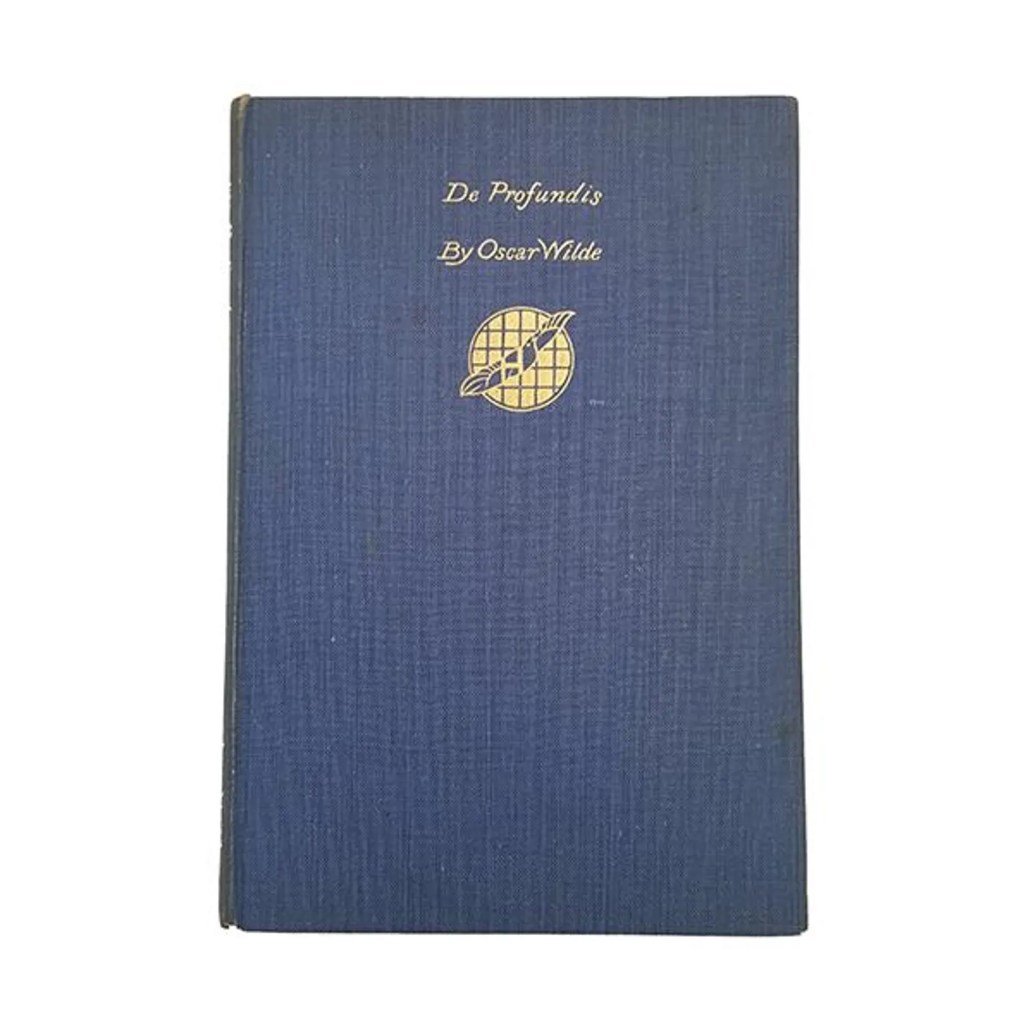
Like Heaney, I too was catapulted back to the powerful impact of reading Wilde’s De Profundis, also penned in Reading Gaol, on me aged 20. It is a both a love letter (the longest ever perhaps?) to and an execration of Bosie. Having been enamoured of the plays, the contrast with the love-letter/scalding critique was so stunning, I was reduced to silent sobbing in the library stacks. So, having avoided for several decades being disappointed by a re-reading, I of course had to do it. Right now.
However, my brain templates had been reorganised in the meantime. I was struck on re-reading by its self-justificatory self-pity, and the helpless rage of a loving man who feels he has to give up someone he loves because the latter has spectacularly failed to become an adult. And add to that the pressures coming from a beloved wife and children, and from a conviction that having given up on sexual expression with Bosie, he was acting high-mindedly in the Hellenistic dispensation towards an ephebe. Not as religious as I was, I was also amazed by the turn to Christianity in the last phase of the letter. By listing of Bosie’s numerous acts of taking both financially and emotionally from Oscar, Wilde creates the conditions of his thesis that ‘each man kills the thing he loves’. It is a rational account. It is, however and unhappily, a lot harder to kill the love; and the homoeroticism of both texts is more palpable in this era than it was to the younger reader that I was. Having said all that, I can still feel for Oscar’s cascading losses – of his wife and children, of social and literary status (he was a lion), and most of all of the unworthy Bosie, and his clear-cut intellectual construing of it.
I have to agree with Heaney that the poem and the love-letter may not be Oscar Wilde’s finest literary achievements, but they are his sincerest utterances of solidarity with the underclass, a Luciferian howl of rage and hurt at the operation of the homophobic, classist, Hibernophobic systems as expressed via the British prison system in the systemic humiliation of a man once revered for his glittering, parodic ‘ever-so-British’ theatricals, who was, after all, as Irish as his mother.
Frances Devlin-Glass
Circe by Madeline Miller

I had been getting into the Circe chapter of James Joyce’s Ulysses. I needed to know more about Circe, more than that she was an enchantress and minor goddess in Ancient Greek mythology who turned Odysseus’ men into swine.
Circe possessed an ability to create powerful spells using Moly, a powerful drug that causes amnesia, hallucinations, and delusions. That explains the phantasmagoria.
‘…the flower had no name that I knew so I called it Moly, root, from the antique language of the gods.’
Moly to Molly is not much of a leap. Is Molly/Moly Leopold Bloom’s protection? Bloom carries a potato talisman. Odysseus arrives at Circe’s home with a pouch of Moly as his protection.
‘…what is in that bag you keep close at your waist?’Odysseus and Circe spend the evenings by the hearth. Odysseus regales Circes with tales of conquest and prowess. His hubris is uncontained.
‘When he talked, he was lawyer and bard and crossroads charlatan at once, arguing his case, entertaining, pulling back the veil to show you the secrets of the world.’
Bloom’s ascension is an absurd reenactment of Odysseus’ tall tales.
‘At the base of cliff, where Scylla had been, was a hulking shoal…She had turned to stone’. Circe created the monster Scylla and then had to destroy her. Now the Poulaphouca nymph makes a lot more sense. Bloom has created his own monster from an unsuspecting nymph, that which must be destroyed.
Is the character Bella/Bello Cohen a depiction of Circe? Yes, in a grotesque way. Shape shifting, an unreal atmosphere and verbal castration of men is a Circe trait. Though there is a real thing that ties Bella Cohen to Circe. It is the overwhelming need they have to protect their respective sons.
Circe by Madeleine Miller continued my odyssey into the world of Ulysses, connecting dots along the way, and it is a great read.
Linda Rooney
 Tinteán