by James Groome
The Shanahans and the Kearns: Tipperary to Australia Part 2
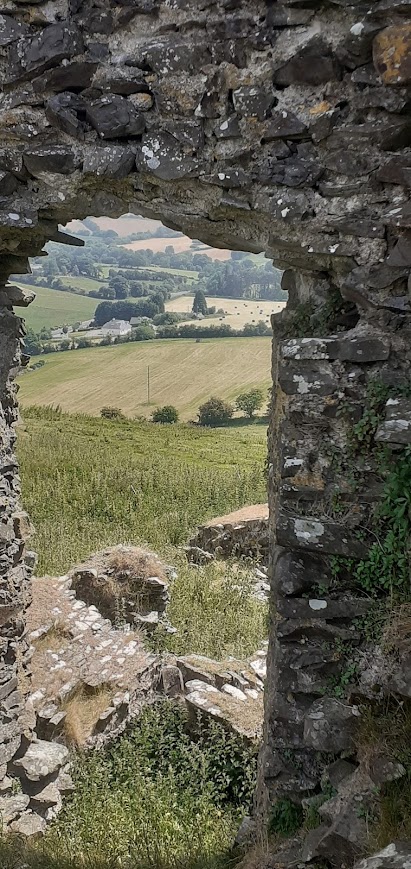
Between 1841 and 1851, the population of Tipperary decreased by twenty five percent or 111,724 persons. Seven townland populations were nearly halved. We now look at some families from two townlands: the Shanahan/Quinnane family at Carrigeen, and the Kearns or Kearins/Harty family at Glenanoge.
Carrigeen
In the Borrisoleigh rate book of 26 Oct. 1847, in the townland of Carrigeen, John and Thady Shanahan jointly paid rates on twenty-five statute acres, three roods and twenty perches. In the Primary Valuation taken the following February 1848, their holdings are listed at 4 and 5, comprising three houses, offices, and land to a value of £14 and 5s.
Carrigeen comprise seventeen households. Mary Shanahan and Catherine Shanahan, believed to be sisters of John and Thady, also lived in the cluster of houses at Carrigeen. Catherine had married William Kennedy there on 1 May 1836.
Glenanogue
In Glenanogue, Philip Kearns and family paid rates on eleven acres, three roods and twenty perches, a third of a larger plot shared with Butler and Ryan families. Glenanogue, in 1848, held ten households. The Kearns extended family’s valuation was calculated at £6 and 15s.
This level of worth classified these families as small farmers having a net annual valuation of land and buildings less than ten pounds. The cottier class were exempt from the payment of the local tax or poor rate as their holdings were valued at less than five pounds, but the tax burden fell on the landlord. This liability was an incentive for landlords to remove smaller tenants and therefore consolidate holdings to avoid payment of tax.
Evictions

Late in the lean month of Iúil an Chabáiste on Friday 26 July 1850, before the digging of the new crop and at the remnants of the previous seasons harvest, agents of Government, bailiffs, crowbar men, police, army, law and land agents gathered at Ross Cottage at Cullohill or Kearns Cross to clear the surrounding townlands of Cooleen, Carrigeen, Cullohill, Mountkinane, Curraghkeale, Glenanoge and Glenarisk. This gang of ‘about twenty’ crowbar men and levellers, supported by Sub Inspector Malone and forty police, removed one hundred and five families from their homes, knocking, tumbling, and burning as they went.
This duty was carried out on behalf of landlords John and James Parker, to clear the tenantry permanently and destroy their homes and holdings as if they had never existed. The Parkers’ decision to eject all tenantry, whether desirous to consolidate and modernise their holdings into larger, more productive farms or unburden themselves of impoverished tenants unable to pay rent, was the final straw for many of the families subsisting and barely surviving on their holdings.
Thirty years later, Thady Shanahan recounted his experience In Corrigeen … where I lived, seventeen houses were burnt in one day by way of eviction…I at once made up my mind to be under Parker, our landlord, no longer, and I came out here.
Australia Bound
In the 1850s Irish families had migrated in their thousands fleeing the turmoil and terror of the previous decade seeking refuge, respite and hopeful of a better life in Australia. It was a huge undertaking, usually a four-month journey aboard a four masted barque. One of those families, James Shanahan and his wife, Ann Berkery and three young children sailed aboard the Appoline on 16 July 1854. Also aboard were his younger brother Pat and aseven-year-old relative Michael Shanahan. All disembarked on 7 Nov. 1854, ‘on their own account’ to join their brother at the Richmond Survey. They were part of a chain migration that had commenced with the departure of his older brother Thady or Timothy Shanahan with wife Biddy Quinnane and three children who had emigrated from Plymouth aboard the James T Foord on 24 December 1850 arriving at Port Phillip, Victoria on 1 May 1851.
Also, on board were nineteen-year-old James and twenty-two-year-old Bridget Shanahan, a nephew and niece, children of his brother John at Carrigeen. Thady had attended his nephew John’s baptism on 22 May 1832.
All Thady’s brothers’ families would follow his pioneering lead except his older brother John, who it is believed had died during the famine at Carrigeen. However, after John’s death, his widow, Peggy Ryan and four children emigrated aboard the Emma Eugenia from Plymouth on 23 March 1852. Thomas Shanahan, thirty-four years, and wife Mary Bourke, thirty-two, and sons James, fourteen, Patrick, nine, and John, four, had already emigrated aboard the Joshua as unassisted, free immigrants on 5 November 1851.
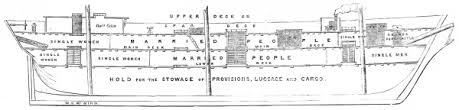
Michael Shanahan and Catherine (Kitty) Maher and family left Liverpool aboard the Bourneuf on 26 May 1852. They had lost one child during the famine and Kitty and daughter Anne died during the passage.
In the four years after the evictions, the remaining Shanahan families had all left Borrisoleigh, three families, John and Peggy’s, Thady’s and James’ from Carrigeen, and three, Michael, Thomas, and Patrick from Castlehill.
In March 1854, Thady and Mary’s son, nine-year-old James was listed as a pupil at the St Alipius school which was associated with the Catholic Church of St. Alipius, Ballarat, of which Thady was an original trustee. The head teacher at the school was Mrs. Harrington née Bourke of Ross Cottage, Borrisoleigh, where the evictors had gathered in July 1850. It was here at St. Alipius Church, in 1856, that Thady’s niece Bridget, daughter of John Shanahan and Peggy Ryan at Carrigeen, married John Bohan, son of John Bohan and Ellen Fogarty, the Fogartys were former neighbours at Carrigeen. After some years as storekeepers in Ballarat, Thady and Mary took up land nearby at Warrenheip and lived out their remainingdays surrounded by family. At a reunion for the Eureka Stockaders in 1884, Thady remarked‘sure it was elegant to be there in 1854. Was it not?’ The paper also reported that Thady,‘who has not been favored by fortune’, ‘now at the age of eighty-two is potato digging at Warrenheip.’ Thady died on 3 Nov. 1888 and Mary, three years later, on 16 May 1891. Both old pioneers were laid to rest together in the Ballarat Old Cemetery.
The Kearins of Glenanoge and New South Wales.
Philip Kearins, with wife Catherine and three sons, Michael, Philip and Patrick, after first going to Michael Martin at Maitland, New SouthWales, established themselves working on the vast MacArthur Estate at Camden Park near Campbelltown. A daughter Margaret was born here on 12 April 1852 and baptised on 2 May 1852.
It was here that the Kearins educated themselves in the development and history of several industries in Australia, including wool, viticulture, dairying, and horticulture, ways of Australian agriculture and animal husbandry, especially sheep and horses, before proceeding in 1861, to take up their own selection at Calabash station near Murringo, Young, New South Wales.
A Tragic End
For ten years after arrival, Philip had gathered financial capital, knowledge, and family to assist him in his quest to take up farming again and a pastoral lease for his own family. However, whilst on the road to Murringo with relatives and other families to take up land, he passed away from an attack of appendicitis, unfortunately a long way from any medical help.
He was buried at the side of the road near Marulan, New South Wales. He had left this New World, ten years after leaving the Old World in Ireland. His widow, Catherine Harty and her sons and daughter now faced another huge crisis. It was now 1862 and the Kearns family were headed for the countryside, the bush, to create a homestead, a legacy for future generations. They were fulfilling what Patrick O’ Farrell called ‘a veritable obsession with the acquisition of land and livestock.’ Having been starved then evicted in Ireland, they now sought to reassure themselves of their survival and the proliferation of their kinfolk. They would make sure that they and theirs would never suffer the ignominy of hunger, starvation, and ejectment ever again.
Chain Migration
Philip Kearins had helped to bring relatives to the new country. He paid £4 towards the passage of his nephew Michael Kearins, son of James Kearns and Annie, (Honoria) Kelly of Glenanoge, nineteen years old. He arrived on the ship Wellington on 1 April 1859, to his uncle and godfather, Philip, at Campbelltown. He also paid £4 each for the passage of Philip and John Harty, twenty-eight and twenty-four years respectively, nephews of his wife Catherine. After the tragic death of Philip, his eldest son Michael continued the family duty and commitment to the preservation and advancement of kith and kin. Michael paid £24 for the passage aboard the Abyssinian of James Karrins, Catherine Karrins, and Richard Degan. It seems James, thirty-eight years, declined the passage and instead was refunded £8 to be paid in Ireland. Richard and Catherine arrived in Sydney on 29 May 1862. Other extended family members Michael and Ellen Carey arrived aboard the Sandringham on 26 June 1864, sponsored £8 and £5 by Michael Kerins. Also aboard were Philip and Mary Kennedy of Borrisoleigh.
Spreading Out: Ballarat and Beyond
By late 1854, Thady Shanahan’s three brothers James, Michael and Tom and families were operating east of Melbourne at the Richmond Survey, perhaps clearing land and tree felling, working for a Kennedy ‘timbergetter’ at Nunawading and Boroondara, or maybe driving carts or storekeepers. Michael, whose wife and child, Catherine, and Anne, had died aboard the Borneuf, remarried Margaret Hackett on 12 July 1854 at St James Chapel, North Richmond. Margaret was a Borrisoleigh native of Coolderry townland, who came out on the Omega.
It is possible all the Shanahans were in Ballarat at the time of the Eureka Stockade rebellion. Michael and his new wife were there in May 1855, when their first son John was baptised at St Alipius’ Catholic Church, and his brother Patrick, who had arrived with James and family on the Appoline in 1854, was sponsor to the child.
Michael and family would go on to farm a selection at Myrniong in the vicinity of Stoney Hut Creek between Ballan and Mount Blackwood, Victoria. Thomas and family became hotel and store owners in the Soldiers Hill area of Ballarat. James and family selected land at Dead Horse also in the vicinity of Ballarat.
Patrick married Sarah Taylor of Tipperary at Bacchus Marsh Roman Catholic Church on 11 July 1858 and took up land in the Greendale/Mount Blackwood vicinity. 1876 the family moved to take up 320 acres in the parish of Panoobanawm near Echuca in Northern Victoria.
Legacy
The Shanahan families would go on to prosper near and far, from hotel keeping in the Northern Territory to farming and mining in Queensland and Papua New Guinea. They integrated quickly into the colonial melting pot. They and the Kearins family became, the epitome of Australia, hardworking, rugged, simple honest folk building new lives, toiling under a blue sky, forging a new nation, and turning a colonial outpost of empire into a modern society of equals through their blood sweat and tears.
Some Newspaper Accounts
The Advocate (Melbourne) 17 May 1890 p. 14
Patrick O’Brien (Ileigh, Borrisoleigh)
The deceased, who was in his 67th year, was a resident in the colony of 38 years standing. He landed in Geelong in 1852 and resided there some time. From there he went to Ballarat to the diggings, and took an active part in the diggers’ riot of 1854, where the late Hon Peter Lalor lost his arm. The deceased gentleman was one of the trusted men who were selected by the late Rev. Fr. Smyth (who died at Castlemaine) to shift Mr. Lalor from tent to tent, while the reward was on his head, to avoid the rigour of the law then in force. The deceased also took a deep interest in the struggle for freedom of his native land. He was a stern Nationalist and zealous Catholic, and always raised his voice in defence of both wherever required.
Advocate, 12 November 1898, p.7
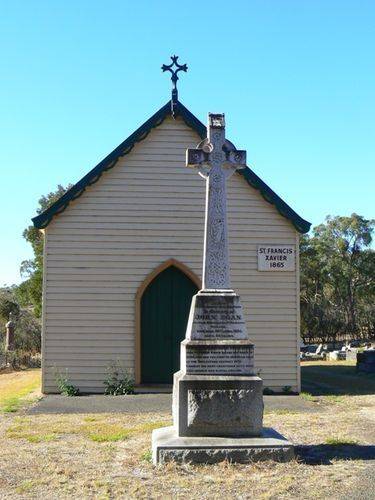
MEMORIAL TO MR. JOHN EGAN. An interesting event took place on All Souls’ Day. after the annual Mass which was celebrated in the Mortuary Chapel of the Eganstown (Catholic) Cemetery. The occasion was the unveiling and blessing of a handsome marble Celtic cross monument in memory of the late Mr. John Egan. the founder of the township which bears his name, and who. throughout his life, had proved himself a good Catholic, a patriotic Irishman, as well as an excellent colonist. Mr. Egan was a native of Borrisoleigh, in the County Tipperary, and arrived in the colony in 1841. Seven years after he founded the present Eganstown. which lies 4 miles beyond Daylesford, on the Creswick side. Here he took up a large selection , as well as an extensive grazing area, and by his indomitable pluck and energy earned a name for himself that will live in the annals of our early pioneers. He died in 1896, at. the age of 85 years, He was the first to discover gold in the Daylesford district, in 1851.
Ballarat Star (Vic.: 1865 – 1924), 18 June 1903, p.1
Mr. James RYAN, one of the leading farmers of Wallace (writes our Gordon correspondent) died on Sunday last. He was ‘a very old and respected resident having carried on farming pursuits in the Wallace district for about 34 years and had reached the ripe age of 72 years when he succumbed to an attack of broncho-pneumonia. The deceased gentleman was born near Borrisoleigh, County Tipperary, Ireland, and arrived in this state 45 years ago. He leaves a widow and three sons, and four daughters—all grownup—well provided for. Two of his daughters are nun, one in the Warrnambool and the other in the Colac Convent and both were able to see their father before he died. The funeral of Mr James Ryan, ofWallace which took place yesterday, was, one of the largest that has passed through Gordon for a long time. The remains were enclosed in a polished oak coffin, with silver mountings.
In Conclusion
The success of the immigration to Australia of numerous family groups from the Borrisoleigh region is evidenced by the continuation and proliferation of remittance chain migration throughout the region as well as the socio-economic successes of the various families. This migration to Australia from Borrisoleigh has continued into modern times.
James Groome is an independent researcher, historian, Australophile and Tipperary man. He holds a Master of Arts in Family History from the University of Limerick. He is interested in hearing from any Australian descendents of the Borrisoleigh emigrants and can be contacted at jamiesoutherncross@gmail.com
 Tinteán
Wonderful couple of pieces of literature. Is anyone aware of Kearns/Kieran’s heading to Goulburn Valley, Northern Victoria?
Cheers
John Cullen