by Michael Boyle

I have participated in all kinds of sports. Firstly, my family and the community of Lavey parish in Derry were sport crazy for Gaelic games, and today the Lavey Wikipedia site list four GAA All Stars from our local club. Secondly, I was lucky to have a next-door neighbor, Dan Mc Crystal, who was a legend in South Derry for his interest in hurling, camogie, soccer, rugby, and bowling. A third factor for my interest in sports was listening to sports on the radio. We had a wet cell battery radio but somehow, we always called it the wireless.
We didn’t have a television, but I was able to go the neighboring village of Culnady and watch the F. A. Cup final at the home of James Paul, the local mill owner. I pedaled my small racer bike the mile and half journey on wet foggy nights to see my first ice hockey game in Culnady on BBC TV sports. I was intrigued that there was no dead ball or end line and fascinated to see players skate so fast in a circle behind the net.
But strangely enough despite all my extensive sports background, I got totally absorbed and immersed listening to cricket games on BBC radio. Yes, this might surprise some of you, for indeed, I was so captivated by the magic and mystery of cricket commentaries that I could hardly leave the house. I wanted the latest score of an English county cricket championship game, or how England went during in the Ashes games against Australia at the Sydney cricket ground or in Melbourne
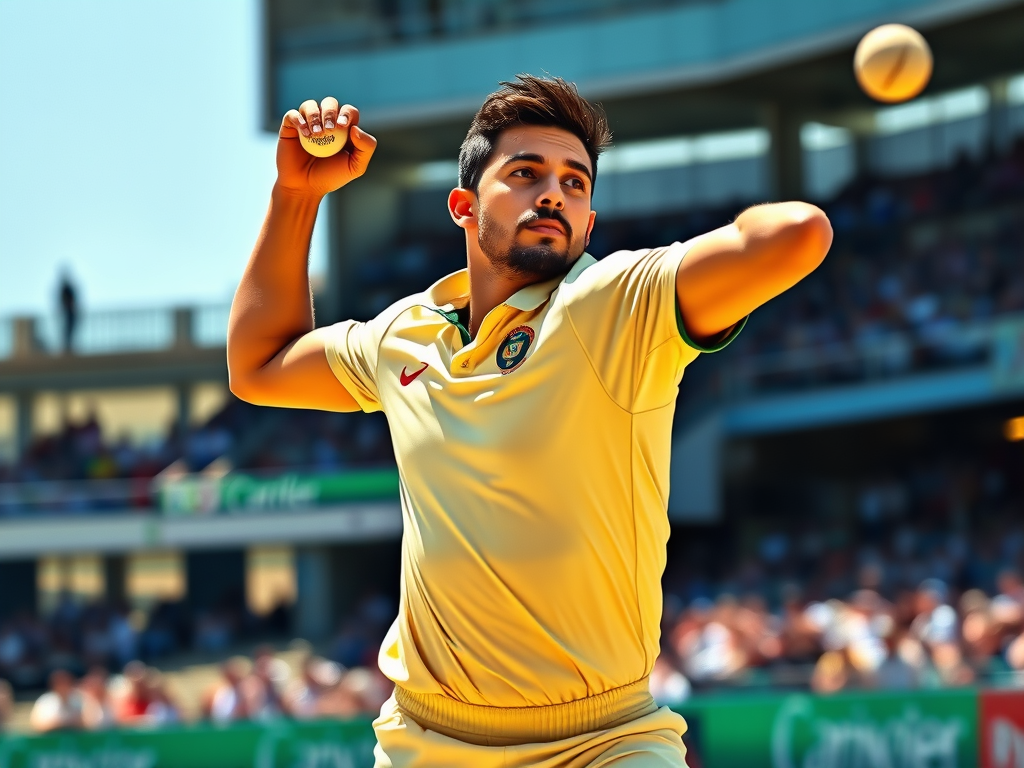
Announcer John Arlott’s droll but captivating commentary brought alive cricket test venues like The Oval, Old Trafford, and Headingly into our house. I knew about *Laker and Lock the great English slow bowlers. And of course, other famous players like Hutton, Cowdry and Sobers. In our local library in Maghera there was an ample supply of cricket books about Australian tours and the long history of cricket. I found it enthralling to read about the amazing career of Don Bradman the great Australian cricketer of yesteryear.
Our radio of the early fifties, was perched high on a tiny shelf to the right of the hearth that had a large hook we used for cooking. There was my pouting corner, fittingly close to a corner of the hearth and the upper room. Often it was so noisy in the kitchen I had to strain my head and put my ear almost into the radio to hear sports reports and commentaries. Sometimes I had a small transistor and would listen to commentary while working outside on the farm. Cricket was a virtual game for me: completely and totally, because I never saw an actual cricket game or followed a game on television. I am sure I was the only cricket aficionado for miles around.
But my sports neighbor Dan Mc Crystal encouraged my interest in cricket and to the amusement of my family in casual lunchtime conversation Dan and I continually used cricket lingo like ‘rain stopped play’ or ‘time for afternoon tea.’ By the time I was age eleven, I had a vocabulary of terms like ‘silly mid-on,’ ‘a duck,’ ‘follow on,’ ‘crease,’ ‘LBW,’ googly,’ ‘Maiden over,’ ‘pace bowling,’ twelfth man,’ and ‘MCC.’
Test matches could take almost a week to play, and I know some of you feel that watching or listening to a game would be dreadfully boring. Not so for me. I was captivated, hooked on dreamlike quality and the richness of the commentary. The players and venues came alive to me because I was there watching every ball being bowled.
Even though local Irish papers did not provide much cricket coverage, I would read cricket novels like the history of the titanic battle for the Ashes between England and Australia. So, a byproduct of my passion for cricket was that I learnt the geography of New Zealand, Australia, England, and The West Indies.
At age twelve when I got to Rainey Endowed School High School in Magherafelt, I was excited as the school had a cricket team. My dream position was to be wicket keeper (something akin to being a catcher in American baseball.) At home in Drummuck Hill with my brothers I played street cricket with a red spongy ball, a make shift cricket bat and wickets chalked out on the stable door. At school when I first tried out to bat, I quickly realized that any novice bowler could hurtle a rock-hard ball at speeds of well over 30 mph or more, and a good bowler could bowl twice as fast. Reality had now hit in and my magical love affair with cricket was crumbling fast. Furthermore, I was extremely short sighted and it was in the cards that I needed glasses real soon. Added to all my misery on this first tryout, I got a staved finger trying to catch the ball and bruised arm after being struck with a ball. My romance with cricket immediately went and never came back.
Today, when I look back on those days, I am totally bemused that growing up in a house with strong Irish Nationalist views, I was so infatuated, and I was allowed vicariously to participate in the stateliest game of the British Empire and the realm, so famously played on the playing fields of Eton.
Michael Boyle is a native of Lavey, Derry, Ireland. His poems have appeared in the The Antigonish Review, Dalhousie Review, Tinteán and New Ulster Writing. His previous prose pieces for Tinteán include Memories of our Old House and Family Trivia in Lavey, County Derry. He lives in St John’s, New Foundland where he conducts a historical walking tour and is currently putting the final touches to his memoir On New Turf about his life in Ireland and in Newfoundland.
*We delight in feedback from readers. Two cricket aficionados noticed that Laker and Lock were slow rather than fast bowlers. Danny Cusack, and Irish-West-Australian living in Meath presently commented:
‘Interesting piece. There is however one glaring error. Jim Laker and Tony Lock were slow (spin) rather than fast bowlers. Laker holds the record for the most ever wickets taken by a bowler in a test – 19 for England against Australia at Manchester in July 1956. Ten in the first innings and nine in the second. Lock took the other one! I recall as a young boy in the early 1960s watching ‘Locky’ bowl at the WACA ground in Perth. He played for and captained Western Australia for a number of years.’
Bob Glass in Melbourne Australia consulted his beloved Penguin History of Australian Cricket‘ and further adds that this Test became known as Laker’s Test because he took 19 wickets for 90 runs, the most ever taken in any first-class game.
Michael Boyle graciously thanks his interlocutors in these terms:
‘As a writer feedback is so important.
PLEASE, Give credit to the folks who were so observant. This enhances the quality of the magazine and Ihaving just written a memoir knows-you gotta get it right.’
Tinteán eds.
 Tinteán