by Dymphna Lonergan
Irish migration to Australia is back in the news with reports of a significant rise in numbers. In January 2024, reporter Jack Evans from news.com.au stated more specifically that ‘More than 21,000 Irish citizens were granted working holiday visas in Australia in the 12 months leading up to July 2023, making the highest recorded number in more than 16 years.’
These Working Holiday Visas (WHV) are part of a revised visa system. The revision has increased the age limit for application from 30 to 35 for some countries, Ireland included. No doubt some Irish on WHVs will want to continue on the path to permanent residency
It has been 15 years since the Global Financial Crash (GFC) that affected Ireland so much and marked a spike in emigration. Ireland recovered relatively quickly from the GFC, and many Irish returned home, yet, according to researchers Mary Gilmartin and Cliodhna Murphy from the Migration Policy Institute in a 2024 article, ‘The number of Irish citizens (Including those born abroad and who inherited their citizenship’) moving or returning to the country each year has remained stable at between 20,000 and 30,000 for each of the last 15 years.’
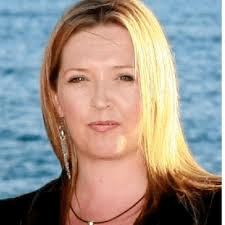
New research shows that there was a 50% increase in migration from Ireland to Australia between 2016 and 2024. Adelaide’s Dr Fidelma McCorry is one of the editors of a new research publication, Continuity and Change. A research manager at the University of Adelaide, her profile notes that ‘Her interest in migration, particularly the global movement of the Irish, stems from a lived experience of repeat and frequent migration.’
Fidelma’s personal story of repeat and frequent migration to and from Northern Ireland since the 1970s, prompted her to establish Adelaide Irish Connect in 2009 as the first online presence of the Irish in South Australia to offer support services to recently arrived or intending migrants. From there she became involved in the Irish Australian Chamber of Commerce (IACC) in South Australia and is currently Vice-President of the Irish Club in Adelaide.
But it was at the outset of the pandemic that the Australian-based Irish-on-the-ground came to the fore, as various groups rallied around social media to coordinate the repatriation of Irish in Australia who needed to go home before Australia’s international borders closed in 2020. On behalf of the IACC, Fidelma herself fielded over 500 private messages through Facebook™ Messenger. This generation of migrants, Fidelma suggests, finds comfort and support in online social and business groups that past generations found in the Church and traditional Irish clubs.

The Epilogue of Continuity and Change, a study of Irish migration 1945-2024 (Routledge, London, 2025) * discusses the traditional term for Irish emigration, the Diaspora, as needing re-evaluation. The ‘Generation Migration’ of today is actively involved with Irish matters through social media. It is a generation that ‘sailed or flew back to vote’ during 2015 and 2018 transforming referendums, or ‘phoning family members at home, particularly grandparents, to discuss issues at hand…’. This generation too is re-raising the question of the right to vote in Presidential elections.
As the figures show, the Irish continue to emigrate, despite better times in Ireland. A recent article in The Irish Times by Pádraig Collins featured Fidelma’s story:
Having lived in Adelaide since 1999, McCorry says she is here for good, with one of the reasons being better healthcare. ‘I was sick last weekend and made a doctor’s appointment at 4am and by 6am I had antibiotics. The chemist was open,’ she says.
While acknowledging the good that citizenship has offered her, Fidelma does not discount the downside:
[I am] staying here because I know how very lucky I am to live in a country with good healthcare and opportunity no matter how much I miss friends, family, and my home.
The question now is whether the Generation Emigration currently on WHVs in Australia will end up being ‘here for good’. Fidelma says that the new visa system does not offer an easy switch to permanent residency and eventual citizenship. We await the next Census.
*Continuity and Change also has a chapter of personal reflection on migration by Julie Breathnach-Banwait, one of our editors. The hard copy cost is prohibitive for many. Perhaps consideration could be given to funding support from the Emigrant Support Program for such important publications so that they can be available to public libraries, at least.
Dymphna Lonergan is a member of the Tinteán collective with academic status at Flinders University.
 Tinteán