Le/with Julie Breathnach-Banwait
Dairena Ní Chinnéide

Dairena Ní Chinnéide is the third poet that I have had the pleasure to engage with in this series of Agallaimh le Scríbhneoirí Gaeilge/Interviews with Irish language writers. She is a writer of intense emotional depth and versatility. Ní Chinnéide’s infusion with the Irish landscape is often felt in her poetry, suggesting a deep connection with the rugged coastlines, rolling hills and vales she describes so aptly.
File sa dá theanga í Dairena Ní Chinnéide. I measc 12 cnuasach filíochta atá foilsithe aici, tá Tairseach, (Éabhlóid, 2021), Fé Gheasa : Spellbound’ (Arlen House, 2016), Cloithear Aistear Anama, (Coiscéim, 2013), Labhraíonn Fungie / Fungie Speaks (Ponc Press, 2016). Scríobhann sí leaganacha aistrithe do chuid dá cuid filíochta. ‘Sé’n leabhar ‘DELETED’ le Salmon Poetry, a céad cnuasach as Béarla (2019). Tá a cnuasach nua ‘ Teacht Aniar – Meascra Dánta 2004-2024’ foilsithe an mhí seo ag Éabhloid. I measc na ngradaim a bronnadh uirthe tá an Patrick and Katherine Kavanagh Fellowship agus Dámhachtana Litríochta Gaeilge ón gComhairle Ealaíon agus Ealaín na Gaeltachta.
Dairena Ní Chinnéide is a poet from Ireland who writes in both Irish and English. She was Writer in Residence for the language and culture organization Oidhreacht Chorca Dhuibhne for the past four years. ‘Teacht Aniar – Meascra Dánta 2004-2024‘ is her new collection following Tairseach in 2022, both published by http://www.éabhloid.com. She was Irish Language Writer in Residence in Dublin City University in 2019. She was Poetry Ireland’s Poet Laureate for Listowel in 2020 and in 2021 was awarded a Residency in Centre Culturel Irlandais, Paris and was also awarded the Aodh Ruadh Ó Domhnaill Busary in Galicia in 2024. Dairena has also translated poetry from English, Polish, Lithuanian and Russian into Irish for Munster Literature Centre and IMRAM (http://www.imram.ie). She collaborated with musicians and composers Steve Cooney and Rónán Ó Snodaigh to record the album ‘Cinnlínte : Breaking Verse which is available in bilingual fomat from her website. Dairena is a former broadcast journalist and works as an interpreter when she’s not writing.
On inspiration, why she writes and style of writing:
It is an existential kind of question, but I guess I write and I have always written to stay alive. It is how I navigate the world and try and understand the universe we live in. I grew up in a small village on the Dingle Peninsula in southwest Ireland and the astounding beauty of the mountains and the hills and cliffs and wild Atlantic Sea are impossible to ignore. So, landscape and place and sense of identity or the word in Irish is ‘dúchas’ or heritage are huge influences on what motivates me to write. Trying to frame some universal hurt through placing words on a page in poems of anguish and love is another common theme. The pursuit of balance and a mind that is at peace is my ultimate quest and daily challenge. I write about complicated love and the rip tides of unrequited passion and also about depression and wellness and mental health issues and swimming below the emotional surface. I write for myself. If others can relate, then that’s all the better, but it isn’t the motivation. I write free verse poetry mainly. I write in Irish and go through phases of providing English versions myself. Of my 12 published collections half of them have English translations. ‘Deleted’ is my first English collection with Salmon Poetry 2019.
On influence:
I was fortunate to grow up in a house which was full of books. I was an avid reader from an early age and the pantheon of European and American literature was to be found on the shelves and devoured. I was the youngest of eight children and their journey through third level reading and influences definitely rubbed off on me in West Kerry where we lived. My father was a poet and a teacher and a huge influence on me. He died in 1985. He put Treasury of English Poetry on my desk at school when I was in fifth class and there began the love affair with Tennyson and Shelley and Dickenson and Hopkins and more. I was fascinated by the way poetry worked. I was amazed at how to play with words and create something entirely magical and unique. During secondary school I was influenced by Irish language writers such as Seán Ó Riordáin and Máire Mhac an tSaoi and Caitlín Maude and Myles na gCopaleen or Flann O’Brien because of his humour and wit. My adult influences are constantly flowing and growing and poets like the Russian poet Marina Tsvetaeva moved me so much when a friend introduced me to her work that we ended up with a stage show in which I performed the Irish language versions of her poems in Dublin. Nuala Ní Dhomhnaill is the queen of Irish language poetry to me, and I was fortunate to have her as a mentor before I ever started publishing. She was almost like the midwife to my poetic expression those wonderful days where we’d meet in Ceann Trá and I’d read and she would just listen. It was a gentle birthing into letting the character of The Warrior or An Trodaí explode on the page and that became my first collection An Trodaí & Dánta Eile / The Warrior and Other Poems (Cló Iar Chonnacht 2005). Reading fed my imagination and from that the influences are as vast as Dorothy Parker and Douglas Adams, from Dostoevsky to Isabella Allende, or Elizabeth Smart and Javier Marías. I love to read, and the entire experience is what influences me.
On a piece of writing she feels strongly about:
There is a very small poem that has a very big part to play in my psyche called Teanga Dhúchais or Native Tongue. I am a native speaker of Irish and grew up in an Irish speaking area or Gaeltacht west of Dingle town. I was trying to put my finger on what it is that makes the Irish language so very sacred to me that it was like magic when the words landed on the page. This sense of a language and a fiercely tribal heritage I felt woven into my being is something I have spent my life respecting and exploring and sharing the importance of minority identities and language, our language, dialects, culture, music and humour. This poem came from some place very deep yet is so simple and vast, something I don’t want people to lose sight of in this modern cyberworld. I live in a country that mainly can’t even pronounce my name and this reality is very scary, to think that Irish will disappear is like everything I stand for being wiped off the planet. We musn’t let this happen. :
Teanga Dhúchais (from Tairseach, Éabhlóid 2021)
Braithim í cogar cuisle a ritheann tríom braithim lúb na bhfocal briathra na dtreabh a labhrann teanga ár sinsear míníonn sí í féin ionainn chomh réidh le hanáil is braistint éirí gréine boladh na beatha braithim rian teangan ná fuil míniú agam uirthi ach go bhfuil sí ann mar braithim í.
Native Tongue (English version by the author from Tairseach, Éabhlóid, 2021)
I feel her a whispery pulse rocketing through me I feel the bend of sound the words of the tribe who speak the language of our ancestors she explains herself as readily as breath the feeling of dawn rising the scent of the living I feel a trace of language I can’t quite explain but she is there because I can feel her.
Suggestions for other writers:
Read. Read. Read. I cannot emphasize that more. Take your time with the work and make sure you are in confident rhythm with your work before you publish. I don’t know what else to say except if it’s in you, it will come out of you and what you do with that is your decision.
Particular themes that she feels strongly about:
Someone recently, in an academic thesis, likened by work the ecofeminist movement and though I would never have framed myself in any specific movement, the issues nonetheless are current in my work – environment, language, culture, women and their bodies, relationships and the complexities of love. I’m drawn to these themes because they are a part of my reality. If that is ecofeminism then fine, but my inspiration will always be personal and that bold, proud, female voice sings strong throughout my poetry.


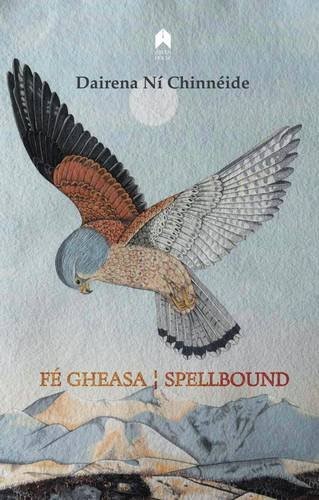
Please visit http://www.dairenanichinneide.com for further information. One of Dairena’s many readings can be found here: https://www.youtube.com/watch?v=c4VSunIFLiA
Julie Breathnach-Banwait
Julie has been a regular contributor to Tinteán for many years and has recently joined the Editorial Collective. She is an Australian based Irish language poet and writer. To date she has published four collections of poetry. Dánta Póca and Ar thóir gach ní are Irish language poetry books published through Coiscéim (Dublin). Bobtail Books (Australia) have recently released two bilingual books of hers: Cnámha Scoilte/Split Bones – a bilingual book of prose poetry and Ó Chréanna Eile/From Other Earths – a bilingual book of poetry, co-authored with the Australian Irish language poet and writer Colin Ryan. Both are available at http://www.bobtailbooks.com.au
 Tinteán