
In just four years, Ireland has lost three of her famous and fearless females, Marian Finucane, Edna O’Brien, and now Nell McCafferty. On hearing the news about Nell McCafferty, I thought that I remembered her guest hosting Ireland’s ‘The Late Late Show’ with her rallying cry ‘free at last.’ I also thought that this was in the early 1970s when I was still living in Dublin.
A little research put me right. Nell McCafferty was on Late Late Show in 1980, but it was Marian Finucane who had centre stage as a guest presenter. Finucane was already a successful radio presenter at the time.
In a report submitted to Ireland’s television station RTÉ on the lack of opportunity for women presenters, the statement that ‘Marian Finucane will never take the Late Late chair’ prompted the show’s long-running presenter Gay Byrne, in what he described as ‘a little gimmick,’ to invite Finucane to present a segment on 15 November 1980, an interview with Dr Lucille Mair Secretary-General of the World Conference of the United Nations Decade for Women held in Copenhagen in July of that year.
Before that, on International Women’s Day in 1991, Nell McCafferty and Marian Finucane featured on The Late Late Show remembering ‘the condom train’ in 1971 when they and many other Irish women challenged the ban on contraceptives in Ireland and travelled to Belfast from Dublin where contraceptives were legal. They were recorded buying condoms in a Belfast chemist shop. These fearless women gave hope and courage to ordinary women who were only coming into awareness about how their reproductive rights had become the property of male dominated establishments, not just in Ireland.
With the upcoming US election and hard-won women’s reproductive rights in jeopardy there, the work of feminist stalwarts such as Nell McCafferty is not finished. Australia, too, has had its own fight for women to have easy access to contraceptives. The Women’s Electoral Lobby formed in 1972 was successful in having the sales tax on contraceptives removed by the Whitlam Government.
Below is a story that we featured a few years ago and republish here in part, in memory of and thanks to Nell McCafferty in particular. The full article can be seen at https://wordpress.com/post/tintean.org.au/37116
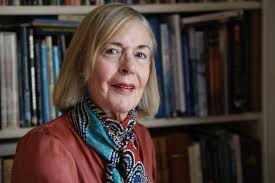
Dr Caroline De Costa, professor of Obstetrics and Gynaecology at James Cook University, Queensland was the first female professor of Obstetrics and Gynaecology in Australia. An activist for Australian women’s reproductive rights, she was on that famous ‘contraceptive train’ in 1971 from Dublin to Belfast.

Caroline describes it as follows:

Contraception in the Republic of Ireland had been illegal since 1935 under the 1935 Criminal Law (Amendment) Act but in Northern Ireland it was legal but restricted. Initially, the IWLM were not in agreement on who should go to the North with some suggesting that it was inappropriate for single women to go as it implied that they engaging in pre-marital intercourse.
For those who went, there was the risk of being detained or prosecuted for bringing birth control into the Republic if caught. They also risked exclusion from family and friends and possible social stigma for being involved with such an immoral and rebellious demonstration. During this time, due to the lack of available contraception, families averaged 6-10 children in the Republic of Ireland (ROI) and women faced, in the words of one member and later Fine Gael TD Nuala Fennell, ‘the nightmare of unremitting pregnancy‘.
This brave act of defiance, with Caroline as part of the group, paved the way for discussions about access to contraception in the ROI and particularly highlighted the need to start exploratory discussions on the provision of contraception for Irish women living there.
Preparing for maximum exposure, this group of extraordinary women were accompanied by media from Ireland, the US and Japan.
There were demonstrations, women’s lib demonstrations in Dublin and meetings with the health minister and things that we all went to as well.
So it was all part of a campaign to get contraception, which was completely illegal. But it was good fun. Because it was a beautiful day. We got on the train to go to Belfast and come back with condoms, and we thought we’d try and get the pill, but we didn’t have prescriptions. So we bought aspirin and told the customs officers it was the pill, they didn’t know the difference.
Now (Nell) McCafferty and Mary Kenny, were at that time journalists and members of the women’s lib organization and they were very instrumental in publicising the fact that we were going to do this and getting a group of women together. So there were 47 of us who got on the train and went to Belfast and we got condoms. We were nervous about the day.
But the customs officers, when we got to Dublin, were much more nervous. They didn’t know where to look. They were absolutely pink with embarrassment and some of them had no idea what a condom looked like, they didn’t know what they were searching for. One of them said ‘Miss ave ya got any of them things? And I said yes. He was just completely overwhelmed. So they hung on to us for a while and there was a lot of the press taking photographs. Some asking women ‘why did you do this?’ We were saying you need to have contraception for women. And for Irish men too, but we were pretty much concentrating on the women because they were getting pregnant.
We weren’t brought to court but we all had to give our names and addresses and so on. But I think it did focus national attention on the fact that there was no access to contraception. It was illegal, but also the Catholic Church had a stranglehold on women’s bodies.
 Tinteán