(This introduction is by ChatGPT and has been checked by Francis K. Beirne author of the latest history of Irish showbands)

Introduction (ChatGPT)
Irish showbands, a vibrant cultural phenomenon that emerged in the mid-20th century, played a significant role in shaping the music scene of Ireland. These bands, typically consisting of a combination of vocalists, and instrumentalists, became immensely popular for their energetic performances, eclectic repertoire, and ability to entertain diverse audiences.
The roots of Irish showbands can be traced back to the 1950s when Ireland experienced significant socio-economic changes, including urbanization and increased disposable income. As a result, there was a growing demand for live entertainment in dance halls and ballrooms across the country. Showbands filled this void, offering a mix of musical styles ranging from traditional Irish folk tunes to rock and roll, pop, country, and jazz.
One of the pioneering figures in the showband movement was Brendan Bowyer, whose band, The Royal Showband, achieved widespread success in the late 1950s and early 1960s. The band’s dynamic performances and catchy melodies captured the imagination of Irish audiences and laid the foundation for the showband craze that followed.
During the 1950s and 1960s, Irish showbands reached the height of their popularity, attracting large crowds to dance halls and venues across Ireland. Bands like The Miami Showband, The Dixies, and The Freshmen became household names, touring extensively and releasing hit singles that topped the Irish charts.
The showband era also witnessed intense competition among bands vying for audience attention and record deals. This competitive environment fueled innovation and creativity, leading to the emergence of new musical styles and trends within the showband scene.
However, the heyday of Irish showbands began to wane by the early 1970s, as changing musical tastes, the rise of disco and punk, and economic downturns impacted the viability of the showband model. Many bands disbanded or transitioned into other musical genres, marking the end of an era.
Despite their eventual decline, the legacy of Irish showbands endures, with many of their songs remaining popular and influential in Irish music culture. Additionally, the showband era is remembered fondly as a time of youthful exuberance, community spirit, and memorable live performances that brought people together in celebration of music and dance.
References:
- Irish Showbands: The Story of the Bands and Singers by Tom Gilmore
- The Irish Showband Scene by Red Hurley
- A History of Irish Music by James Flannery
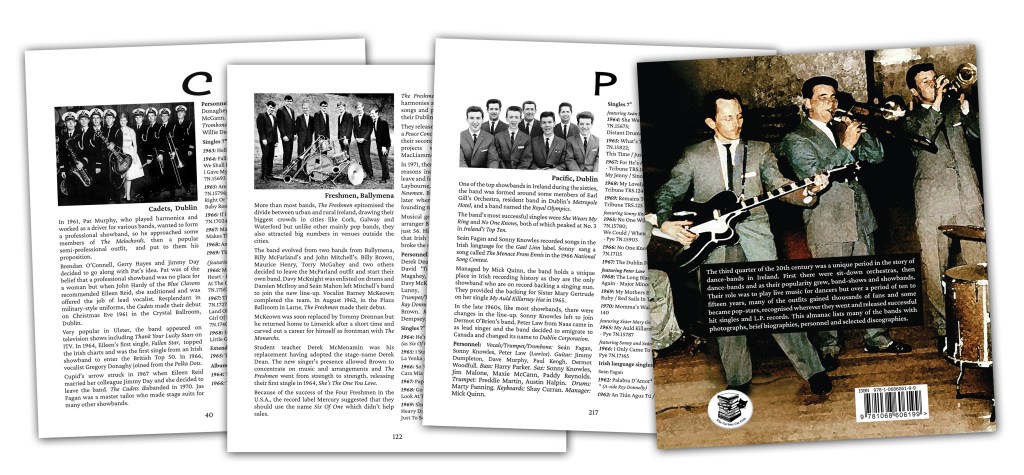
From Tango to Twist is a big 336-page door-stopper with details on 858 dance-bands from 1960s (from all 32 counties of our island), personnel, selected discographies, and so on. The complete index of bands, towns, and so on. can be viewed here: https://irishshowbands.net/index-book.htm
Availability

Francis Beirne was a working musician for more than two decades and has experienced the live music scene at first hand. A native of County Galway, he has been collecting memorabilia, writing and researching the subject since the 1980s. He has written three different series for Ireland’s Own magazine (weekly) since 2005 – The Showbands’ Era (60 parts), The Mineral Bar (72 parts) and Showbands and their names (15 parts). He has also been commissioned to write for the Irish Independent, Irish-America (monthly), the Linenhall Library (Belfast) and various other papers.
He founded the Irish Bands’ Archive at www.irishshowbands.net in 2001, and he runs an active facebook group called The Mineral Bar (1,700 members) at http://www.facebook/groups/isbga
 Tinteán
Sadly, Tommy Drennan, lead singer of The Monarchs Showband, died last Thursday in Limerick. May he rest in peace.
Albert Reynolds and his brother had 14 dance halls in Ireland.
After the Showband era had ended, he explained to a journalist how lucrative the Showband business had been.
He said:
‘The money we took in at the cloakroom paid the hall cleaning expenses, the money we made in the mineral bar paid for the Showband and what we took in at the box office was sheer profit.’