The Accents Lost Along the Way
By Susie Harris
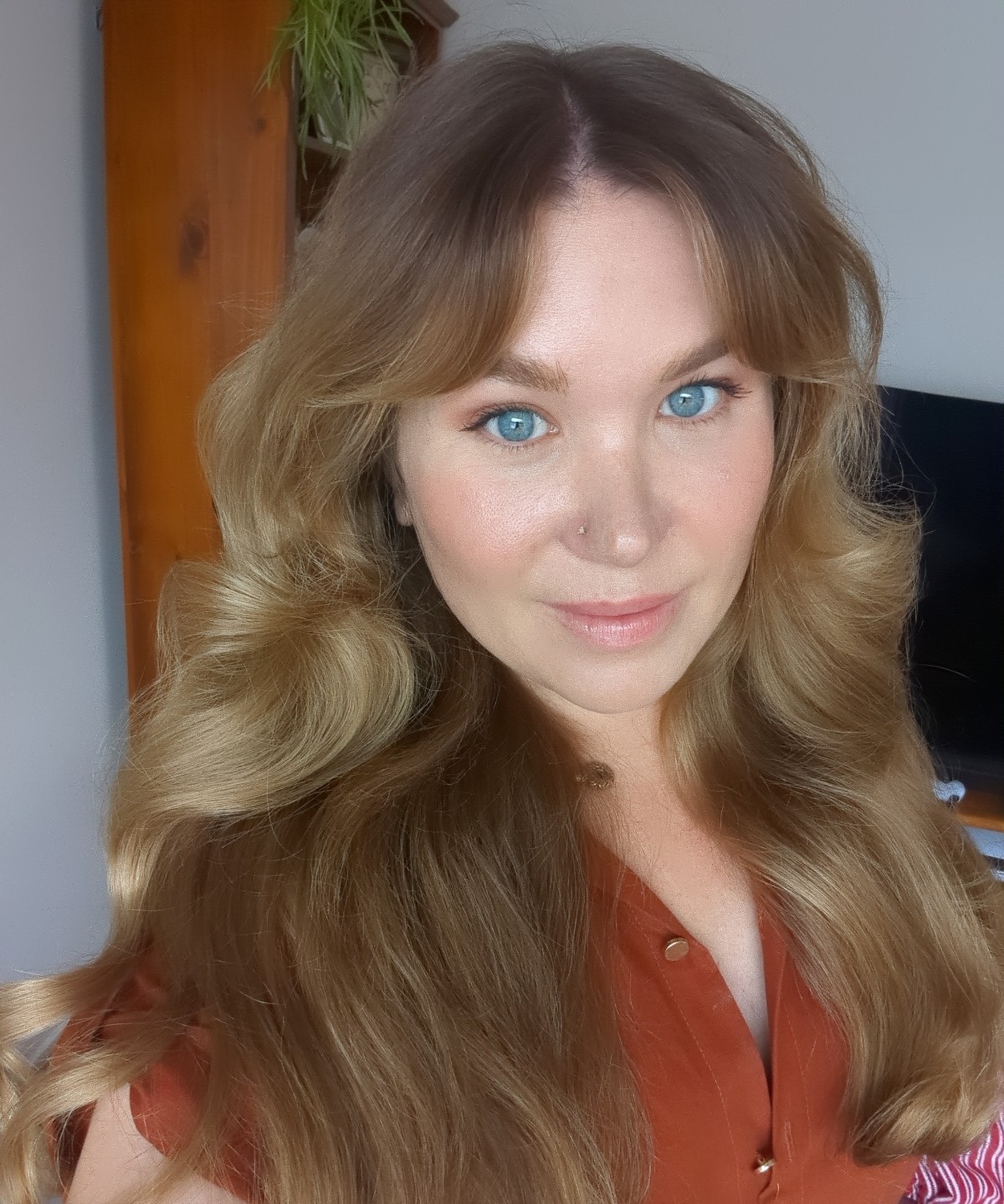
I grew up in County Kildare. Naas, to be specific. My youth was a long grey uniform from the posh private school a town over, and a deep fear of walking past the public schools in it. It was Sunday morning fights over having to go to mass, and it was a yearning to leave Ireland and go as far as I could.
At twenty, my desire for escape was fulfilled in the form of a backpack and a Dutch accomplice found at a college exchange program in the Canaries. Bright eyed and freshly graduated with a degree in Tourism from DIT, I took off with my mate, ready to see what the world beyond Europe had to offer. For months we travelled through Asia, visiting temples and getting pink eye from dodgy hostels, swimming naked in fresh springs and making friends from all over the world. It was a time of discovery for our eager minds, one that my thirty-four-year-old self is flabbergasted to have survived—seriously, the state of some of those hostels!

The longest leg of our adventure was, of course, Australia. What other place offers the promise of youth filled novelty of Bondi Beach, The Great Barrier Reef, and the throngs of ‘thong’ wearing, tanned, babes (of both varieties—I was open to either)? Six months stretched out in front of us as a road to nirvana. Fate is a funny beast, though, and within three days of our plane touching down in Melbourne, I met the person I’ve gone on to marry.
That first year in Australia passed with an intense certainty that I had found the person I was meant to be with, but the main question was never formally uttered; was I moving to Australia for good? If you were to ask me now, fourteen years later, I would still say that I’m currently living in Australia, not that I live in Australia. It is a fine point of difference, but an important distinction all the same. Because I never actively moved here; I just never went home.
A tiny incident occurred, that first year, but one that has led to over a decade of questions about my cultural identity. A friend of a friend mocked my Irish accent. It was not in the gentle ribbing manner I’ve come to recognise as a loving prod from Australians to their Irish cousins, but a pointed attack.
‘I can’t understand a f*cking word you’re saying. Would you speak English for God’s sake?’ he asked.
I was young and desperate for the validation of my peers. I wanted to show them how cool, how easy going I was, and so I laughed it off. But the next decade saw a gradual shift in my accent and my regard for my legacy.
‘I’m starting my career here, better that people can understand what I’m saying,’ I told myself, as I shaped my mouth to form words in ways that were not natural for me.
Unlike most who come to Australia, I avoided all other Irish people. I rejected any sense of community and, for a long time, lost sense of who I was, and where I had come from. In time I became an Australian citizen and stopped telling people I was Irish altogether, but my muddled accent would continue to confuse people. American, they would assume. With blonde hair and (slightly) tanned skin, Irish was certainly never the guess.
Covid-19 hit Australia in January 2020, nine years after my arrival, and Melbourne became one of the most locked down cities in the world. While it was a tumultuous time, it was also one of profound reflection for me. With nothing but time on my hands and the same longing for adventure that brought me to Australia, I began to write a fantasy novel based on Irish mythology. From never having written more than one sentence, I went on to write a one hundred and ten thousand word manuscript in six months. My love for writing was born. More importantly though, I found the secret place inside myself that had been storing the deep affection for my homeland, its history and culture, until I was ready to reclaim it. I was Irish, why had I forgotten that?
It took four years over the pandemic until I made it back to Ireland for a visit. Loved ones had died, beloved family pets were no more, old school friends had had babies, my parent looked older, and the first time I opened my mouth in a pub, someone asked me if I was Australian.
‘Australians think I’m American and the Irish think I’m Australian. I am a woman with no land,’ I joked, but it settled in my stomach like a stone skipping across a lake, only to sink.
In another dim-lit pub with food that had certainly improved in quality in the decade I’d been gone, I met a bar lady of about my mum’s age. (Even now I must resist using the word ‘Mam’ in an attempt to reclaim my Irishness; it’s not one I ever used growing-up.) She also asked me if I was Australian to which I responded that, no, I was Irish, born and raised in that very town. Smiling—a toothy, wrinkled stretch—she handed me a pint, and said, ‘Welcome home, love.’
Susie Harris is an Irish writer. Having grown up in Naas, Co. Kildare, she now can be found living in Melbourne with a menagerie of animals, writing domestic thrillers, and trying to find any excuse to go travelling again. Connect with her on Instagram at @susiehwrites
 Tinteán